Four-Wheel Counterbalance Electric Forklift Specs Food Industry Buyers Should Confirm Against Washdown Schedules and Floor Load Limits
News 04/11/2026
An electric forklift purchase in the food industry fails at the specification stage more often than at the operation stage. Two site conditions drive most of those failures: the washdown schedule the truck must survive, and the floor load limit it must respect. Buyers who confirm both before requesting a quote avoid the common outcome where a standard four-wheel counterbalance electric forklift arrives with an enclosure rating or a ground pressure that does not match the building. This guide lists the specifications to confirm, the questions to put to the supplier, and the acceptance checks to plan before delivery. Every figure below is a parameter to verify against the manufacturer’s technical data, not a default you should assume.
Start With the Washdown Schedule, Not the Truck
Washdown is not one condition. A dry warehouse swept nightly, a packaging hall rinsed at shift end, and a ready-to-eat area cleaned with a pressure hose and detergent demand different levels of protection. Write down the actual routine before comparing models.
- Frequency: daily, per shift, or weekly cleaning of the truck itself.
- Method: dry sweeping, low-pressure hose rinse, or high-pressure spray directed at the chassis.
- Chemistry: plain water, alkaline detergent, or sanitizer, plus the concentration used.
- Water temperature and duration: cold rinse versus hot wash, and how long surfaces stay wet.
- Drainage and standing water: whether the truck parks or drives through puddles.
Ask the supplier to state the enclosure rating of the drive motor, controller, connectors, display, and battery compartment against this routine. Confirm whether that rating covers direct spray or splashing only, and whether the warranty terms change when the truck is washed. A rating printed on a datasheet means little if the cleaning crew aims a hose at a connector the supplier expected to stay dry.
Battery and Charging Exposure
Lithium battery packs used in food facilities need a clear statement on moisture exposure, charging-area ventilation, and whether charging is permitted in a washdown zone. Ask where the charger will sit, how cables are routed away from water, and what the supplier requires during cleaning. These points belong in the written technical requirement, not in a verbal aside during the site visit.
Floor Load Limits and Ground Pressure Specifications
Floor capacity is a building constraint, not a forklift feature. Obtain the permissible point load or distributed load of each floor, mezzanine, ramp, and dock area from the facility engineer. Then ask the supplier for the truck’s loaded weight distribution and ground pressure at the actual operating load, not at rated capacity alone.
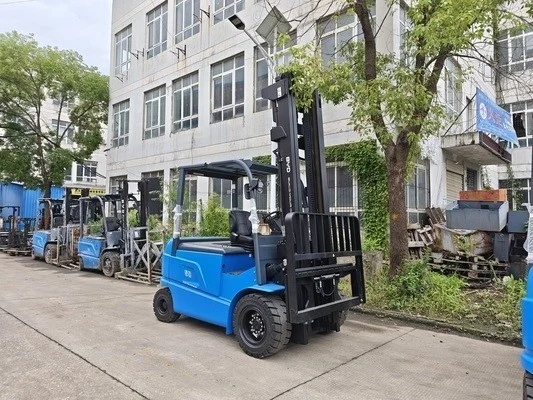
Three numbers matter together:
- Service weight of the truck with the specified battery.
- Wheel load at each axle when carrying the real load at the real lift height.
- Contact pressure at the tires, which depends on tire type and tread.
Floor joints, expansion gaps, trench covers, and older slab sections often govern before the general slab rating does. Walk the route with the maintenance team and mark every weak point. A four-wheel counterbalance electric forklift concentrates load differently from other handling equipment, so confirm the figures the supplier provides apply to your exact configuration, including any side-shift or attachment that moves the load center.
Ramps, Docks, and Transitions
Ask the supplier to confirm gradeability and stability limits at the loads and lift heights you will use on ramps and dock plates. Request the conditions attached to those figures: speed, load center, and whether the mast is lowered. Do not extrapolate from a headline gradeability number.
Specifications to Lock Down Before You Request a Quote
Use the list below as the structure of your inquiry. It also becomes the acceptance checklist at delivery.
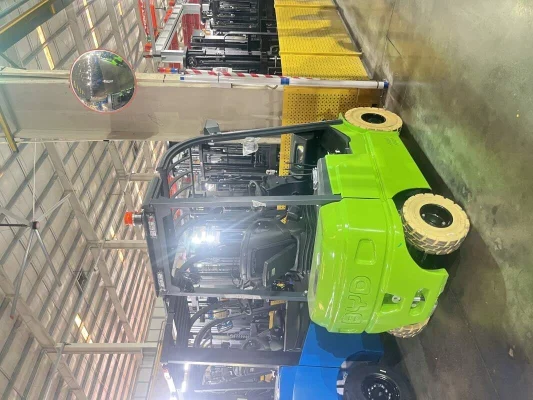
| Area | Specification to confirm | Evidence to request |
|---|---|---|
| Washdown | Enclosure rating of motors, controllers, connectors, display | Datasheet statement plus warranty conditions covering washdown |
| Battery | Pack moisture protection, charging location rules, charger rating | Written charging and cleaning instructions |
| Floors | Service weight, axle loads, tire contact pressure at working load | Load chart and weight distribution drawing |
| Load | Rated capacity at your load center and lift height | Capacity chart showing derating |
| Environment | Ambient temperature range, humidity, dust or flour exposure | Operating limits from the technical file |
| Cleanability | Surfaces, crevices, and materials that contact food areas | Hygiene design notes and cleaning guidance |
| Operation | Shift length, duty cycle, aisle width, lift height | Battery capacity and recharge plan supporting the shift |
Two further items deserve written answers. First, which components are rated only for dry operation and must be shielded during cleaning. Second, what maintenance access looks like when the truck is wet, since service work on a damp machine carries its own risks. If the supplier cannot provide a documented answer, treat that gap as a reason to keep evaluating rather than as a minor detail.
When you are ready to compare configurations, share the washdown routine, floor limits, load, lift height, aisle width, and shift pattern with our team so the four-wheel counterbalance electric forklift specification can be matched to your building rather than to a generic catalogue entry.
Frequently Asked Questions
Does a higher enclosure rating remove the need to plan washdown?
No. The rating describes protection under defined test conditions. Your cleaning method, detergent, water pressure, and duration still need to fall inside the supplier’s stated limits, and warranty terms may set additional conditions. Confirm both.
Can I use the rated capacity as the load figure when checking floor limits?
Use the actual load you will carry at the actual load center and lift height. Capacity derates as the load center moves forward and as lift height increases, so the rated figure alone can understate the load the floor receives.
What if the facility engineer cannot supply floor load data?
Ask for an assessment before committing to a truck configuration. Without permissible floor loads, neither you nor the supplier can confirm suitability, and a later restriction on routes or loads becomes an operational problem.
Which documents should be ready at delivery acceptance?
Expect the capacity chart, weight distribution data, operating and cleaning instructions, charging guidance, and warranty terms that address washdown. Check the delivered configuration against the quoted specification, including battery, charger, and any attachment.