Four-Wheel Counterbalance Electric Forklift Battery Charging Room Placement: Layout Questions Food Industry Buyers Should Settle Early
News 31/10/2026
A charging room decision looks like a facilities detail, but it shapes how an electric forklift fits into a food plant long before the first unit arrives. Buyers who settle placement questions early avoid late layout changes, cable routing problems, and awkward traffic patterns. The points below focus on a four-wheel counterbalance electric forklift, the type most often used to move pallets between receiving, storage, and production areas. They are general planning guidance, not a substitute a site-specific engineering review.
Why the Charging Room Belongs in the Layout Discussion
Charging equipment, battery handling, and the space around them compete with storage and production floor area. In food facilities, that competition is tighter because washdown zones, allergen controls, and pest management already constrain where equipment can sit. A charging room placed after the aisles are fixed often ends up far from the trucks it serves or too close to exposed product.
Placement also affects the duty cycle. A truck that must travel a long distance to reach a charger loses productive time, and operators may delay charging until the battery is deeply discharged. Early planning lets you compare charger location, battery swap options, and shift patterns together rather than treating them as separate purchases.
Buyers should treat the charging room as part of the truck specification. The truck voltage, battery capacity, and charger type must match the room’s electrical supply, ventilation, and available footprint. Confirm these details with the supplier’s technical documentation rather than assuming a standard configuration.
Layout Questions to Settle Before Requesting a Quote
These questions help a supplier propose a workable configuration. They also expose assumptions that could otherwise surface during installation.
Space and access
- How much floor area is available, and can a truck approach and leave the charger without reversing into a blind corner?
- Is there room to park the truck clear of the charger during battery changes or maintenance?
- Can pedestrians be separated from the charging area, or will the room need a marked exclusion zone?
Electrical supply
- What voltage and phase is available at the proposed location, and is the capacity adequate once other loads are considered?
- Will the charger need a dedicated circuit, and who is responsible the connection?
- Does the site require an isolation point that staff can reach quickly?
Environment and hygiene
- Is the room separated from open product, packaging storage, and high-care areas?
- How will the floor be cleaned, and will water or cleaning chemicals reach electrical equipment?
- Is ventilation adequate the gases and heat associated with charging, as confirmed by the equipment supplier and site safety assessment?
Operations
- How many trucks share one charger, and what shift pattern determines the charging window?
- Will batteries be charged in place or changed, and does the room have space and equipment the chosen method?
- What travel distance separates the charging room from the busiest aisles?
Food-Industry Constraints That Change the Placement Decision
Food plants add constraints that a general warehouse layout may not face. Dust, flour, or sugar in the air can settle on charging equipment, so a room that opens directly onto a dusty production area deserves closer review. Wet cleaning routines may rule out floor-level sockets or exposed cables in walkways.
Traffic separation matters as well. A four-wheel counterbalance electric forklift is stable and suited to pallet handling, but it still needs clear sight lines and safe pedestrian routes. If the only available charging location forces the truck to cross a busy packing line, the layout is worth revisiting before purchase.
Temperature is another factor to confirm rather than assume. Charging equipment and batteries have operating ranges specified by the manufacturer, and a cold store or an unheated loading dock may fall outside them. Ask the supplier to confirm the permitted range and any derating that applies.
The table below summarises the trade-offs common placement options, as a starting point discussion rather than a recommendation.
| Placement option | Potential advantage | Question to confirm |
|---|---|---|
| Dedicated room near receiving | Short travel to inbound pallets | Is the room separated from open product and adequately ventilated? |
| Central charging bay | Balanced travel to multiple aisles | Can pedestrian traffic be kept clear of the bay? |
| Charging point inside storage area | Convenient access during picking | Does the area meet electrical and fire separation requirements? |
| Separate building or annex | Keeps charging away from production | Does added travel time reduce available truck hours? |
What to Send the Supplier and What to Verify on Delivery
A clear enquiry shortens the back-and-forth. Include the number of trucks planned, the loads and lift heights expected, the shift pattern, the available charging window, and the proposed room dimensions. Add a sketch showing doors, aisles, and the electrical supply point. State any food-safety or cleaning constraints that affect the room.
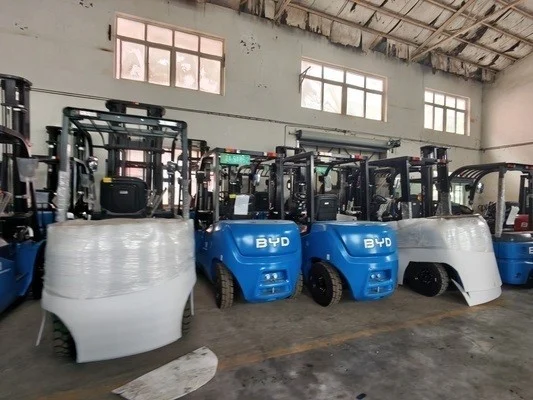
Ask the supplier to confirm which charger and battery configuration suits the stated duty, and to provide the technical documentation needed a site electrical review. Do not accept assumed figures; request the published specifications the exact model offered.
On delivery, verify that the truck and charger match the agreed specification, that the electrical connection has been checked by a competent person, and that operators have been briefed on charging and parking procedures. Keep the supplier’s documentation on file so future maintenance and audits can refer to it.
If the layout is still open, share your actual operating conditions, loads, and lift heights with our team to discuss a four-wheel counterbalance electric forklift configuration that fits the room you can provide.
Frequently Asked Questions
Can a four-wheel counterbalance electric forklift be charged inside a food production area?
That depends on the site’s hygiene and safety assessment. Many food plants prefer a separated charging area to keep dust, cleaning water, and electrical equipment away from open product. Confirm the requirement with your food-safety team and the equipment supplier.
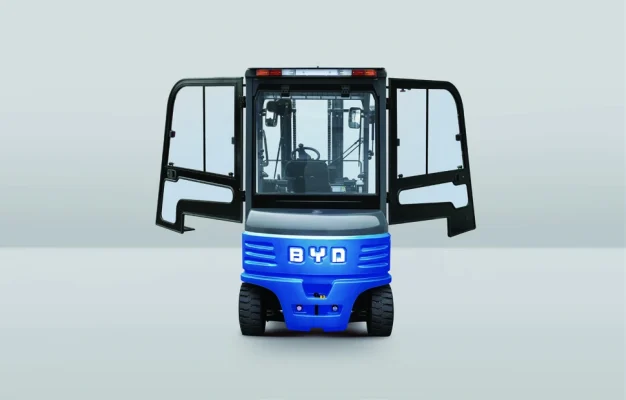
How much space should a charging room have?
There is no single figure. The answer depends on truck size, charger type, whether batteries are changed on site, and the access needed around the equipment. Provide the supplier with a dimensioned sketch and let them confirm the clearance requirements.
Is one charger enough multiple trucks?
It may be, if the charging window and battery capacity match the duty cycle. Share the shift pattern and expected hours of use so the supplier can advise on charger quantity and charging strategy instead of relying on a rule of thumb.
What electrical details should be settled before ordering?
Confirm the available voltage, phase, and capacity at the proposed location, the need a dedicated circuit, and who will complete and inspect the connection. These details belong in the quotation and should be checked by a qualified electrical professional.