Sizing a Four-Wheel Counterbalance Electric Forklift Mast and Lift Height to Food Plant Racking and Bulk Ingredient Handling
News 02/11/2026
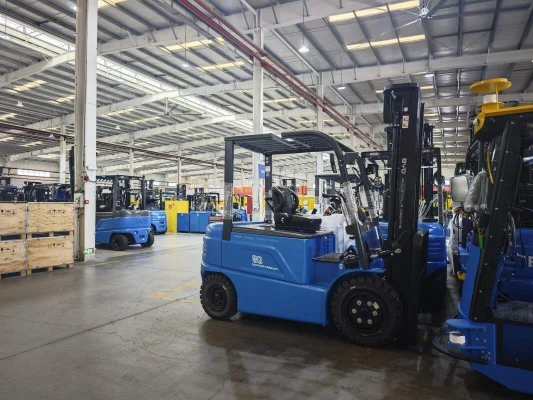
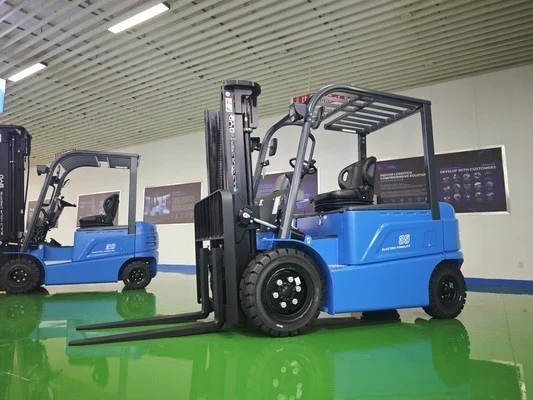
Choosing the right mast and lift height a four-wheel counterbalance electric forklift in a food plant starts with the racking layout and the bulk ingredient handling flow, not with a catalog number. The mast must reach the highest pick point with enough free lift to enter the rack safely, while the collapsed height and overhead guard must clear doors, sprinklers, and process equipment. Load weight, load center, and attachment use then determine whether the chosen capacity remains valid at height. This guide explains the conditions to check, the trade-offs between mast types, and the information a supplier needs to propose a configuration. It applies to four-wheel counterbalance electric forklifts, including lithium-battery models, and does not cover other truck types.
Start with Racking Geometry and the Real Lift Height
Lift height is not simply the top beam of the highest rack. The useful number is the height at which the fork carriage must place the pallet, plus clearance to lift the load off the beam and withdraw the forks. Measure the following at each storage location:
- Height of the top storage level, measured to the beam surface where the pallet sits.
- Pallet and load height, including any overhang or uneven stacking.
- Clearance above the load needed to lift and lower without striking the beam or the load above.
- Available free lift before the mast stages begin to extend, especially in low-clearance areas.
A common error is to specify lift height equal to the top beam. In practice, the carriage must rise above the beam to engage and disengage the pallet. If the rack has multiple levels, the highest level sets the minimum rated lift height, but the lowest clear height under a mezzanine or door may set the maximum collapsed height. Record both numbers before reviewing mast options.
Food plants often combine selective racking with bulk ingredient storage. Bulk bags, totes, and ingredient bins may sit on the floor or on low stands, while finished goods go into high racking. The mast must handle the full range without the operator improvising. A mast with sufficient free lift allows the forks to reach a low pallet without extending the mast, which matters under conveyors, mezzanines, and door frames.
Match Mast Type, Free Lift, and Overhead Clearance
Mast type affects visibility, collapsed height, and the ability to work in low-clearance areas. The table below summarizes common configurations and their practical implications. Exact dimensions vary by model and must be confirmed against the manufacturer’s technical data.
| Mast configuration | Typical use | Trade-offs to check |
|---|---|---|
| Two-stage (duplex) | Lower lift heights, general warehousing | Limited free lift; collapsed height may be higher than a three-stage mast |
| Three-stage (triplex) with free lift | High racking and low-clearance entry | More mast stages can reduce forward visibility; check free-lift rating |
| Four-stage or high-free-lift variants | Very high lift or restricted overhead clearance | Higher cost and maintenance complexity; confirm capacity at height |
Free lift is the height the carriage can rise before the mast stages extend. In a food plant, free lift is useful when the truck must enter a trailer, pass under a low door, or work beneath a mezzanine. A mast with inadequate free lift may force the operator to raise the load earlier, which increases the overall height and risks contact with overhead structures. Ask the supplier to state the free-lift value and the collapsed height with the mast fully lowered.
Overhead clearance includes the mast, the overhead guard, and any load backrest extension. Sprinkler systems, lighting, and ductwork often set a hard limit. The truck must pass beneath these with a margin that accounts for load height and any mast tilt. Do not rely on nominal aisle dimensions alone; measure the actual clear passage at the lowest obstruction.
Check Capacity, Load Center, and Attachments at Height
Rated capacity is stated at a specific load center, usually 24 inches (600 mm). When the load center moves forward—because of a longer pallet, an attachment, or an offset load—the allowable capacity decreases. The same effect occurs as lift height increases: the mast and carriage geometry reduce the safe working load. The manufacturer’s load chart shows the capacity at each height and load center. Use that chart, not the headline capacity, to confirm the truck can handle the heaviest pallet at the highest pick.
Bulk ingredient handling often involves non-standard loads. A bulk bag on a pallet may have a higher center of gravity and a longer footprint than a standard pallet. Slippers or fork extensions change the load center and may require derating. If the plant uses a push-pull attachment or a clamp, the attachment weight and thickness further reduce capacity. In every case, the load chart and attachment data govern.
Food plant conditions also affect the choice. Washdown areas, cold rooms, and dusty ingredient rooms may require specific protection or lubricants. These options can add weight and affect mast dimensions. Confirm with the supplier which options are available and how they change the rated capacity and overhead height. Lithium-battery models may have different counterweight and compartment layouts, so the same mast model on a lead-acid truck may not yield identical dimensions.
Verify Aisle, Floor, and Charging Conditions Before Finalizing
Mast and lift height decisions interact with the aisle and floor. A four-wheel counterbalance truck needs a defined aisle width that depends on the truck’s turning radius, the load length, and the mast type. Narrower aisles may require a different truck type, but this article focuses on four-wheel counterbalance models. Measure the narrowest aisle and the right-angle stack, and compare with the manufacturer’s aisle data. Do not assume that a higher-lift mast automatically fits the same aisle; mast stages can change the truck’s overall length and visibility.
Floor conditions matter as well. Uneven joints, drains, or ramps affect stability and load positioning. The mast tilt range and the operator’s ability to level the forks at height depend on the truck’s specifications. For bulk ingredient handling, the truck may need to travel with a raised load over short distances; confirm the manufacturer’s travel recommendations and never exceed them.
Charging and battery exchange also influence uptime. Lithium-battery models may allow opportunity charging, but the plant’s electrical capacity and charging location must be confirmed. The mast and lift height selection should not be finalized without checking that the chosen truck can be charged and maintained within the facility’s constraints. Provide the supplier with the following information to receive a suitable proposal:
- Highest and lowest lift points, with load heights and clearances.
- Heaviest load, load center, and any attachment use.
- Narrowest aisle, door heights, and overhead obstructions.
- Floor conditions, ramps, and washdown or cold-room exposure.
- Shift pattern and charging window.
With these details, a supplier can propose a four-wheel counterbalance electric forklift configuration and confirm the mast, capacity, and options against the manufacturer’s technical data. Where data is missing, request the specific load chart and dimension drawing rather than accepting a generic recommendation.
Frequently Asked Questions
How much lift height should I add above the top rack beam?
There is no single figure. The carriage must lift the pallet clear of the beam and any load above, so the required height depends on pallet thickness, load height, and the clearance needed to withdraw the forks. Measure the actual lift-off and set-down clearance at the top level, then confirm the mast’s rated lift height covers that point. The manufacturer’s load chart will also show whether capacity is sufficient at that height.
Can I use a standard mast in a cold room or washdown area?
Not necessarily. Cold-room and washdown environments may require specific lubricants, seals, or surface protection. These options can affect mast dimensions, capacity, and maintenance intervals. Ask the supplier which factory options are available for the intended conditions and how they change the rated capacity and collapsed height. Do not assume a standard mast is suitable without confirmation.
Does a lithium-battery truck change the mast or lift height selection?
The battery type primarily affects charging and energy management, but the truck’s counterweight and compartment layout can differ from lead-acid models. Those differences may influence overall dimensions and capacity. The mast and lift height should be selected from the specific model’s technical data, not from a sister model with a different battery. Provide the exact model and options to the supplier when requesting a configuration.
What if my heaviest load is a bulk bag on a pallet?
Bulk bags often have a higher center of gravity and a larger footprint than standard pallets. The load center may exceed the nominal 24-inch value, which reduces allowable capacity. Use the manufacturer’s load chart with the actual load center and height. If the bag requires an attachment or fork extension, include its weight and thickness in the calculation. Where the load center is uncertain, request a capacity review from the supplier before committing.