Four-Wheel Counterbalance Electric Forklift: Questions to Ask Before Matching Battery Runtime to a Multi-Shift Schedule
News 06/11/2026
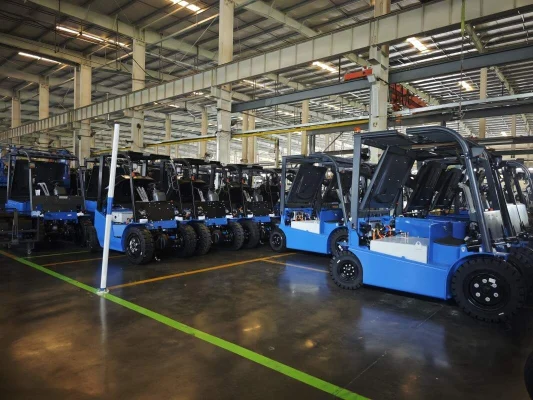
Matching battery runtime to a multi-shift schedule is less about finding one headline number and more about asking the right questions before you commit. A four-wheel counterbalance electric forklift can serve several shifts between charges, but only when the battery capacity, charging routine, work cycle and site infrastructure all line up. The questions below help buyers and fleet planners test that alignment before purchase, and they apply to any lithium-battery counterbalance truck, including the BYD models this site supplies.
This article uses a general warehouse and loading-dock setting as the working context: mixed pallet handling, indoor and yard transfer, two or three shifts, and limited space at the charging area. The questions are framed so you can substitute your own throughput, aisle and ground conditions.
Start With the Work Cycle, Not the Battery Label
Battery runtime is a result, not an input. Before comparing ampere-hours or voltage, describe what the truck actually does in a shift. Two sites with identical fleets can have very different energy demands depending on lift height, travel distance and how often the operator leaves the seat.
Questions that define the duty cycle
- How many hours per shift does the truck move, and how many does it sit idle?
- What is the average and maximum lift height, and what loads are carried at that height?
- How far does the truck travel per hour, and over what surfaces — smooth concrete, dock plates, ramps or yard pavement?
- How many pallet moves per hour, and what proportion involves attachments such as clamps or push-pull units?
- Are there peak periods, such as trailer loading, where the truck runs almost continuously?
These answers let a supplier estimate energy use honestly. Without them, any runtime figure is a guess. Record the cycle over a full shift, not a quiet hour, and note the heaviest and highest lifts separately.
Why shift patterns change the answer
A single-shift operation may need only a partial charge between shifts. A two- or three-shift schedule with short gaps demands either a larger battery, opportunity charging during breaks, or a battery-swap plan. Ask whether the schedule allows the truck to return to a charger at predictable times, or whether it must stay in the aisle until the task is finished. The less predictable the return, the more conservative the runtime margin should be.
Match Battery and Charging Choices to Your Schedule
Once the duty cycle is clear, the next questions concern energy storage and charging infrastructure. Lithium batteries behave differently from lead-acid in ways that affect scheduling, but the specific figures must come from the manufacturer’s technical data, not from general assumptions.
Capacity, voltage and usable energy
Ask what nominal voltage and capacity the proposed battery uses, and what usable energy the supplier expects under your cycle. Confirm whether the stated capacity assumes a full discharge or a partial depth of discharge that protects battery life. Request the manufacturer’s recommended depth-of-discharge range and the conditions under which it applies.
Charging time and opportunity charging
Charging time depends on charger output, battery state and the manufacturer’s charging profile. Ask these questions:
- What charger power is recommended, and what charge time does it give from a stated state of charge?
- Does the battery support opportunity charging during breaks, and what limits apply?
- Is a full charge required before each shift, or can partial charges be combined?
- What charging temperature range does the manufacturer specify, and what happens outside it?
Do not accept a single “fast charge” claim without the starting state of charge, charger rating and ambient conditions. These three details determine whether the claim is relevant to your schedule.
Battery swapping and fleet rotation
If charging windows are too short, a swap plan may be more practical than a larger battery. Ask whether the truck is designed for easy battery exchange, what equipment the swap needs, and how long a trained operator takes. Also confirm whether swapping affects warranty terms.
Verify Site Conditions and Truck Specifications
Runtime is only useful if the truck can perform the work safely in your building. The table below lists the parameters that most often decide whether a four-wheel counterbalance electric forklift fits a multi-shift warehouse schedule, along with the risks and the documents to request.
| Parameter or configuration | Why the industry cares | What to confirm with the supplier | Standard, optional or to be confirmed |
|---|---|---|---|
| Rated load and load center | Determines whether pallet weights are within capacity at the actual lift height | Rated capacity at the load center you use; residual capacity with any attachment | To be confirmed from the model data sheet |
| Lift height and mast type | Affects both energy use and overhead clearance | Maximum lift height, free lift, mast dimensions and overhead guard height | To be confirmed |
| Aisle width and turning radius | Four-wheel trucks need more space than three-wheel designs; rack layout must suit the chassis | Turning radius, right-angle stacking aisle and recommended aisle width | To be confirmed; layout review advised |
| Battery capacity and voltage | Sets the energy available between charges | Nominal capacity, usable energy, recommended depth of discharge | To be confirmed |
| Charger rating and charge time | Determines whether breaks and shift changes are enough | Charger output, charge profile, time from a stated state of charge | Optional depending on infrastructure |
| Operating and charging temperature range | Cold docks or unheated yards can limit charging and capacity | Manufacturer’s stated limits and any cold-weather package | To be confirmed |
| Ground and ramp conditions | Slopes and rough surfaces increase energy use and affect stability | Permitted slope, floor loading and tire options | Optional tire and configuration choices |
| Operator compartment and visibility | Multi-shift work raises fatigue and safety concerns | Seat, controls, lighting and mirror options | Optional |
Treat every cell as a question, not a promise. A supplier should be able to show the model data sheet and explain which figures apply to your lift height, load center and attachments. If a value is missing, ask what test condition it assumes.
Ground, slope and aisle realities
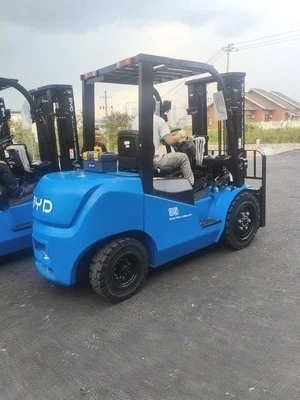
Ramps, dock plates and worn concrete all draw more energy and demand more from the brakes and tires. Ask whether your slopes fall within the manufacturer’s permitted grade, and confirm aisle widths against the truck’s turning radius. A layout that suits a smaller three-wheel truck may not suit a four-wheel counterbalance model; if the aisle is too narrow, that is a genuine limit, not something to solve by choosing a different battery.
Operating environment and battery behavior
Temperature affects lithium battery performance and charging. Ask the supplier to state the operating and charging temperature ranges from the technical documentation, and describe what happens at the edges of those ranges. If your site includes a cold store or an unheated loading area, raise it early so the configuration can be reviewed. Do not assume a standard truck will perform identically in every temperature band.
Frequently Asked Questions
Can one four-wheel counterbalance electric forklift cover three shifts on a single charge?
It depends on the duty cycle, battery capacity and charging opportunities. Some schedules work with opportunity charging during breaks; others need a larger battery or a swap plan. The only reliable answer comes from matching your measured cycle to the manufacturer’s data and accepting a margin you can verify.
Is a larger battery always the best answer to a multi-shift schedule?
Not necessarily. A larger battery adds weight and cost, and may not help if charging windows are the real constraint. Sometimes a charger upgrade, a scheduled break charge or a swap routine is more practical. Compare the options against your actual shift gaps.
What should I measure before asking a supplier to size a battery?
Record hours of active use, pallet moves per hour, average and maximum lift height, load weights, travel distance, surface type and any ramps. Also note the longest period the truck must run without returning to a charger. These figures let the supplier give a defensible estimate rather than a generic claim.
How do I check charging temperature limits?
Ask the supplier to quote the operating and charging temperature ranges from the battery and truck documentation, and confirm which package applies to your site. If your charging area is unheated or near a cold dock, state that condition before configuration is finalized.
What if my aisles are too narrow for a four-wheel counterbalance truck?
That is a layout constraint, not a battery question. Review turning radius and aisle width with the supplier, and consider whether the rack layout or truck type must change. Do not assume a four-wheel model will fit an aisle designed around a different chassis.
Before requesting a quote, assemble a short data pack: shift pattern, measured duty cycle, load weights and lift heights, aisle and door dimensions, floor and ramp conditions, charging area location and temperature, and the electrical supply available at the charger. Then ask the supplier to confirm rated capacity at your load center, the recommended battery and charger combination, the charge time from a stated state of charge, and the operating and charging temperature limits. Ask which items are standard, which are optional and which require factory confirmation. A clear answer to those questions is worth more than any single runtime figure.