Sizing a BYD Four-Wheel Counterbalance Electric Forklift: Load, Lift Height, and Duty Cycle Questions Buyers Should Answer First
News 03/11/2026
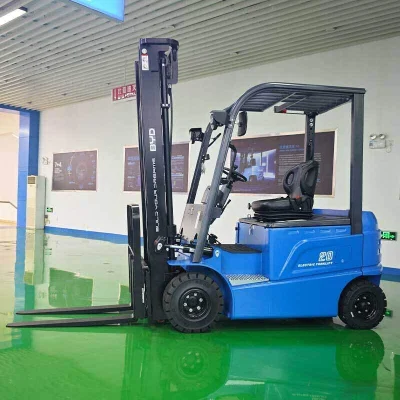
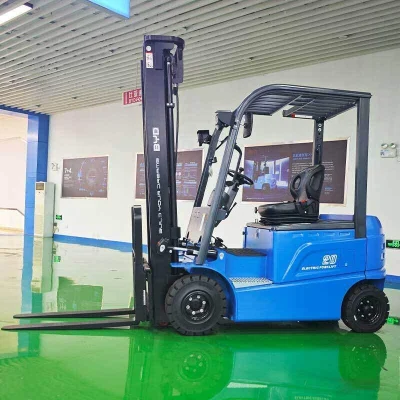
Getting a BYD counterbalance forklift sized correctly starts with three numbers and one pattern: the heaviest load you will lift, the height you must reach, and how hard the truck works across a shift. Buyers who answer these questions before requesting a quote avoid two costly mistakes: buying a truck that is technically rated high enough but unstable in practice, or paying for capacity and battery size the operation never uses. This guide walks through the questions to settle first, the data to collect, and the points to confirm in writing with the supplier.
Start With the Load, Not the Model
Rated capacity is only meaningful together with load center. A four-wheel counterbalance electric forklift is rated to a stated load at a stated load center, and capacity falls as the load center moves outward. Before comparing models, measure the actual load.
- Weighed load, not catalog weight. Weigh the heaviest pallet, stillage, or attachment-plus-load combination. Add packaging, pallets, and any residual material.
- Load dimensions. Record length, width, and height. A long load shifts the center of gravity outward even when the weight is modest.
- Attachments. Clamps, rotators, and other attachments add weight and move the load center forward. Their effect on net capacity must come from the attachment and truck supplier, not from a rule of thumb.
- Handling margin. State whether the operation needs headroom above the heaviest load, and confirm how much with the supplier.
Write the answer as a single sentence, such as: heaviest load 1,400 kg including pallet and attachment, 1,200 mm long, 1,000 mm wide. That sentence becomes the first line of your technical requirement.
Lift Height and the Capacity You Actually Get
Lift height is the second question, and it interacts with the first. As lift height increases, remaining capacity at height becomes the number that matters. Buyers should collect:
- Maximum lift height needed at the rack or truck bed, plus the free lift required to enter low openings.
- Height under the fork carriage at the highest shelf, and the overhead clearance in the aisle and doorways.
- Mast type that fits the building: a two-stage mast may suffice where ceilings are low; a three-stage mast reaches higher but changes visibility and collapsed height.
- Capacity at height. Ask the supplier to show the derated capacity at your maximum lift height and load center, not just the nominal rating.
This is where many inquiries stall. A truck rated for a heavy load at ground level may carry less at full height. Provide both figures to the supplier and ask which configuration meets them, including any capacity reduction from the attachment.
Duty Cycle: The Pattern That Sets Battery and Charging Needs
Duty cycle describes how the truck is used, and it drives battery capacity, charging strategy, and the practical working window between charges. Answer these questions with observed data where possible:
- Shift length and breaks. Hours the truck is available, hours it is actually moving, and when it can be charged.
- Lifts per hour and travel distance. A truck that lifts frequently and travels long distances draws more energy than one that works a compact area.
- Ramp and floor conditions. Slopes, dock plates, uneven joints, and floor friction affect both energy use and the tractive effort required.
- Charging infrastructure. Available power, charger location, and whether opportunity charging is possible during breaks.
- Operating environment. Dust, moisture, cold storage, or outdoor use may change the specification and should be stated plainly.
For lithium-powered models, confirm the charging approach with the supplier: which charger, what charging window, and what the manufacturer states about partial charging and battery care. Do not assume a battery size from a similar operation; the supplier needs your numbers to recommend a configuration.
Aisle, Floor, and Site Checks Before You Compare Prices
Sizing is not complete until the truck fits the building. Measure the narrowest aisle, the widest load, and the turning space at rack ends. Record floor condition, slopes, dock edges, and door heights. A four-wheel counterbalance electric forklift has a turning radius and right-angle stacking aisle requirement that must suit the layout; the supplier can confirm the figures from the technical data sheet.
Also settle the operational details that affect configuration:
- Operator training and familiarization needs.
- Whether the truck will be used in multiple buildings and how it moves between them.
- Local requirements that apply to the site; confirm these with the supplier and your own advisers rather than relying on general statements.
If your operation involves a different truck type, such as a reach truck in a very narrow aisle, that is a separate discussion. The guidance here concerns four-wheel counterbalance electric models, which suit many general loading, unloading, and horizontal transport tasks when the load, height, and aisle conditions match.
Frequently Asked Questions
What load figure should I give a supplier?
Give the weighed heaviest load including pallet and attachment, plus its dimensions. A rated capacity alone is not enough because capacity depends on load center and lift height.
Can a higher-capacity truck solve a load-center problem?
Sometimes, but not automatically. Moving the load center outward reduces usable capacity, and an oversized truck may not fit the aisle. Provide the actual load geometry and ask the supplier to confirm capacity at your load center and height.
How do I estimate duty cycle if I have no data?
Observe a typical shift and record lifts per hour, travel distance, ramp use, and available charging time. Use those observations as the basis; the supplier can then recommend battery and charger options. Avoid copying figures from another site.
What should be confirmed in writing before ordering?
Rated capacity at the stated load center and lift height, mast type and collapsed height, battery and charger configuration, aisle and turning dimensions, and the delivery and acceptance checks. Ask the supplier to confirm each item against the technical data sheet.
The most useful next step is a short requirements sheet: heaviest load and dimensions, maximum lift height, aisle width, shift pattern, charging power available, and floor or ramp conditions. With those answers, a BYD four-wheel counterbalance electric forklift configuration can be checked against your operation rather than guessed from a model list.