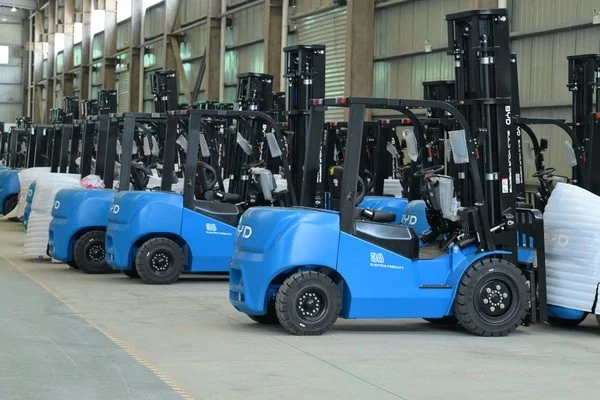
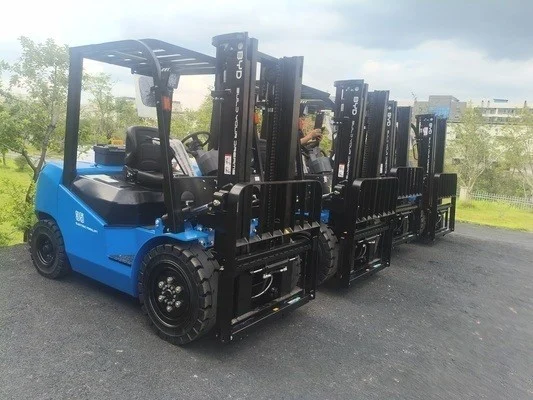
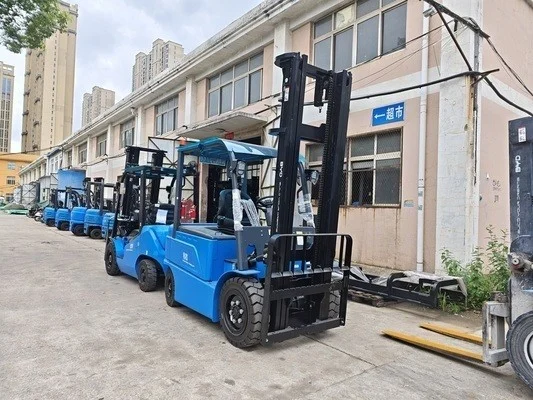
Choosing a Four-Wheel Counterbalance Electric Forklift: Matching Load Capacity and Lift Height to Factory Handling Tasks
News 01/11/2026
Load capacity and lift height are the two numbers most buyers compare first, yet neither one works alone. A four-wheel counterbalance electric forklift rated at a given capacity only carries that load when the load centre, attachment, lift height and mast type match the rating conditions. This guide explains how factory handling tasks translate into a practical capacity and lift-height specification, which site measurements to collect before requesting a quote, and where the common mismatches occur. It applies to four-wheel counterbalance electric forklifts, including lithium-battery models; other truck types appear only where the boundary between designs matters.
Start With the Load, Not the Truck Rating
The rated capacity on a data plate is a conditional figure. Manufacturers publish it against a defined load centre, usually 500 mm or 600 mm, measured from the front face of the forks to the centre of gravity of the load. Move the centre of gravity forward and the safe capacity drops, even though the plate has not changed. A buyer who matches the plate number to the heaviest pallet on site, without checking how that pallet sits on the forks, can end up with a truck that is overloaded in normal use.
Turning a factory task into a working load figure
Take the heaviest unit load the truck will actually lift, not the average. Then add the weight of anything that travels with it: a slip sheet, a tote frame, a clamping or rotating attachment, or a custom fixture. Attachments shift the load centre forward and add their own weight, and both effects reduce the capacity available at the forks. The result is a working load that should sit comfortably below the truck’s capacity at the relevant load centre and lift height, with margin left for unevenly stacked pallets.
Where loads vary widely, list them rather than averaging. A factory that handles 800 kg pallets most of the day but occasionally moves a 1,500 kg crate still needs a truck sized on the crate if that task is part of normal operations. If the heavy lift is rare and can be routed to another asset, say so explicitly in the specification so the truck is not oversized unnecessarily.
Load centre: the number buyers overlook
Deep pallets, long loads and drum-handling attachments all push the centre of gravity away from the fork face. A load that is compact and centred may be well within capacity, while the same weight in a deep, front-heavy configuration may not be. The practical step is to measure the actual load depth on site and compare it with the load centre stated on the capacity chart. If the real figure is larger, ask for the capacity at that load centre rather than assuming the headline rating applies.
Match Lift Height to the Rack, the Door and the Mast
Lift height requirements come from three places: the highest shelf the truck must reach, the lowest clearance it must pass under, and the mast geometry that connects them. A truck specified only on maximum fork height can fail on the second and third points.
Free lift and overhead clearance
Free lift is the height the forks can rise before the mast stages begin to extend. It matters wherever the truck works inside a building with low doorways, mezzanine edges, sprinkler pipework or overhead conveyors. A mast that reaches the required rack height but needs full extension to do so may not fit under those obstructions at the point where the lift begins. Check the lowered and extended mast heights against the lowest overhead obstacle on the travel route, not only against the rack.
Residual capacity at height
Capacity charts often show a lower figure at high lift heights, because the mast and carriage geometry change the stability envelope. A truck that handles a load at floor level may be rated lower when the same load is raised to the top beam. When the top rack level is the regular working position, size the truck on the capacity at that height. Ask the supplier to confirm the capacity at the specific lift height and load centre the task requires, and keep that confirmation with the specification.
Mast type and collapsed height
Duplex, triplex and quad mast arrangements trade collapsed height against lift range and visibility. The right choice depends on the building: a low-clearance trailer or older doorway may rule out a tall mast even when the rack height demands it. Compare the collapsed mast height with the lowest opening on the route, and consider whether the operator needs a clear view of the fork tips at the working height.
Site Conditions That Change the Specification
Capacity and lift height narrow the field, but the factory environment decides whether a given configuration works day to day. The points below are the ones most often missed when a buyer compares quotations.
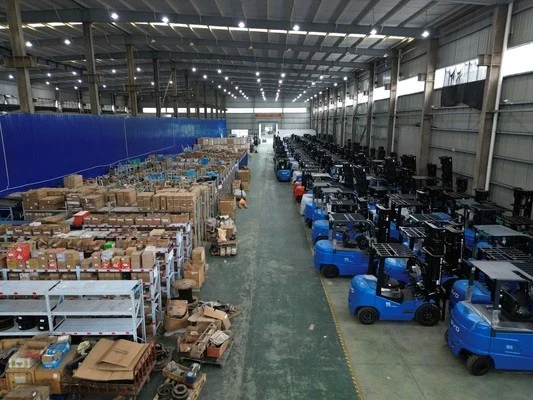
- Aisle width and turning. Four-wheel counterbalance trucks need room to turn; measure the narrowest aisle and the space at rack ends, then confirm the truck’s turning radius and right-angle stacking dimensions against those figures.
- Floor and surface. Joints, drainage covers, ramps and yard-to-building transitions affect ride, load stability and tyre choice. Note gradients and any threshold the truck must cross.
- Shift pattern and charging. Duty cycle determines how much battery capacity is needed and whether opportunity charging fits the schedule. Confirm the available charging position, power supply and any ventilation or housekeeping constraints with the battery supplier.
- Attachment and fork dimensions. Fork length, spread and thickness should suit the pallet and the rack beam. A fork that is too short leaves the load unsupported; one that is too long can foul racking.
- Environment. Dust, moisture, cold-store operation and washdown practices all affect the specification. State them plainly rather than assuming a standard truck covers them.
A hypothetical scenario: sizing two tasks on one truck
Consider a hypothetical assembly plant that receives palletised components at 1,200 kg on 1,200 mm deep pallets, stores them at a 6 m top beam, and also loads finished goods into trailers through a 2.4 m doorway. The receiving load sets a capacity requirement at a load centre deeper than the standard rating condition, the rack height sets a lift requirement with residual capacity checked at 6 m, and the trailer doorway sets a collapsed mast height limit. A single specification can satisfy all three only if each figure is checked separately and the supplier confirms capacity at the actual load centre and lift height. If the trailer task instead needs a much lower mast, the plant may be better served by separating the tasks than by compromising the rack work.
Questions to Settle Before You Request a Quote
A clear brief shortens the selection process and reduces the risk of a truck that fits on paper but not in the building. The checklist below covers the information a supplier needs to propose a four-wheel counterbalance electric forklift configuration honestly.
- Heaviest and most common unit loads, with dimensions and load depth.
- Any attachment or fixture that travels with the load, and its weight.
- Highest and lowest working lift heights, plus the lowest overhead obstruction on the route.
- Narrowest aisle, tightest turn and any gradient or threshold.
- Shift length, charging window and available power supply.
- Floor condition, environment and any cold-store or washdown requirement.
- Fork dimensions and pallet type, including any non-standard pallets.
Where a figure is unknown, mark it as unknown rather than estimating. A supplier who understands which values are still open can propose a configuration and state the assumptions behind it, which is more useful than a quotation built on guessed numbers. Capacity, lift height and battery options should be confirmed against the manufacturer’s technical documentation for the specific model, not inferred from a general brochure.
The decision rule is straightforward: size the truck on the heaviest working load at its real load centre, confirm capacity at the height where that load is handled, then check the mast and chassis against the building. When those three checks agree, the specification is defensible. When they conflict, the conflict usually points to a task that needs a different handling approach rather than a larger truck. Sharing your actual loads, lift heights and site measurements with our team lets us help you confirm which four-wheel counterbalance electric forklift configuration suits your factory tasks.
Frequently Asked Questions
Does a higher rated capacity always mean a safer choice?
No. A larger rating can still be exceeded if the load centre is deeper than the rating condition or if an attachment adds weight and offset. Safety comes from matching the rating conditions to the real task, and from leaving margin where loads are unevenly stacked or handled at height.
Can one four-wheel counterbalance electric forklift serve both rack work and trailer loading?
Sometimes, but the two tasks pull the specification in different directions. Rack work may call a tall mast and capacity checked at height, while trailer loading may impose a collapsed height limit. Confirm both sets of figures against the same model before assuming one truck covers both.
How do I confirm capacity at my actual lift height?
Ask the supplier to state the capacity at your specific load centre and lift height, and to identify the document that supports the figure. Capacity charts vary by mast and carriage configuration, so a general headline rating is not enough when the top rack level is a regular working position.
What if my heaviest load is handled only occasionally?
Decide whether that task belongs to this truck at all. If it can be routed elsewhere, the specification can be based on routine loads. If it cannot, size the truck on the heavy load and accept that the extra capacity is justified by the task rather than by daily use.