Four-Wheel Counterbalance Electric Forklift Procurement: Questions to Ask About Duty Cycle, Battery Runtime and Charging Strategy
News 05/11/2026
Duty cycle, battery runtime and charging strategy decide whether a four-wheel counterbalance electric forklift keeps up with your operation or becomes a bottleneck. They also shape the questions you should put to any supplier before comparing offers. This procurement guide lists the information to gather, the technical points to confirm and the acceptance details to settle before you commit to a purchase.
Start With the Work Profile, Not the Truck
A supplier can only size a battery and charger correctly when the work profile is clear. Before requesting a quotation, document the following:
- Load weights handled most of the time and the heaviest routine load, including attachments.
- Lift heights used in normal operation and the highest lift required.
- Load centre distance, since capacity ratings depend on it.
- Shift length, breaks and the number of shifts per day.
- Aisle width, floor condition and any ramps or gradients.
- Ambient conditions such as dust, moisture or cold storage.
These figures let the supplier match a model, battery capacity and charging approach to the actual job. Ask that the quotation state the load centre and lift height at which any capacity figure applies; a rating without those conditions is hard to verify.
Questions About Duty Cycle and Utilization
Duty cycle describes how hard the truck works: how much of the shift it moves, how far it travels and how often the operator lifts and lowers. It is not a single number you can read from a brochure. Use these questions to turn your observations into a specification.
How should we describe our duty cycle?
Record the share of the shift spent driving, lifting, idling and waiting. Note average travel distance per trip and the number of lifts per hour. A truck that lifts frequently at low height has a different demand profile from one that travels long distances with occasional high lifts. Ask the supplier which of these patterns their proposed configuration is designed to handle.
What utilization assumptions underpin the runtime estimate?
Request the assumptions behind any runtime figure: load weight, lift height, travel distance, speed and ambient temperature. A runtime quoted without these conditions cannot be compared across suppliers. If the supplier cannot provide the assumptions, treat the figure as indicative only.
Does the proposed capacity suit our heaviest routine load?
Confirm the rated capacity at your actual load centre and lift height, not just the headline number. Also ask whether an attachment changes the rating and whether the truck remains stable with the loads you handle. Capacity questions belong in the written quotation so they can be checked at delivery.
Questions About Battery Runtime and Lithium Power
Runtime depends on battery capacity, the work performed and temperature. Rather than accepting a single number, ask how the estimate was derived and what margin it includes.
What battery capacity is proposed, and on what basis?
Ask the supplier to explain the link between your shift profile and the proposed battery capacity. Confirm whether the estimate assumes opportunity charging during breaks or a full charge between shifts. Both approaches can work, but they lead to different capacity choices and different charger requirements.
How does cold or hot storage affect runtime?
Battery behaviour changes with temperature. If the truck works in cold storage or a hot environment, ask how the proposed lithium battery is rated for that condition and whether the warranty covers it. Confirm the operating temperature range in the technical documentation.
What does the battery warranty cover?
Ask about the warranty period, what counts as normal degradation and how capacity loss is measured. Request the terms in writing, including any conditions on charging habits or maintenance that could affect coverage.
Questions About Charging Strategy and Infrastructure
Charging strategy connects the truck to your building. It affects shift planning, electrical capacity and where the truck parks. The following questions help you avoid surprises after delivery.
Which charging pattern fits our shifts?
Options include charging between shifts, opportunity charging during breaks, or a combination. Ask the supplier to recommend a pattern based on your shift length and battery capacity, and to explain the trade-offs. Confirm whether the proposed battery supports the pattern without reducing its service life.
What charger and power supply are required?
Ask the supplier to state the charger type, input voltage and current draw, and whether your electrical supply can support it. If several trucks will charge at once, ask about the combined load. Any electrical work should be planned with a qualified electrician and checked against local requirements.
Where should the charging point be located?
Consider distance from the work area, ventilation, fire precautions and traffic flow. Ask the supplier what space and clearances the charger needs, and confirm the charging area meets your site’s safety rules.
Acceptance Checks and Information to Request
Before placing an order, ask the supplier to confirm the following in writing:
- Model, rated capacity, load centre and lift height.
- Battery type, capacity and warranty terms.
- Charger specification and installation requirements.
- Delivery, commissioning and operator training arrangements.
- Service coverage, response times and spare parts availability.
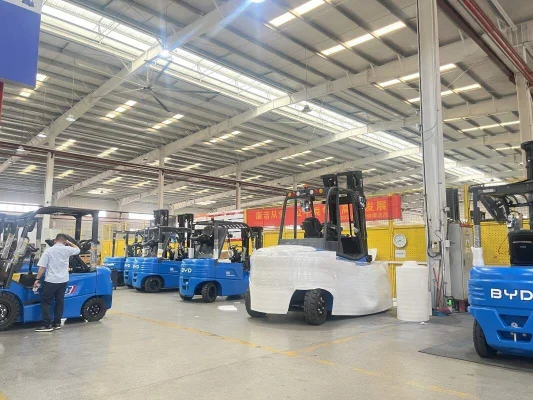
At delivery, check the truck against the quotation, confirm the battery and charger match the agreed specification, and verify that operators have been trained on the charging routine. If any figure in the offer lacks stated test conditions, ask the supplier to clarify it before signing. This site supplies BYD four-wheel counterbalance electric forklifts, including lithium models; share your load, lift height, shift pattern and charging conditions, and we can help you confirm a suitable configuration.
Frequently Asked Questions
Can one battery last a full shift?
It depends on battery capacity and how hard the truck works. Ask the supplier to estimate runtime using your load, lift height and travel data, and to state the assumptions. If the estimate falls short, discuss a larger battery or opportunity charging.
Is opportunity charging bad for a lithium battery?
Lithium batteries generally tolerate partial charging, but the acceptable pattern depends on the battery design and the manufacturer’s instructions. Ask the supplier to confirm the recommended charging routine and any limits that apply to the warranty.
What information speeds up a quotation?
Load weights, lift heights, load centre, shift length, aisle width, floor and ramp conditions, and your charging location and power supply. Clear data reduces back-and-forth and makes offers easier to compare.
How do we compare runtime claims from different suppliers?
Ask each supplier for the assumptions behind the claim and check that they match your operation. Figures based on different loads or lift heights are not directly comparable, so align the conditions before deciding.