Procurement Guide: Four-Wheel Counterbalance Electric Forklift Options When Dock Ramp Gradients and Floor Loading Limit Site Access
News 03/11/2026
Dock ramp gradients and floor loading limits can rule out many forklift configurations before a buyer ever compares battery or motor specifications. A four-wheel counterbalance electric forklift may still be a workable choice, but only when its weight, traction, and ground-pressure characteristics match the ramp and the slab. This guide sets out the information a procurement team should gather, the questions to put to a supplier, and the acceptance points to confirm before ordering.
Why Ramp Gradient and Floor Loading Decide the Shortlist
Two site constraints dominate early procurement decisions. The first is the ramp: a loaded four-wheel counterbalance electric forklift must climb and, more critically, descend under control, and the available traction depends on surface condition, tire type, and the combined weight of truck and load. The second is the floor: the same truck transfers its weight through four wheels, and the slab or suspended deck must be able to carry that concentrated load at every point on the route.
Neither constraint can be settled from a brochure alone. Ramp gradient is measured on site, and floor capacity is a structural question. A supplier can advise on truck capability, but the building structure must be assessed separately. Procurement should treat both as gate criteria: if either fails, no amount of battery or charging flexibility will make the site suitable.
Information to Collect Before Requesting a Configuration
A useful inquiry gives the supplier enough data to propose a realistic configuration rather than a generic model. The following items are the minimum set. Where a value is unknown, mark it as unknown and plan to measure it rather than estimate.
Ramp and Route Data
- Ramp length, rise, and the resulting gradient, measured rather than assumed.
- Ramp surface material and condition: concrete, steel plate, asphalt, or coated deck, and whether it is dry, damp, or exposed to weather.
- Any transition plates, lips, or joints at the top and bottom of the ramp.
- Route width, turning points, and door or gate clearances along the path.
- Whether the truck must stop, start, or turn while on the gradient.
Floor and Structural Data
- Slab construction and any suspended or mezzanine sections on the route.
- Documented floor loading limits, or a structural assessment if limits are not known.
- Expansion joints, trenches, drains, and other discontinuities.
- Surface finish and flatness, since poor flatness affects wheel contact and load distribution.
Load and Duty Data
- Typical and maximum load weight, plus load dimensions and centre of gravity.
- Required lift height and whether loads are handled at height while travelling.
- Shift pattern, operating hours, and charging windows.
- Attachments or special handling needs that alter capacity or stability.
Suppliers should confirm which of these values affect the rated capacity and stability of the proposed four-wheel counterbalance electric forklift. Capacity ratings are tied to a stated load centre and lift height; a truck rated at one load centre may not carry the same weight at a longer load centre or greater height.
Technical Requirements and Acceptance Points
Once the site data is assembled, the procurement document should translate it into verifiable requirements. The table below lists the main areas to specify and the evidence to request. The right-hand column is deliberately cautious: where a value depends on the manufacturer’s technical file, the supplier should provide it in writing rather than leave it to verbal assurance.
| Requirement area | What to specify | Evidence to request |
|---|---|---|
| Rated capacity | Capacity at the actual load centre and lift height needed | Manufacturer capacity chart or data sheet showing the relevant load centre |
| Ramp capability | Maximum gradient and surface condition the truck is rated to negotiate loaded | Written confirmation tied to the proposed model and tire type |
| Ground pressure | Wheel loads or ground pressure data at the specified load | Technical data from the manufacturer, to be checked against the structural assessment |
| Tires | Tire type suited to the ramp surface and indoor or outdoor use | Specification sheet and any limits on mixed surfaces |
| Battery and charging | Battery type, capacity, and charging method compatible with the shift pattern | Charging profile and any site power requirements |
| Safety and control | Braking and speed control behaviour on gradients | Operator manual extract or functional description |
Acceptance should be tied to these written values. A practical approach is to require a pre-delivery confirmation that the proposed configuration matches the site data, followed by an on-site check of the ramp and route before the truck enters full service. If the ramp gradient or floor capacity cannot be confirmed, the honest position is to pause the order rather than accept a truck that may not be safe on site.
Common Procurement Errors
- Comparing capacity figures without checking the load centre they refer to.
- Treating a ramp as flat because it looks gentle, without measuring gradient.
- Assuming a supplier’s general ramp guidance applies to every model and tire option.
- Leaving floor capacity to the forklift supplier instead of a structural assessment.
- Specifying battery and charging before the shift pattern and charging window are known.
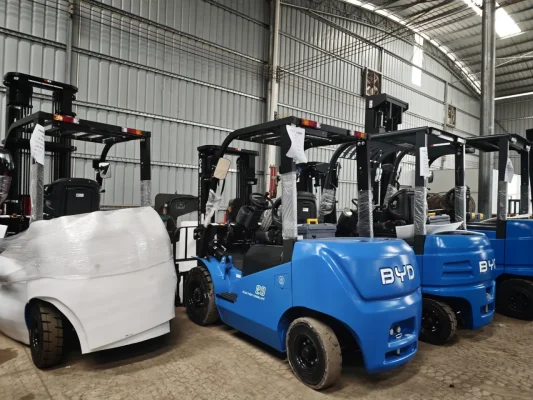
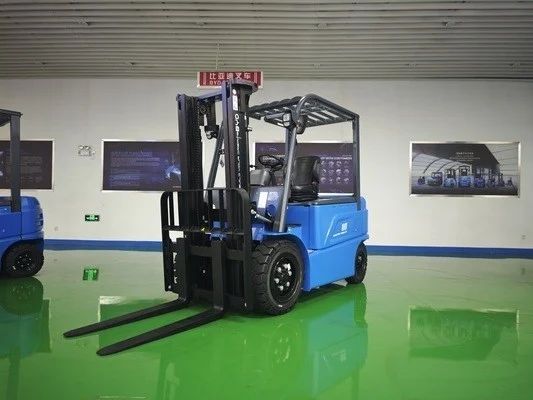
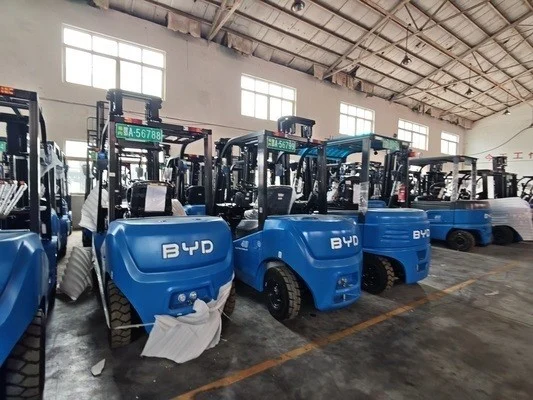
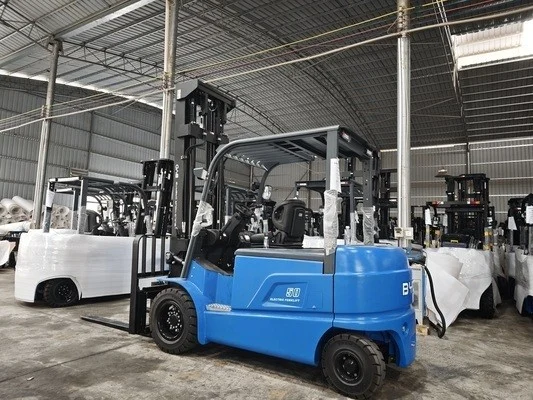
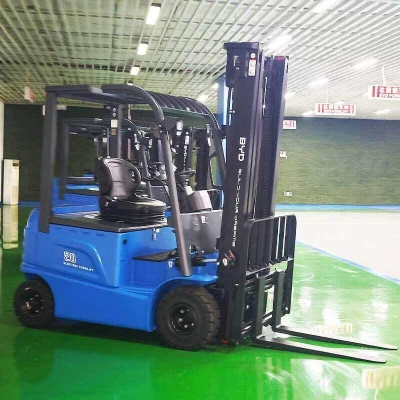
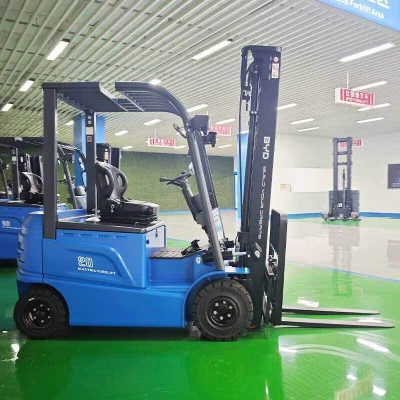
Where the site data points to a four-wheel counterbalance electric forklift, buyers can share the ramp, floor, load, and duty details with our team to discuss configuration options within the BYD four-wheel counterbalance electric forklift range. Specific models, capacities, and charging arrangements should be confirmed against the manufacturer’s technical documentation and the site assessment, not assumed from general descriptions.
Frequently Asked Questions
Can a four-wheel counterbalance electric forklift work on a dock ramp?
It can be suitable where the ramp gradient, surface, and traction conditions are within the truck’s rated capability and the floor can carry the wheel loads. The gradient must be measured and confirmed in writing against the proposed model. A ramp that exceeds the truck’s rating, or a floor that cannot support the load, makes the site unsuitable regardless of other features.
What floor information does a supplier need?
The supplier needs the documented floor loading limits or a structural assessment, plus details of slab construction and any suspended sections on the route. Wheel load or ground pressure data from the manufacturer can then be checked against those limits. The supplier cannot certify the building structure.
How should capacity be specified when the load centre is unusual?
State the actual load centre, load weight, and lift height, and ask the supplier to confirm capacity at those values using the manufacturer’s capacity chart. A capacity figure quoted at a shorter load centre does not automatically apply to a longer one, and attachments can further reduce available capacity.
What should be confirmed before accepting delivery?
Confirm that the delivered configuration matches the agreed capacity, tire type, battery, and charging specification, and that the ramp and route have been checked against the written requirements. Any discrepancy between the site data and the delivered truck should be resolved before full operation begins.