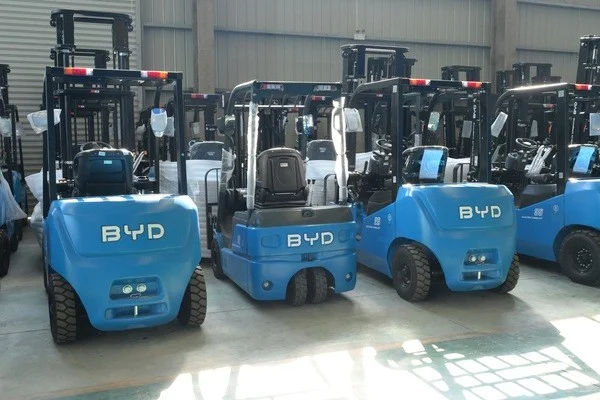
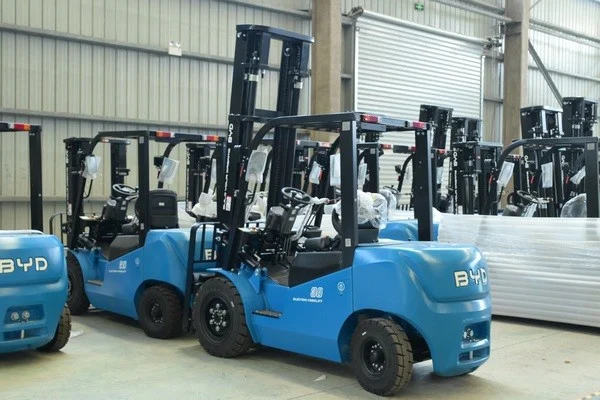
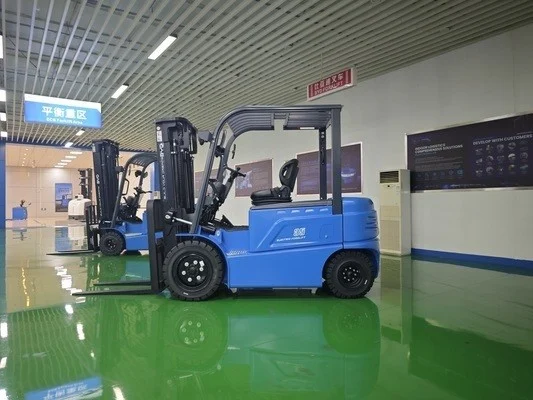
Four-Wheel Counterbalance Electric Forklift Selection: Verifying Load Charts, Lift Height, and Battery Specs Against Your Handling Task
News 07/11/2026
Choosing a four-wheel counterbalance electric forklift looks simple until you compare the load chart with the actual task. A truck rated at 2,000 kg at a 500 mm load center does not carry 2,000 kg to every lift height, and a battery that suits one shift pattern may not suit another. The practical approach is to treat the load chart, the lift height requirement, and the battery specification as three linked checks, then confirm each one against the real handling task. The many different forklift types on the market make this discipline more important, not less: a specification copied from a different truck class can mislead a buyer who has not checked the underlying conditions.
Start With the Task, Not the Truck Rating
A load chart is only meaningful when the task is described in the same terms. Before reading any specification, write down the handling task in measurable form. The list below covers the details that change the selection outcome.
- Load: the heaviest unit handled, plus any attachment or pallet weight that adds to the load. A load handler or clamp changes the effective load center and usually reduces capacity.
- Load center: the horizontal distance from the fork face to the load’s center of gravity. Standard ratings assume a defined load center; a deeper load reduces capacity.
- Lift height: the height at which the load must be placed, not the maximum height the mast can reach. Capacity falls as the carriage rises.
- Aisle and door width: the narrowest point the truck must pass, which constrains truck width and turning clearance.
- Ground and slope: floor condition, ramps, dock plates, and gradients that affect stability and traction.
- Shift pattern: hours per shift, number of shifts, and available charging windows.
This is a general selection framework, not a substitute for the manufacturer’s technical documentation. Where a value is uncertain, such as the true center of gravity of a non-standard load, measure it or ask the load supplier rather than estimating.
Reading the Load Chart Correctly
The load chart, sometimes called the capacity plate, states the rated capacity at a specified load center and lift height. Its purpose is to show how capacity changes as those conditions move away from the rated point. Two errors are common in buying decisions.
Error one: quoting capacity without its conditions
A figure such as 2,500 kg means little on its own. The same truck may be rated at a lower capacity at a greater load center or a higher lift height. When comparing options, always record the load center and lift height that accompany the capacity figure. If a supplier quotes a capacity without those conditions, ask for the full chart.
Error two: ignoring the attachment
Attachments add weight and move the load forward. Both effects reduce the capacity available at the fork. The attachment supplier should provide the derating information, and the truck supplier should confirm that the combination remains within the chart. Do not assume the base truck rating still applies.
The table below shows the kind of verification record worth keeping during selection. The values are placeholders; fill them from the actual load chart and task data.
| Check | Task requirement | Chart value to confirm | Open question |
|---|---|---|---|
| Capacity at load center | Heaviest load plus attachment | Rated capacity at the stated load center | Is the load center measured or assumed? |
| Capacity at lift height | Height where the load is placed | Capacity at that height, not the maximum | Does the chart cover the full mast range? |
| Mast and free lift | Clearance under overhead obstructions | Mast type and collapsed height | Is free lift needed in the aisle or doorway? |
| Battery and charger | Shift hours and charging window | Battery voltage, capacity, and charge profile | Is opportunity charging permitted? |
Matching Lift Height and Mast Choice to the Building
Lift height selection is a building constraint as much as a load constraint. The required placement height sets the minimum mast specification, but the building sets limits the chart does not show.
Check overhead obstructions first: sprinkler heads, lighting, door tracks, and roof trusses. A mast that reaches the required height may still need more collapsed height or free lift than the doorway allows. Free lift matters where the truck must enter a trailer or pass under a low structure with the forks raised slightly. Confirm the collapsed height and the free-lift figure against the lowest clearance on the route.
Then check the capacity at the working height. A truck that handles the load at floor level may not handle it at the top of the racking. Read the chart at the actual placement height and keep a margin. The size of that margin is a judgment call that depends on load stability, operator technique, and floor condition; it should be agreed with the supplier rather than taken from a generic rule.
Finally, consider the aisle. Four-wheel counterbalance trucks generally need more turning space than three-wheel designs, which is one reason the two types suit different buildings. If the aisle is tight, the practical question is whether a four-wheel truck can work safely in it at all, not whether a different truck class should be substituted without checking the task.
Battery Specifications and Charging Logistics
Battery selection follows from the shift pattern. The key figures are voltage, capacity, and the charging profile the manufacturer permits. Voltage must match the truck’s system; capacity should cover the energy used across the working period plus a sensible reserve. The reserve figure should come from the supplier’s documentation, not from a rule of thumb.
Charging logistics often decide the outcome more than the battery label does. Ask these questions before committing:
- How many hours does the truck actually operate per shift, including idle time with accessories running?
- Is there a charging window between shifts, and is opportunity charging during breaks allowed?
- Does the site have the electrical capacity and the right charger location?
- Will batteries be swapped, and if so, is handling equipment available?
- What does the manufacturer state about charging frequency and depth of discharge?
For lithium battery models, confirm the permitted charging behavior and operating temperature range with the supplier. Do not assume that a lithium pack removes the need to plan charging; it changes the options, but the site still needs a workable routine. Where the supplier’s data is silent on a point, treat it as unconfirmed.
Verification Checklist and Common Mistakes
A short verification pass before ordering catches most selection errors. Use the checklist below as a final review, and keep the answers with the purchase record.
- Confirm the heaviest load and its center of gravity, including attachments.
- Read capacity at the actual load center and the actual placement height.
- Check collapsed height, free lift, and overhead clearance along the route.
- Measure the narrowest aisle and doorway against the truck’s dimensions.
- Confirm ground conditions and any slopes against the supplier’s guidance.
- Match battery voltage, capacity, and charging profile to the shift pattern.
- Ask the supplier to confirm the configuration in writing against your task data.
Common mistakes include comparing trucks by a single capacity number, treating the maximum lift height as the working height, planning charging around the nominal shift length rather than actual operating hours, and accepting verbal assurances without a written configuration check. Each of these can be resolved by returning to the task description and the manufacturer’s technical data.
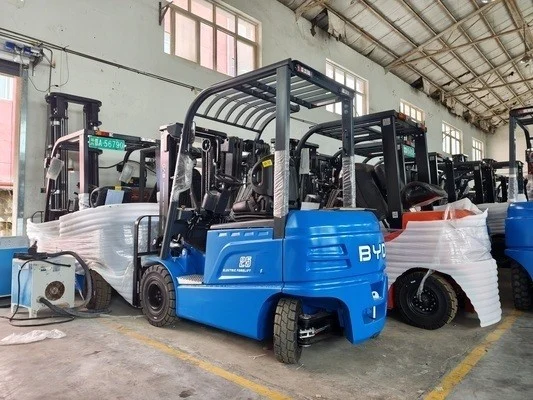
When the task data is ready, share the load, load center, lift height, aisle width, floor and slope conditions, and shift pattern with the supplier. That information allows a configuration of a four-wheel counterbalance electric forklift to be checked against the load chart and battery specification rather than guessed. The many different forklift types available make it easy to compare the wrong things; a written task description keeps the comparison anchored to the work the truck must do.
Frequently Asked Questions
Does a higher capacity rating always mean a better choice?
No. A higher rating at one load center and height may not hold at the conditions you actually work in. The relevant figure is the capacity at your load center and placement height, confirmed on the chart.
Can I use the maximum lift height as my working height?
The maximum lift height is a limit, not a working target. Capacity at the top of the mast is usually lower than at floor level, and overhead obstructions may prevent using the full height safely.
How do I know whether a lithium battery suits my shift pattern?
Compare the actual operating hours, the charging windows available, and the manufacturer’s permitted charging behavior. If any of these is unclear, ask the supplier to confirm in writing before ordering.
What should I send to a supplier when requesting a configuration check?
Send the heaviest load and its center of gravity, the placement height, the narrowest aisle and doorway, floor and slope conditions, and the shift and charging pattern. Those details let the supplier verify the truck against the load chart and battery specification.