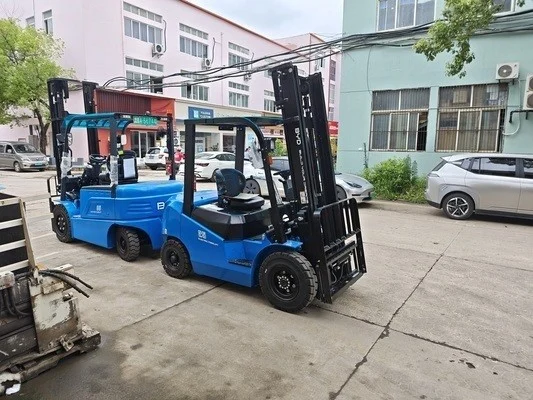
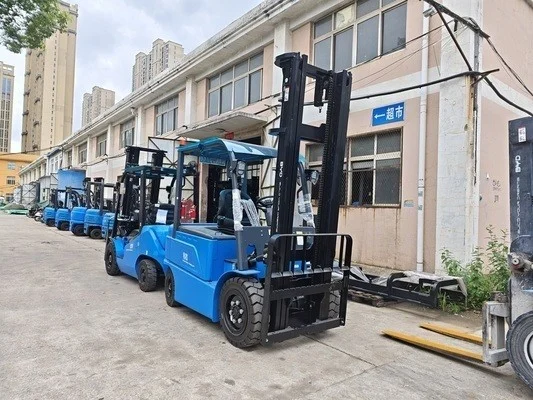
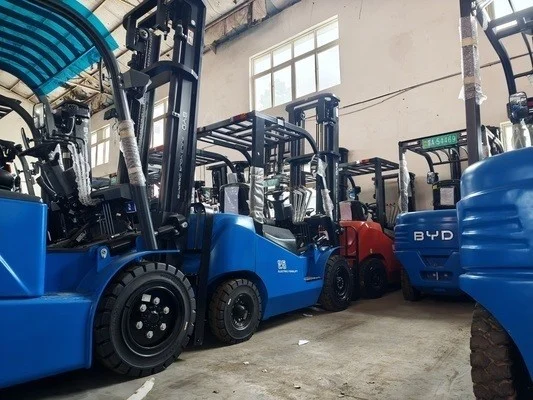
Four-Wheel Counterbalance Electric Forklift Specification Review: Checking Load Centre, Derated Capacity, and Mast Height Before You Commit
News 09/11/2026
When you compare different forklift types, a four-wheel counterbalance electric forklift often appears as a general-purpose option. The specification sheet, however, can mislead. A rated capacity printed in large type rarely applies to every lift. Load centre, derated capacity, and mast height interact, and ignoring that interaction can lead to unstable handling or premature wear. This review explains how to read those three values together before you commit to a configuration.
How Load Centre Changes What the Forklift Can Safely Lift
Load centre is the horizontal distance from the vertical face of the forks to the centre of gravity of the load. A nominal rating usually assumes a specific load centre, often 500 mm or 600 mm. When the actual load centre is longer, the forklift’s safe capacity decreases. The principle is simple: the load moment increases, and the counterweight and chassis have a fixed limit.
Consider a hypothetical pallet whose centre of gravity sits farther out because the load is deep or irregular. Even if the total weight matches the rated capacity, the effective capacity at that load centre may be lower. The manufacturer’s capacity chart, not the headline number, governs the safe limit. Ask your supplier to provide the capacity chart at the load centre you actually handle.
Load centre questions to settle early
- What is the horizontal distance from the fork face to the load’s centre of gravity in your typical handling?
- Does the load shift during transport, changing the effective centre?
- Are attachments or special forks involved? They can move the load centre and require a new rating.
Without a verified chart, do not assume the rated capacity applies. That is a common and avoidable error.
Reading Derated Capacity Without Guesswork
Derated capacity is the capacity at a specific load centre and lift height, as stated in the manufacturer’s data. It is not a penalty invented by the sales team; it reflects the physical limits of the mast, carriage, and chassis. Two numbers matter most: the load centre used for the rating and the lift height at which the rating applies.
Many specification sheets show a capacity at a standard load centre and a standard lift height. If your operation requires a higher lift or a longer load centre, the allowable capacity drops. The chart should show this relationship. If the chart is missing or unclear, request it. A responsible supplier will provide the derating curve or table.
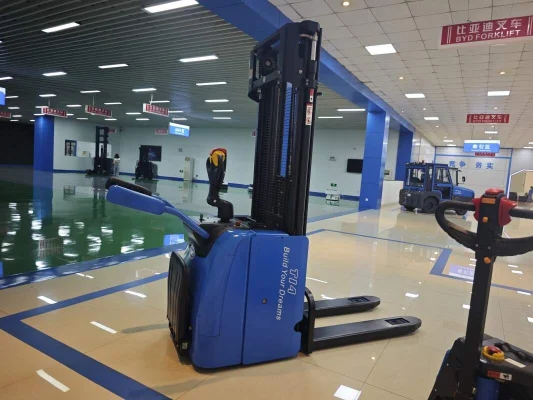
What to verify in the capacity chart
- The load centre used for the nominal rating.
- The lift height range covered by the chart.
- Whether the chart accounts for the mast type and any attachment.
- The condition of the battery and its effect on counterweight, if applicable.
Do not compare derated capacities between different forklift types without checking that the load centre and lift height are the same. A higher headline number may hide a shorter load centre or a lower lift height.
Mast Height, Lift Height, and Overhead Clearance
Mast height affects both the lift and the building. A mast that is too tall may not fit through doorways or under sprinklers. A mast that is too short may not reach the required shelf. The specification should list the lowered mast height, the extended height, and the free lift, if any.
Free lift matters when you work inside a trailer or a low-clearance area: it allows the forks to rise without increasing the overall mast height. If your operation includes such areas, confirm the free lift value. Also confirm the overhead guard height and any restrictions in your building.
Mast specification checklist
- Lowered mast height and overhead guard height compared with doorways and racking.
- Maximum lift height compared with the highest shelf or trailer roof.
- Free lift, if the application requires lifting inside low-clearance spaces.
- Mast type and its effect on capacity and visibility.
These values should come from the manufacturer’s technical data. If they are not available, ask before you commit.
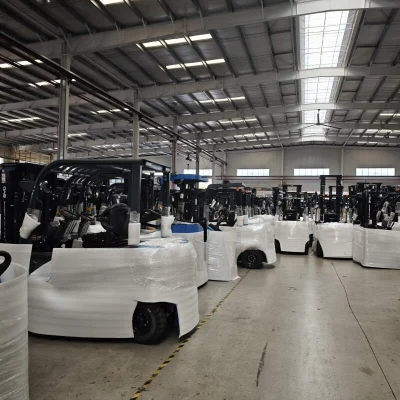
Comparing Different Forklift Types: What the Specification Sheet Does Not Tell You
The phrase different forklifts type often appears in searches when buyers try to understand why capacities vary. A four-wheel counterbalance electric forklift is one category among several. Other categories exist, but they serve different purposes and should not be treated as interchangeable. This article does not recommend them; it only notes that their specifications follow different logic.
When you compare, use the same load centre, lift height, and duty cycle. A specification that looks superior may simply reflect a different test condition. Ask each supplier to state the conditions behind the numbers. That request alone will filter out many misleading comparisons.
Questions that reveal whether a specification is comparable
- At what load centre is the capacity rated?
- At what lift height is the capacity rated?
- Does the rating include any attachment?
- What is the battery voltage and capacity, and how does it affect continuous operation?
If a supplier cannot answer these, treat the specification as incomplete.
FAQ: Specification Review Before Purchase
Can I use the rated capacity if my load centre is longer?
No. The rated capacity applies only at the stated load centre. A longer load centre reduces the safe capacity. Use the manufacturer’s capacity chart to find the allowable load at your actual load centre.
Why does derated capacity change with lift height?
The mast and hydraulic system have structural limits that vary with height. The manufacturer’s chart shows the allowable capacity at each height. Lifting a load that exceeds the derated capacity at that height can compromise stability.
How do I confirm mast height fits my building?
Compare the lowered mast height and overhead guard height with your lowest doorway or obstruction. Compare the maximum lift height with your highest shelf. Also check free lift if you work inside trailers or low-clearance areas. Use the manufacturer’s data, not estimates.
Does battery type affect capacity?
Battery weight contributes to the counterweight. A different battery configuration can change the forklift’s overall weight and therefore its capacity rating. Confirm the battery specification with the supplier and ensure the capacity chart reflects the configuration you will use.
Before you commit, gather the load centre, required lift height, and building clearances. Ask your supplier to provide the capacity chart and mast data that match those conditions. If you are considering a four-wheel counterbalance electric forklift from our range, share your actual load details and handling conditions so we can help you check the configuration against the available technical data. No capacity claim should be accepted without the chart that supports it.