How Counterbalance Forklift Load Center Distance Affects Overall Load Handling Stability
News 12/10/2026
What Is Load Center Distance On Counterbalance Forklifts
Counterbalance forklifts use rear mounted weight to offset loads carried on front forks. Load center distance describes horizontal distance between load’s vertical center of gravity and fork carriage face. Standard industry measurements typically set this value at 24 inches (600 mm) to match common pallet loads. This standard measurement appears on every counterbalance forklift’s capacity plate, which operators must review before handling any load. Changes to load size or shape shift the actual load center away from this standard value, which directly impacts the forklift’s ability to maintain balance.
How Load Center Distance Changes Load Handling Stability
Increased Distance Raises Tip Over Risk
When actual load center distance exceeds the standard value marked on your capacity plate, the forklift’s effective lifting capacity drops. The longer moment arm created by the shifted center of gravity pulls more weight forward, beyond the forklift’s front axle. Counterbalance rear weight can no longer offset this increased forward moment. This shift pushes the combined center of gravity outside the forklift’s stability triangle, the area that keeps the unit upright during operation.
Even loads that fall within your forklift’s rated weight capacity become dangerous when load center distance extends beyond rated limits. Small movements, such as turning or traveling across uneven ground, can trigger forward tip overs when this condition occurs.
Reduced Distance Can Increase Effective Capacity
If your actual load center sits closer to the fork carriage than the standard rating, your forklift can safely handle heavier loads than its published nameplate capacity suggests. Operators still need to confirm this adjustment through manufacturer guidelines, rather than assuming automatic capacity increases. Unofficial capacity adjustments create unnecessary safety risks even when load center distance falls within safe ranges.
Practical Selection Guidance For Operators And Managers
When selecting a counterbalance forklift, match load center distance ratings to the most common loads your operations handle. If you regularly handle large, bulky items such as lumber, plywood or custom crates, select a forklift rated with longer load center distance. These units build extra counterbalance weight into the rear frame to offset longer moment arms.
If you only handle small, dense loads such as metal coils or stacked bricks, a standard 24-inch load center rating works well and keeps your acquisition and operating costs lower. Always check load dimensions before lifting, calculate estimated load center position, and compare this value against your forklift’s rated limits. Symmetric loads let you use a simple calculation: approximate load center distance equals total load length divided by two. This calculation gives you a solid starting point supporting your safety checks.
Key Limitations To Keep In Mind
Load center distance calculations only work with symmetric, evenly distributed loads. Unevenly distributed loads, such as half-loaded crates or shifted cargo, create different center of gravity positions even when overall load length matches your previous measurements.
Forklift attachments such as side shifters, fork extensions or clamps add extra weight forward of the front axle, which effectively shifts the load center further away from the carriage. This added forward weight reduces effective capacity even when the load itself has correct load center distance.
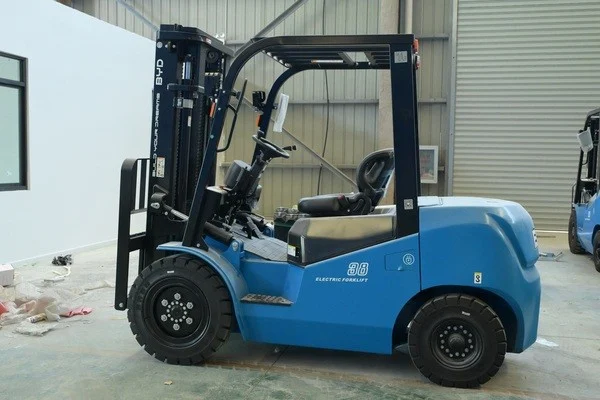
Sloped ground also changes the combined center of gravity position, which amplifies the impact of extended load center distance. Never operate a counterbalance forklift on steep slopes with loads that exceed rated load center distance limits.
Frequently Asked Questions
Does load center distance affect counterbalance forklift capacity
Yes, any change to actual load center distance directly impacts your forklift’s safe lifting capacity. Extended load center distance reduces effective capacity, while shorter distance increases it. Always adjust your load weight to match the actual load center distance before lifting.
What standard load center distance applies to most counterbalance forklifts
The most common standard load center distance across the industry equals 24 inches (600 mm). This matches the center of a standard 48-inch long pallet, the most widely used pallet size across global shipping and storage operations.
Can I use fork extensions without adjusting my load calculations
No. Fork extensions add length to your forks, which pushes the load center further from the fork carriage. You must recalculate your actual load center distance and reduce your maximum load weight accordingly to maintain safe operation.
Where can I find my counterbalance forklift’s rated load center distance
All counterbalance forklifts display rated load center distance on the official capacity nameplate, attached to the frame within easy view of the operator’s station. Always check this plate before handling new or unfamiliar loads.