Industrial Forklift Battery Planning: Matching Charging Windows to Multi-Shift Duty Cycles on Four-Wheel Counterbalance Electric Models
News 22/10/2026
Effective battery planning prevents unplanned downtime with four-wheel counterbalance electric forklifts running multiple daily work shifts. Without correct alignment between available charging time and work demand, operations face costly interruptions that impact overall output. This guide breaks down key steps and considerations to build reliable battery plans that match multi-shift duty cycles.
Core Factors Shaping Battery Planning Requirements
Several site-specific factors impact how much energy your forklift uses each shift, which directly shapes your charging window needs:
- Total daily operating hours across all shifts
- Average load weight and frequent lifting height on your site
- Work terrain, including frequent uphill travel on sloped docks or yards
- Ambient temperature inside your working area
- Available electrical capacity your facility can dedicate to forklift charging
Lithium batteries, the standard option on modern four-wheel counterbalance electric models, offer more flexibility in charging than older lead acid alternatives. They support faster charging and opportunity charging during short breaks, which opens more options when matching multi-shift work.
Match Charging Windows To Your Duty Cycle
Single-Shift Base Operation
Single-shift operations typically run 6-8 hours daily, leaving 16-18 hours of idle time overnight. This long idle window provides enough time to fully recharge a single lithium battery, so no extra batteries are needed at most sites.
Two-Shift Daily Operation
Two-shift operations split 12-16 hours of total work across two separate work groups. Most sites have a 30-60 minute gap between shifts when no work occurs. This gap acts as a built-in charging window. A properly sized lithium battery can add 30-50 percent of its full capacity within 60 minutes, enough power to cover the second full shift. If your shift gap falls below 30 minutes, you may need a spare battery to avoid downtime.
Three-Shift 24/7 Operation
Three-shift operations run nearly 24 hours daily, with only 10-15 minute breaks between shift changes. Short breaks only add enough power to maintain operation through the next shift, so most sites rely on battery rotation. Teams swap depleted batteries with fully charged units during shift changes, keeps the forklift in operation without long waits. On-site charging infrastructure charges depleted batteries while the forklift uses the spare unit.
Common Battery Planning Mistakes To Avoid
Many operations underestimate key factors that break otherwise solid battery plans. Watch these common issues:
- Underestimating power draw: Heavy constant loads and frequent uphill travel increase energy use far more than expected. Always account maximum load and worst-case terrain when sizing your battery.
- Ignoring temperature impacts: Lithium battery capacity drops in cold environments. Operating below freezing reduces available power, so you need extra capacity to offset this loss.
- Overlooking infrastructure limits: Multiple forklifts charging at the same time can exceed your facility’s available electrical capacity. Confirm your building electrical system can handle peak charging demand before finalizing your plan.
- Assuming one size fits all: No universal battery plan works at every site. Your specific work schedule and site conditions shape all decisions.
Planning Considerations Your BYD Four-Wheel Counterbalance Electric Forklifts
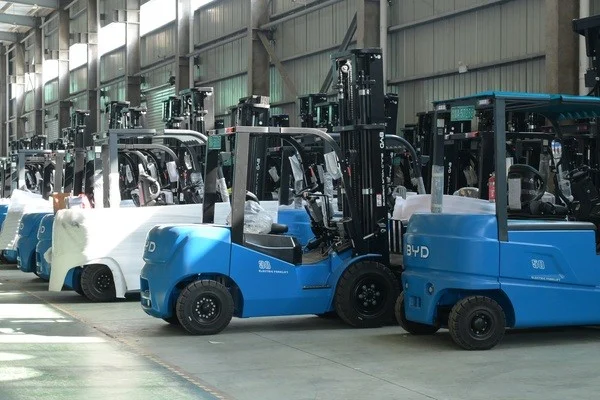
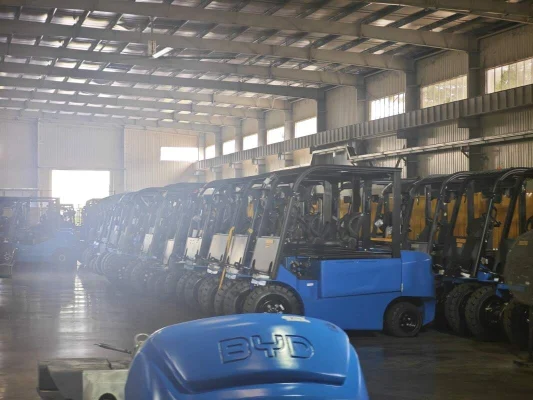
BYD four-wheel counterbalance electric forklifts use built-in lithium iron phosphate batteries designed to support flexible charging. This battery chemistry delivers faster charging rates than many older alternatives, so shorter charging windows can deliver enough power to sustain longer operation.
When you reach out our team, we request details about your daily duty cycles, available charging space, facility electrical capacity and work environment. These details help us match the correct battery size and charging setup to your specific operation, no generic one-size solutions.
Frequently Asked Questions
Can lithium batteries support continuous three-shift operation?
Yes, but only with proper planning. Rotating spare batteries or regular short opportunity charging during shift changes meets continuous operation demand. No single battery can run 24 hours nonstop without charging, regardless of its chemistry.
Do I need extra batteries when running two-shift operation?
This depends on your available charging time between shifts. If you have one hour or more of open charging time between shifts, a single properly sized lithium battery often meets your needs. If your gap between shifts falls under 30 minutes, a spare battery reduces risk of unexpected downtime.
How much extra capacity do I need when operating in cold environments?
Capacity loss varies by battery chemistry and actual temperature. Most lithium batteries lose 10 to 30 percent of their rated capacity when operating below freezing. Always confirm required extra capacity with your forklift supplier matched to your site’s specific temperature range.
When you finalize your battery plan, always cross-check all details against your actual site conditions. If you need help building a plan that fits your new BYD four-wheel counterbalance electric forklift, share your operation details with our team today.