Industrial Forklift Procurement: Questions to Ask About Lithium Battery Capacity and Charger Matching on Four-Wheel Counterbalance Electric Trucks
News 04/11/2026
Buying an industrial forklift often starts with load charts and ends with a battery question nobody asked early enough. On four-wheel counterbalance electric trucks, battery capacity and charger matching determine how much of the shift the truck actually works, how long charging takes, and whether the electrical supply at your site can support the plan. The practical approach is to treat capacity and charging as procurement requirements, not afterthoughts. Ask suppliers to document usable capacity, voltage, charge rate, connector type, and the conditions behind any runtime figure they quote. This guide lists the questions worth putting in writing before you compare offers.
What Battery Capacity Really Means on a Counterbalance Truck
Battery capacity is usually stated in ampere-hours (Ah) at a given voltage, and sometimes as kilowatt-hours (kWh). Neither number alone tells you how long a truck will run. Usable capacity, discharge limits, temperature, and the duty cycle all shape real working time. A pack rated at a certain Ah figure may be managed by the battery management system so that only part of that energy is available in daily operation, depending on the manufacturer’s settings.
Ask suppliers to separate nameplate capacity from usable capacity, and to explain the assumptions behind any runtime estimate. Useful questions include:
- What is the nominal voltage and rated capacity of the pack, and what usable window does the BMS allow?
- Which duty cycle does the runtime estimate assume: hours per shift, lift height, travel distance, and load weight?
- How does capacity change at low or high ambient temperatures in your warehouse or yard?
- Does the truck’s hydraulic and drive system draw power in ways that shorten runtime during heavy lifting?
If a supplier cannot provide these details, treat the runtime claim as unverified and plan a trial or a conservative buffer. General statements about lithium batteries lasting a full shift are not a substitute for site-specific numbers.
Charger Matching Questions to Put in the RFQ
Charger matching is where procurement plans often fail. A charger that is too small extends charging time beyond the break or shift window. A charger that is too large may exceed the site’s electrical capacity or the battery’s accepted charge rate. The right match depends on the pack, the charger, the connector, and the building’s power supply.
Electrical supply and charge rate
Ask what input voltage and current the charger requires, whether it is single-phase or three-phase, and what site electrical work is needed. Confirm the maximum charge current the battery accepts and the charger’s output profile. A charger rated above the battery’s accepted rate is not automatically better; the BMS should control the charge, but the equipment must be compatible.
Connectors, communication, and placement
Check that the charger connector matches the truck’s battery connector, and ask whether the charger communicates with the BMS. Confirm cable length and where the charger will sit relative to parking and charging areas. Ventilation, floor space, and cable routing are practical constraints that affect the layout.
Charging strategy
Ask whether the supplier recommends opportunity charging during breaks, a single overnight charge, or battery exchange. Each strategy changes the capacity and charger combination you need. Opportunity charging can reduce the required pack size, but it depends on charger availability and disciplined parking. Overnight charging needs a pack sized to the full shift plus a margin. Battery exchange requires handling equipment and a safe exchange area.
| Procurement item | What to confirm | Why it matters |
|---|---|---|
| Battery pack | Nominal voltage, rated Ah, usable kWh, BMS limits | Sets the energy available per charge |
| Charger | Input voltage, phase, output current, connector type | Determines charge time and site electrical needs |
| Charging plan | Opportunity, overnight, or exchange | Links pack size to shift pattern |
| Site conditions | Ambient temperature, ventilation, parking space | Affects charging safety and layout |
Documents, Acceptance Checks, and Questions Before You Sign
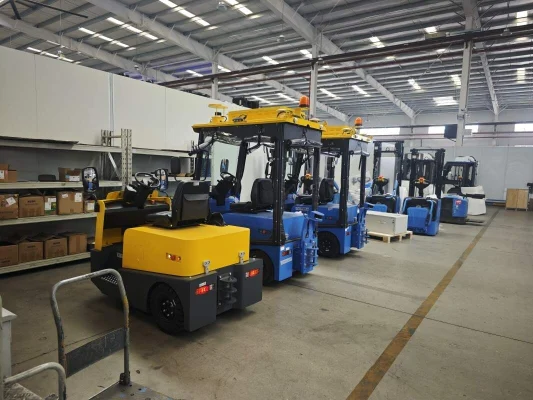
Procurement should specify what the supplier must deliver in writing. Request a data sheet listing battery chemistry, voltage, capacity, BMS protections, charger model, input requirements, and connector type. Ask whether commissioning includes a charging test and a runtime check under an agreed duty cycle. Define how you will verify that the delivered configuration matches the offer.
Acceptance checks worth agreeing on include:
- Confirming the battery and charger model numbers against the purchase order.
- Recording the state of charge and charging time during a supervised charge.
- Running a defined work cycle and recording energy use or runtime.
- Checking that BMS alarms, charger fault codes, and emergency stop functions work as described.
Also clarify warranty terms covering the battery, charger, and their interaction. Ask what maintenance the charger needs and what spare parts are recommended. If the truck will operate in a cold store or a hot environment, ask how the supplier handles temperature-related limits and whether the standard configuration is suitable.
When you request a quote, share your actual load weight, lift height, aisle width, floor conditions, shift pattern, and available electrical supply. These details let the supplier size the battery and charger honestly instead of guessing. If you are considering a four-wheel counterbalance electric truck from our range, we can review those inputs with you and confirm which configurations our technical documentation supports.
Frequently Asked Questions
Does a larger battery always mean longer runtime?
Not automatically. Runtime depends on usable capacity, discharge limits, temperature, and how hard the truck works. A larger pack may help, but the BMS settings and duty cycle determine what you actually get. Ask the supplier to explain the assumptions behind any runtime figure.
Can I use an existing charger with a new lithium battery truck?
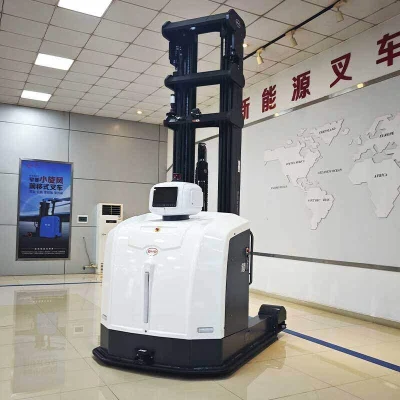
Only if the charger’s output profile, connector, and communication are compatible with the battery and its BMS. Using a mismatched charger can cause faults or unsafe charging. Confirm compatibility in writing before relying on existing equipment.
What information should I provide when asking for a quote?
Provide load weight, lift height, aisle width, floor and ramp conditions, hours per shift, charging windows, and the available electrical supply. These details let the supplier size the battery and charger to your operation rather than a generic assumption.
How do I verify the delivered battery and charger match the offer?
Compare model numbers and nameplate data against the purchase order, and include a supervised charging test and a defined work cycle in acceptance. Record the results and keep them with the commissioning documents.