What Industrial Buyers Should Verify in a Lithium Ion Forklift Battery Quote: Capacity, Charger Compatibility, and Warranty Terms
News 30/10/2026
A lithium ion forklift battery quote is only useful when it states the conditions behind each number. Two quotes can show the same nominal capacity and still describe very different power systems, because voltage, discharge behavior, charger pairing, and warranty exclusions all shape what the battery will actually deliver on a four-wheel counterbalance electric forklift. Before comparing prices, buyers should confirm that every quote describes the same duty cycle, the same charger arrangement, and the same service obligations. This guide covers the items to verify, the questions to send back to the supplier, and the claims that should be documented rather than assumed.
Capacity: Read the Numbers Together, Not in Isolation
Capacity appears in several forms on a lithium ion forklift battery quote, and each answers a different question. Ask the supplier to label each figure clearly and to state the test conditions behind it.
Voltage and rated capacity
Rated capacity is normally expressed in ampere-hours at a stated voltage, and the pair determines the nominal energy content. A quote that lists ampere-hours without voltage, or voltage without the corresponding capacity, cannot be compared with another offer. Confirm that the nominal voltage matches the forklift’s traction system and that the capacity figure is quoted at a defined discharge rate rather than left open.
Usable capacity and depth of discharge
Lithium ion packs are usually managed so that only part of the nominal capacity is used in normal operation. Ask what usable capacity the supplier expects the battery management system to make available, and what depth of discharge the figure assumes. This matters more than the headline number when you estimate how long a truck can run between charging opportunities.
Duty cycle assumptions
Runtime depends on load weight, lift height, travel distance, ramp gradients, and how much of the shift involves hydraulic work. A capacity figure quoted without duty cycle assumptions is a starting point, not a runtime promise. Provide the supplier with your truck model, average and peak loads, lift heights, and shift pattern, then ask them to state the assumptions behind the recommended pack. Treat the result as an engineering estimate to be checked during a trial period, not a guaranteed shift length.
Physical fit and weight
Confirm the battery compartment dimensions, the retention method, and the counterweight implications of the pack. A lithium pack may differ in mass from the lead-acid battery it replaces, and the truck’s stability rating depends on the installed configuration. Ask the supplier to confirm compatibility with your specific four-wheel counterbalance electric forklift model and to state any change in rated load capacity that results from the swap.
Charger Compatibility and the Charging Arrangement
The charger is part of the power system, not an accessory. A battery quote that leaves charger specifications vague is incomplete, because charging behavior affects availability, battery life, and electrical safety.
Voltage, current, and communication
Ask for the charger’s output voltage range, maximum charge current, and connector type. Confirm whether the charger communicates with the battery management system and what happens if communication is lost. If you intend to use an existing charger, request written confirmation that it is compatible with the new pack, including any required firmware or configuration changes. Do not assume that a charger sized for a lead-acid battery will suit a lithium pack.
Opportunity charging and shift patterns
Lithium ion packs are often described as suitable for opportunity charging, but the acceptable pattern depends on the cells, the management system, and the charger. Ask the supplier to describe the charging profile they support, whether partial charges between breaks are acceptable, and any limits on charging frequency or state of charge. Match these answers to your actual break schedule and shift length rather than to a generic claim.
Facility requirements
Verify the input power available at the charging location, the charger’s physical footprint, ventilation or thermal management needs, and any site rules covering lithium battery charging areas. Where the quote includes installation, clarify who supplies cabling, protective devices, and any local electrical work.
Warranty Terms and the Commercial Details Behind Them
Warranty language is where quotes diverge most, and where vague wording becomes expensive later. Read the terms as a set of conditions, not a headline duration.
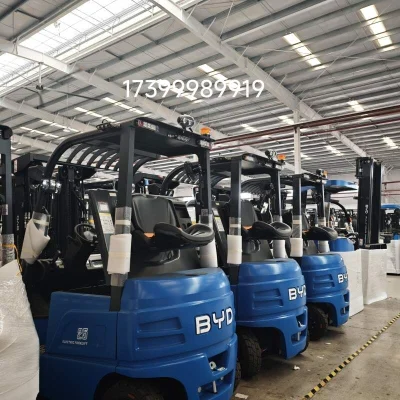
What is covered and what is measured
Ask whether the warranty covers capacity retention, premature failure, or both, and how each is measured. If capacity retention is covered, request the test method, the threshold, and who performs the assessment. Confirm whether the charger and other system components carry separate warranties with different durations.
Exclusions and operating conditions
Typical exclusions include operation outside specified temperature ranges, unauthorized chargers, physical damage, immersion, and modifications. Ask the supplier to list the conditions that void coverage in plain terms, and check that your operating environment and charging practice fall inside them. If your site runs multiple shifts in a hot or cold area, confirm the permitted temperature window before signing.
Service response and spare parts
Clarify the claims process, expected response times, who performs diagnostics, and whether replacement units are shipped or installed. Ask about the availability of spare packs or modules and the expected lead time. These details belong in the quote or its attached terms, not in a verbal assurance.
Quote comparison checklist
Use a single table to compare offers on equal terms:
- Nominal voltage, rated capacity, and usable capacity with stated test conditions
- Battery management system functions and communication protocol
- Charger model, output range, connector, and compatibility confirmation
- Physical dimensions, mass, and confirmation of fit with the truck model
- Warranty duration, covered failures, measurement method, and exclusions
- Delivery, installation scope, commissioning, and training included
- Service response terms and spare part availability
Where a supplier cannot answer a point, record it as an open item rather than filling the gap with an assumption. Buyers considering a four-wheel counterbalance electric forklift with a lithium battery can send their load data, lift heights, shift pattern, and charging location to the supplier and ask for a configuration proposal that addresses each item above.
Frequently Asked Questions
Can I compare quotes by price per kilowatt-hour alone?
No. Price per kilowatt-hour ignores usable capacity, charger inclusion, warranty conditions, and service terms. Compare total system cost against the same duty cycle and charging arrangement.
Does a higher ampere-hour rating always mean longer runtime?
Not necessarily. Runtime also depends on voltage, usable capacity, discharge limits, and the actual work performed. Ask the supplier to explain the assumptions behind the rating.
What should I ask about charging before accepting a quote?
Request the charger specification, confirmation of compatibility with the battery management system, the supported charging pattern, and the site power and ventilation requirements.
How do I judge whether warranty terms are strong enough?
Check what is covered, how it is measured, which operating conditions void coverage, and how service is delivered. Written terms that name the test method and response process are more useful than a long duration stated alone.