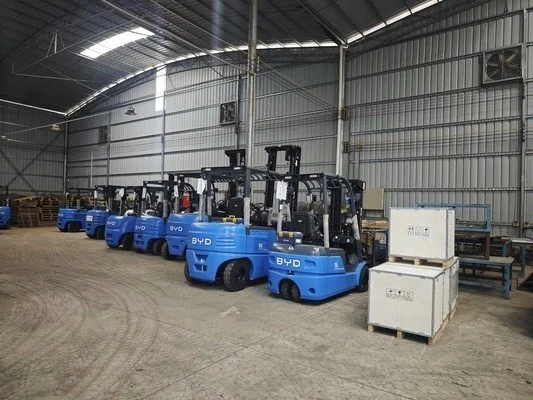
Site Power Capacity Planning: Preparing Facility Electrical Infrastructure Before a Lithium Forklift 3 Ton Arrives
News 31/10/2026
A lithium forklift 3 ton unit changes what the facility must supply. The charger draws power on a schedule, the battery needs a defined charging zone, and the electrical panel must carry that load without disturbing other equipment. Before delivery, confirm four things: the charger input rating from the manufacturer’s data sheet, the available capacity at the intended panel, the charging location and its ventilation, and the sequence in which the truck will be commissioned. This article walks through that preparation as a planning checklist rather than a set of equipment recommendations.
Start With the Charger Data Sheet, Not the Truck Rating
The truck’s 3-ton capacity describes what it can lift, not what the building must deliver. Electrical planning begins with the charger. Ask the supplier to confirm the charger model matched to the battery, its input voltage and phase, its maximum input current, and whether it is a conventional or opportunity/fast charger. Those figures, not the truck’s lift rating, set the circuit size.
Where the data sheet is incomplete, request it before ordering the electrical work. A charger selected later may not match the panel capacity already installed. Note that charger input current varies with battery state of charge and charger design, so plan around the maximum input current the manufacturer states rather than an average.
Assess the Panel and Circuit Before Scheduling Work
Walk the route from the proposed charging position back to the distribution board. The practical questions are usually simple, but they are easy to defer until the truck is on site.
- Spare capacity: Does the panel have a spare breaker position and enough headroom under its main breaker rating? A qualified electrician should make this determination.
- Voltage and phase: Does the site supply match the charger’s input requirements? Single-phase and three-phase chargers are not interchangeable.
- Cable route: Is there a protected path from panel to charging point, and is the distance short enough that voltage drop stays acceptable?
- Protection and isolation: Will the circuit include the overcurrent protection and disconnection means the charger instructions require?
- Other loads: Will charging coincide with shift-start loads such as compressors, welders, or HVAC startup?
Electrical installation, breaker sizing, and cable selection are regulated work. Use a licensed electrician and follow local codes and the charger manufacturer’s installation instructions; this article does not substitute for either.
Plan the Charging Zone and Daily Operating Pattern
Electrical capacity and charging behavior are linked. A truck charged during breaks and between shifts places a different demand on the panel than one charged once overnight. Decide the intended pattern before finalizing the circuit.
Location and access
The charging position should keep the charger and cable clear of traffic lanes, allow the operator to connect and disconnect without stretching cables across walkways, and keep the connector protected when not in use. Confirm the charger’s mounting and clearance requirements from its manual.
Ventilation and environment
Follow the charger and battery documentation on ventilation, ambient temperature limits, and any restrictions on charging in dusty or damp areas. Lithium battery systems have different charging and storage guidance than lead-acid, so use the documentation supplied with the specific battery rather than general assumptions.
Operating pattern and opportunity charging
If the plan relies on charging during short breaks, confirm with the supplier that the battery and charger combination supports that pattern. If charging is confined to an overnight window, check that the window is long enough given the charger’s stated capability. Neither answer should be inferred from the truck’s 3-ton rating.

Commissioning Sequence and Common Planning Errors
A short sequence reduces the chance of a truck arriving before the site can charge it.
- Confirm the exact truck configuration and matched charger with the supplier.
- Obtain the charger data sheet and installation instructions.
- Have a licensed electrician assess panel capacity, circuit, and cable route.
- Complete and inspect the electrical work, then test the circuit before the truck arrives.
- Commission the charger and battery according to the manufacturer’s instructions, and brief operators on the connection procedure.
Recurring errors include sizing the circuit from the truck rating instead of the charger, assuming a spare breaker position means sufficient capacity, planning a charging point far from the panel without checking voltage drop, and leaving ventilation and housekeeping until after installation. In an assumed warehouse scenario, a truck charged near a busy dispatch door may also need a layout change so cables never cross a pedestrian route.
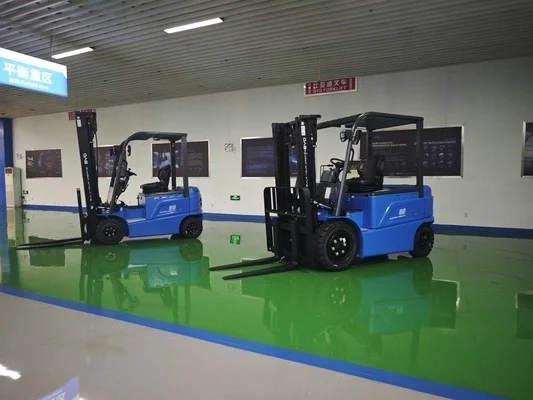
If your operation is considering a four-wheel counterbalance electric forklift, share the intended shift pattern, charging window, and site supply details with the supplier so the charger and configuration can be matched before electrical work begins. Specifications should come from the manufacturer’s technical documentation, and final electrical decisions rest with a qualified electrician.
Frequently Asked Questions
Does a lithium forklift 3 ton require a dedicated electrical circuit?
Often yes, but the answer depends on the charger’s input rating and the existing panel. Ask the charger manufacturer and a licensed electrician to confirm whether a dedicated circuit is needed at your site.
Can the truck charge from a standard wall outlet?
Only if the charger is designed for that supply and the circuit can carry its input current. Many industrial chargers require a higher-capacity supply. Check the charger data sheet rather than assuming outlet compatibility.
How much panel capacity should be reserved?
Reserve capacity based on the charger’s maximum input current plus the site’s load profile, as determined by a qualified electrician. No single figure applies to every facility.
What should be confirmed before the delivery date?
Confirm the matched charger model, its electrical requirements, the completed and tested circuit, the charging position, and the commissioning procedure. If any item is unresolved, adjust the delivery schedule rather than improvising on arrival.