Specifying a Four-Wheel Counterbalance Electric Forklift: Battery Capacity and Duty Cycle Checks Before Purchase
News 21/10/2026
When sourcing a four-wheel counterbalance electric forklift, battery capacity and operational duty cycle sit among the most critical spec decisions. Mismatched specs lead to unexpected downtime, unnecessary extra costs, or underutilized equipment that hurts your bottom line.
Core Relationships Between Battery Capacity and Operational Duty Cycle
Duty cycle describes how often your forklift operates each day, average load weight, travel distance between stops, and common work environment conditions like ramp grades or ambient temperature. Battery capacity directly determines how long your forklift can run before a recharge is needed. Higher capacity batteries support longer continuous operation, but add upfront purchase cost and extra vehicle weight that can impact maneuvering in tight spaces.
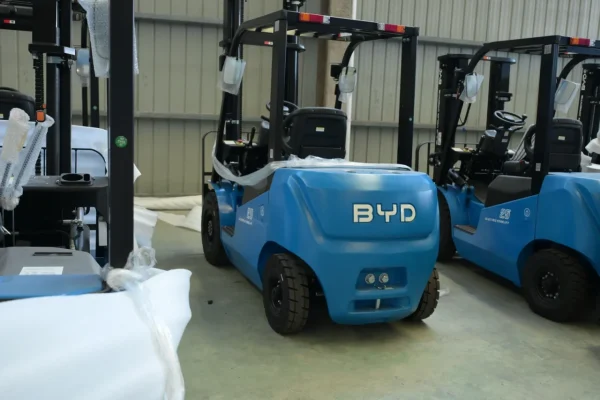
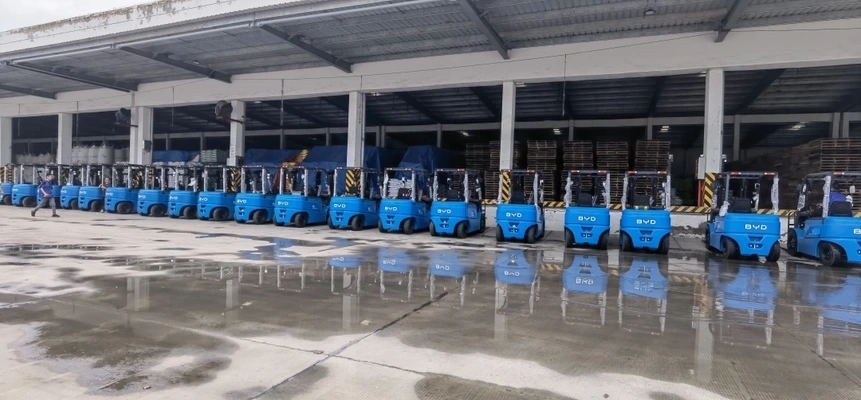
BYD lithium-ion four-wheel counterbalance electric forklifts offer multiple capacity options to fit different operational profiles. Matching capacity to your duty cycle balances upfront investment and long term operational reliability.
Step-by-Step Pre-Purchase Verification Checks
Map Your Daily Operational Profile
Start by documenting core operational details your team requires:
- Total daily operating hours across all shifts
- Average and maximum load weight your team handles regularly
- Typical travel distance between loading and storage locations
- Frequency of lift cycles per hour
- Ambient temperature ranges your work site sees year round
Lower daily operating hours (under 4 hours per day) fit smaller capacity batteries, while multi-shift operations with continuous use require higher capacity options. Cold environments reduce effective battery output, so you need adjust capacity upward 10 to 15 percent to offset this effect.
Colder operating temperatures slow chemical reactions inside battery cells, cutting available runtime even with a fully charged pack. The 10 to 15 percent adjustment covers this natural efficiency loss, ensuring your forklift meets shift length requirements without unexpected mid-shift power outages. Frequent loaded travel across steep ramps also increases consistent battery draw, which reduces total runtime per charge. This factor, already noted as part of your duty cycle mapping, requires an additional upward adjustment to capacity if your site includes regular ramp use.
Confirm Capacity and Charging Infrastructure Alignment
Next, cross check your selected battery capacity against your on-site charging setup. Opportunity charging during break periods lets you use a smaller capacity battery, while no mid-shift charging access means you need enough capacity to cover your full work shift on one charge.
Ask your supplier to share discharge curves matching your typical load and operating conditions. These curves show how much effective runtime you can expect at different load levels, helping you confirm your selected capacity meets your needs.
Many operations overlook facility weight constraints when selecting higher capacity batteries. Larger capacity packs add extra weight to the entire forklift, which may require reinforced flooring in high-traffic or charging areas to meet site safety requirements. Confirming these site constraints early avoids costly modifications after delivery.
Share your full operational profile with our team to get matched with the correct BYD four-wheel counterbalance electric forklift battery option that fits your site constraints.
Frequently Asked Questions
Does higher battery capacity improve my forklift performance?
Higher capacity extends runtime, but does not directly improve lifting speed or maximum load rating your forklift can handle. Extra capacity adds weight to the vehicle, which can reduce available maneuverability in narrow aisle spaces.
Can I upgrade my battery capacity after purchase?
Many four-wheel counterbalance electric forklift designs support battery upgrades, but you need confirm frame and power system compatibility before committing any changes. Most buyers avoid this step by matching capacity to your needs during initial procurement.
How does lithium-ion battery performance stack against lead acid alternatives?
Lithium-ion batteries outperform lead acid alternatives on multiple key metrics: faster charging, longer service life, and lower maintenance requirements. BYD lithium-ion models also deliver consistent voltage output across full discharge cycles, maintaining consistent performance through your entire work shift.