Verifying Rated Capacity at Maximum Lift Height: A Four-Wheel Counterbalance Electric Forklift Checklist Buyers Can Apply
News 02/11/2026
Rated capacity on a four-wheel counterbalance electric forklift is a conditional figure, not a single number. The capacity shown on the data plate applies at a stated load center and, in most published tables, at a stated lift height. Buyers who compare machines only by headline capacity risk choosing a truck that cannot safely handle the load at the racking level where it will actually work. This checklist covers the documents to request, the questions to put to the supplier, and the points to confirm before accepting delivery.
Why Capacity Changes With Lift Height
A counterbalance forklift stays upright because the load and the counterweight act on opposite sides of the front axle. When the carriage is raised, the load’s center of gravity moves higher and the machine’s stability margin changes. Manufacturers therefore publish capacity ratings that describe what the truck can handle under defined conditions, typically a load center distance and a lift height.
Two consequences matter during procurement. First, a capacity figure quoted without its load center and height context tells you very little. Second, the capacity at maximum lift height can be lower than the capacity at ground level, so the number you need depends on your highest pick and place positions. The exact reduction depends on the model’s mast and stability design; it should come from the manufacturer’s technical documentation, not from a general rule of thumb.
Load center is part of the same statement
Load center is the horizontal distance from the vertical face of the forks to the load’s center of gravity. A rating stated at one load center does not automatically apply to a load whose center of gravity sits farther out, such as a long crate or an off-center pallet. Ask how capacity changes when your real loads exceed the stated load center, and whether a derating table is available.
Documents and Data to Request Before Quotation
The goal at this stage is to replace brochure headlines with model-specific data. The following items are reasonable to request; where a supplier cannot provide them, treat the gap as a risk to resolve rather than an assumption to fill in.
- Capacity plate data: rated capacity, load center, and the lift height or mast configuration to which each rating applies.
- Mast specification: type and stages, lowered and extended heights, and free lift if the application needs it.
- Capacity derating information: how rated capacity changes across the lift range, and whether attachments such as sideshifters affect it.
- Battery and charger details: voltage, capacity, and charging profile, so that shift patterns and charging windows can be matched to the truck.
- Dimensions and weights: overall length, width, turning radius, and service weight, which affect aisle planning and floor loading.
- Documentation language: confirmation that the plate and manual supplied with the delivered unit match the quotation.
Provide your own operating data alongside the request: heaviest load, load dimensions and center of gravity, highest and lowest handling heights, aisle width, floor condition, ramp gradients, and daily shift pattern. These inputs let the supplier check a specific configuration instead of quoting a generic model.
Acceptance Checks When the Forklift Arrives
Verification does not end with the quotation. The delivered machine should be checked against the agreed specification before it enters service. The checks below are practical steps a buyer can organize; they do not replace any inspection or commissioning procedure the supplier is required to perform.
Compare the plate with the purchase documents
Read the capacity plate on the truck and compare model designation, rated capacity, load center, battery voltage, and mast details with the quotation and order confirmation. Discrepancies should be resolved in writing before acceptance.
Confirm the mast and attachment configuration
Check that the mast stages and lift height match the order, and that any attachment fitted is the one specified. If an attachment was added, ask whether the capacity plate reflects it.
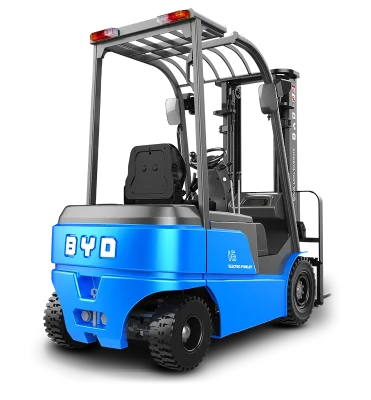
Test at working height with a known load
A controlled trial using a load of known weight and dimensions, raised to the highest working level, lets you observe stability and reach under realistic conditions. Keep the trial within the rated capacity at that height and follow the supplier’s operating instructions. Record what was tested and at which height.
Verify charging and daily checks
Confirm that the charger, connectors, and battery monitoring arrangements match the agreed configuration, and that operators receive the daily inspection routine that applies to the delivered unit.
Frequently Asked Questions
Is the capacity on the plate valid at every lift height?
Not necessarily. The plate states capacity under defined conditions, usually including a load center and a height or mast configuration. Where capacity varies with height, the manufacturer’s derating information should be consulted rather than assuming the headline figure applies throughout the lift range.
What if my loads exceed the stated load center?
The rated capacity may no longer apply. Ask the supplier whether a derating table exists and what capacity remains at your actual load center and working height. If the answer is unclear, consider a different model or a load-handling change rather than accepting the headline rating.
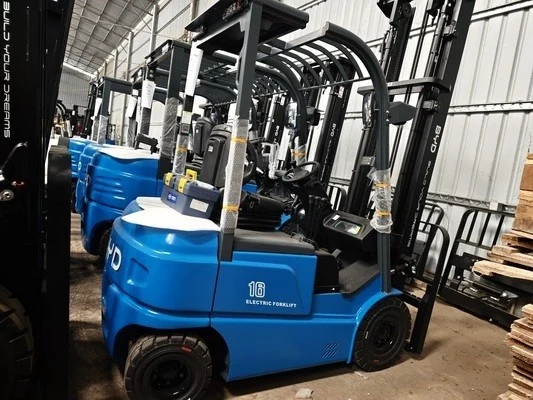
Can I verify capacity without special test weights?
A documented comparison of the plate, quotation, and mast specification is the first step and requires no weights. A working-height trial with a known load gives additional confidence, but it should be planned with the supplier and kept within rated limits. Do not improvise overload tests.
Which questions should go into the quotation request?
Ask for the rated capacity with its load center and height basis, the capacity at your maximum lift height, the effect of any attachment, and confirmation that the delivered plate will match the quotation. Include your load weights, dimensions, heights, aisle width, floor and ramp conditions, and shift pattern so the answer is specific to your operation.
If you are assessing a four-wheel counterbalance electric forklift, share your actual loads, lift heights, and site conditions with our team so the capacity and configuration can be checked against the manufacturer’s technical data before you commit.