Sizing a Four-Wheel Counterbalance Electric Forklift Battery Pack to Multi-Shift Duty Cycles: Questions Buyers Should Ask
News 01/11/2026
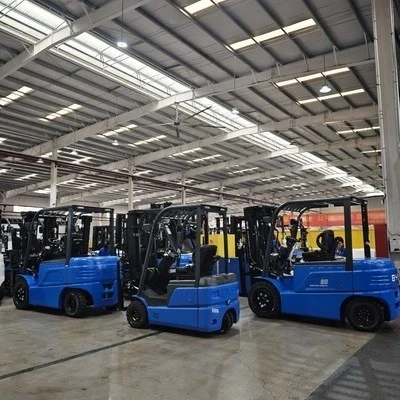
Battery capacity should be sized from the work the truck actually does, not from a single shift length. A four-wheel counterbalance electric forklift running two or three shifts may need one pack, a larger pack, or a planned opportunity-charging routine, and the answer depends on measured energy demand, charging windows, and the site’s electrical capacity. This procurement guide lists the questions buyers should ask before requesting a configuration, so the pack discussion starts from duty-cycle data rather than a guess.
Start With the Duty Cycle, Not the Shift Count
A shift is a calendar unit; a duty cycle is an energy unit. Two sites with the same shift pattern can place very different loads on a counterbalance forklift. Buyers should describe a typical and a busy day separately, because the busy day usually governs pack sizing.
- Operating hours per shift: actual powered time, excluding breaks and idle periods.
- Load weight distribution: typical loads, heavy loads, and how often the truck runs near its rated capacity.
- Lift height and frequency: how high loads go and how many lift cycles occur per hour.
- Travel distance and surface: route length, floor condition, ramps, and door thresholds.
- Attachment use: any hydraulic attachment adds demand beyond standard lifting.
- Ambient conditions: cold storage, outdoor work, or hot areas that affect battery behavior.
Where the site has no logged data, ask the supplier which assumptions will be used and how sensitive the recommendation is to those assumptions. A sizing exercise built on estimates should be labeled as provisional.
Questions About the Battery Pack and Charging Window
Multi-shift operation often fails at the charger, not at the truck. The pack must fit the available charging time, and the charger must fit the site’s power supply. Ask these questions before comparing configurations.
Capacity and usable energy
Request the nominal pack capacity and the usable energy the supplier expects under the site’s conditions. Confirm whether the figure assumes a new pack, a specific temperature range, and a defined depth of discharge. Do not accept a single capacity number without its test conditions.
Charging opportunity and break structure
List every window when the truck can be plugged in: shift changes, meal breaks, and overnight. Then ask whether the proposed pack and charger can restore enough energy in those windows. Opportunity charging during breaks can reduce the pack size needed, but only if the windows are reliable and the charger is positioned where operators will actually use it.
Charger power and electrical capacity
Confirm the charger input requirements, the available supply at the charging location, and whether several trucks charging at once will exceed the site’s capacity. Ask what happens during peak building load. This is a facilities question as much as a forklift question.
Battery management and monitoring
Ask what data the battery management system records and how the site can read state of charge, cycle history, and fault codes. For multi-shift fleets, access to this data supports planning and helps distinguish a sizing problem from an operational one.
Site Conditions That Change the Answer
Several conditions routinely shift a pack recommendation. Buyers should raise them early, because they can affect both capacity and the practical charging plan.
- Cold environments: low temperatures can reduce available energy and affect charging; ask how the supplier accounts for this.
- Ramps and uneven surfaces: sustained grade or poor floor conditions raise energy demand compared with flat indoor travel.
- High-lift work: frequent lifting to full height draws more energy than low stacking.
- Continuous heavy loads: near-rated loads reduce the margin available from a given pack.
- Limited charging space: a constrained charging area may rule out some opportunity-charging routines.
These are general considerations, not predictions of specific performance. The supplier should state which factors were included in the sizing calculation and which were not.
What to Put in the Inquiry and What to Verify on Delivery
A clear inquiry shortens the configuration discussion. Provide the site layout, shift schedule, load range, lift heights, surface and ramp details, charging location, and available electrical supply. State whether the truck will work indoors, outdoors, or in temperature-controlled areas. Ask the supplier to identify every assumption behind the recommended pack.
Before ordering, confirm the quoted pack capacity, charger model, charging method, and any site preparation the charger requires. Keep the sizing basis in writing so it can be reviewed if the operation changes.
On delivery, verify that the pack and charger match the agreed specification, that the battery management system reports correctly, and that operators have been shown the approved charging routine. Record baseline state of charge and operating hours so later changes in runtime can be compared against a known starting point. If the operation later adds a shift, a heavier product line, or new lift heights, revisit the sizing rather than assuming the existing pack still fits.
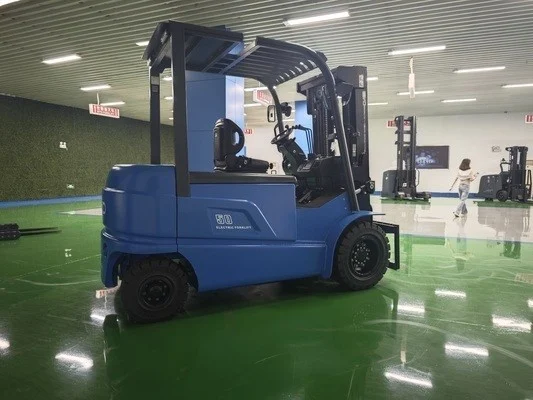
Buyers considering a four-wheel counterbalance electric forklift should share their actual duty cycle, load range, and lift height with the supplier so the pack and charging plan can be matched to the work. Configurations and specifications should be confirmed against the manufacturer’s technical documentation; this article does not provide model-specific figures.
Frequently Asked Questions
Can one battery pack cover two shifts?
Sometimes, but it depends on measured energy demand, the charging windows between shifts, and the site’s electrical capacity. A two-shift operation with long breaks and a suitable charger may need a different configuration than a continuous two-shift schedule with no charging opportunity.
Is opportunity charging a substitute for a larger pack?
It can reduce the required capacity when charging windows are dependable and the charger is accessible. It is not a substitute when breaks are unpredictable, the charger is far from the work area, or the electrical supply cannot support the charging load.
What if we do not have energy consumption records?
Provide the best available description of hours, loads, lift heights, routes, and surfaces, and ask the supplier to state the assumptions used. Treat the result as provisional and plan to review it after the truck is in service.
Which documents should accompany a battery sizing proposal?
Ask for the proposed pack capacity with its basis, the charger specification, the assumed duty cycle, and any site requirements. Written assumptions make the proposal easier to check and to update when operations change.