Specifying Zero Emission Forklift Capacity: Load Center and Attachment Effects on Four-Wheel Counterbalance Stability
News 21/10/2026
Zero emission four-wheel counterbalance electric forklifts deliver emission free operation and work well within indoor and enclosed warehouse spaces. Many buyers focus only on listed rated capacity when selecting units, but ignore two critical factors that shift actual safe lifting capacity: load center distance and mounted attachments. Mis-specification leads to overloading, reduced stability, and increased safety risks. This guide breaks down these effects and helps you select correct capacity matching your operation.
Core Concepts: Rated Capacity vs Effective Capacity
What Is Load Center Distance?
Load center distance marks horizontal distance from front vertical face of forks to center of gravity your carried load. Manufacturers set rated capacity based on a standard load center distance during factory testing. This standard creates baseline capacity all buyers can use as comparison reference. When your actual load center distance differs from this standard, effective safe capacity changes immediately.
When load center extends beyond the standard value, the load creates greater forward tipping moment around the front axle. The rear counterweight (battery pack on electric zero emission models) can no longer offset this moment safely, so you must reduce maximum load weight to maintain stability.
Key Factors That Alter Effective Capacity
Load Center Position Variations
Different cargo types create different load center positions. Standardized pallets often hold load centers close common standard values. But oversized cargo, unevenly distributed bulk goods, or custom sized loads shift load centers further forward than standard. This directly reduces effective capacity before you add any extra attachments.
What steps help you get correct specification? First, measure actual load center your most frequent loads. Second, share this measurement with your supplier. Third, ask supplier to provide adjusted capacity chart matching your actual load center. Never assume rated capacity printed on nameplate applies directly to your operation.
Attachment Effects on Stability and Capacity
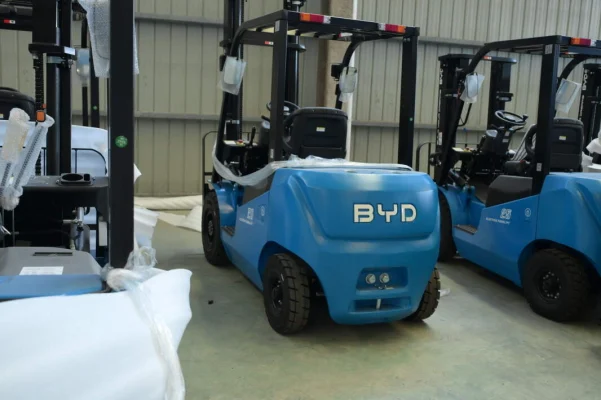
Most four-wheel counterbalance electric forklifts support various attachments expand functionality. Common attachments include side shifters, paper roll clamps, and fork positioners. Every attachment adds extra weight to the front carriage, and shifts combined center of gravity (attachment plus load) further forward. This creates higher tipping moment, just like extended load center, and reduces maximum safe capacity.
Factory integrated attachments come with pre-calculated capacity adjustments from manufacturers. Aftermarket attachments added after delivery require full re-evaluation of stability and capacity. Always disclose your planned attachment type during initial selection process. This lets supplier adjust base unit configuration maintain safe operation.
This table summarizes core items you need check during selection:
| Parameter/Item | Industry Concern | Verification Steps | Configuration Notes |
|---|---|---|---|
| Standard Load Center Distance | Base capacity calculation reference | Request official specification sheet from supplier | Standard value varies by manufacturer, confirm before selection |
| Actual Load Center Distance | Matches daily operating load types | Measure typical cargo center position your most common loads | Derate capacity automatically when actual distance exceeds standard value |
| Attachment Type and Weight | Stability and capacity adjustment | Share full attachment details with your supplier early in selection process | Factory integrated attachments include official capacity adjustments; aftermarket attachments require re-evaluation by manufacturer |
| Maximum Lifting Height | Capacity drops as lifting height increases | Confirm capacity at your required maximum lifting height | Higher lifting heights reduce mast rigidity and change overall center of gravity, requiring lower effective capacity |
Frequently Asked Questions
Can I rely on original nameplate capacity after adding an aftermarket attachment?
No. Aftermarket attachments add unaccounted weight and shift overall center of gravity. This reduces stability and lowers effective safe capacity. Always ask manufacturer engineering team re-evaluate capacity before you return the unit to regular operation.
Does lifting height impact effective capacity alongside load center and attachments?
Yes. As lifting height increases, mast extends upward and shifts overall center of gravity higher. Higher center of gravity reduces vehicle stability, even when load center and attachment configurations remain unchanged. Most manufacturers publish capacity adjustments across different lifting heights, so confirm your effective capacity matches your maximum required lifting height.
Do zero emission counterbalance models handle capacity adjustments differently than fossil fuel models?
Core stability principles stay identical across all energy types. But zero emission four-wheel counterbalance models use large lithium-ion battery packs as rear counterweight. Battery weight is fixed, so capacity adjustments can not rely on adding or removing rear counterweight to match new load conditions. Always confirm all adjustments with your BYD supplier before finalizing your order.
Before you reach out to discuss your forklift needs, prepare these key details:
- Maximum load weight you need lift during daily operation
- Average actual load center distance of your most common cargo
- Type and total weight of any attachment you plan install
- Maximum lifting height your operation requires
- Minimum aisle width within your facility
Share these details with our team, we will help you specify correct BYD four-wheel counterbalance electric forklift matching your operational requirements.