1.5 ton electric forklift: Attachment and Fork Dimension Checks That Preserve Rated Capacity on Four-Wheel Counterbalance Trucks
News 01/11/2026
A 1.5 ton electric forklift is rated at 1,500 kg under a defined set of conditions, and those conditions rarely survive contact with real work. Bolt on a side shifter, add longer forks, or move the load centre outward, and the truck still looks the same while its safe working load quietly falls. The checks below focus on the two changes most often made after delivery — attachments and fork dimensions — and explain how each one shifts the capacity you can actually use on a four-wheel counterbalance electric forklift.
One point matters before any number: rated capacity belongs to the truck-and-attachment combination, not to the chassis alone. Any figure you calculate here is an estimate to discuss with the manufacturer. The data plate and the supplier’s capacity chart govern what the truck may lift.
Why the Data Plate Reflects a Specific Configuration
A capacity plate is not a general statement about strength. It records the load the truck can handle at a stated load centre, usually measured from the front face of the forks, at a stated lift height, with a stated attachment fitted. Change any of those inputs and the plate no longer describes your machine.
Three variables do most of the work:
- Load centre. The horizontal distance from the fork face to the load’s centre of gravity. A standard pallet load sits close to the fork face; a deep load or a spacer pushes the centre outward.
- Load distance. Attachments and fork extensions add their own thickness and offset, moving the load further from the truck.
- Residual capacity. The load a truck can still handle once an attachment or non-standard fork is fitted, expressed at a specific load centre and height.
The underlying reason is leverage. Load weight multiplied by distance from the front axle produces a tipping moment. Move the load outward and the moment grows even when the mass stays the same, so the truck must be de-rated to keep stability margins intact.
Attachment Checks That Protect Residual Capacity
Attachments are where capacity is most often lost without anyone noticing. The following checks apply to common bolt-on and integrated attachments on a four-wheel counterbalance truck.
Confirm the attachment’s own weight and load distance
Every attachment adds mass ahead of the carriage and pushes the load forward. Ask the supplier two questions: how much does the attachment weigh, and how much does it increase load distance? Both figures are needed before any capacity discussion. Without them, no honest de-rating is possible.
Obtain a residual capacity chart, not a single number
A chart showing capacity at several load centres and lift heights is far more useful than one headline figure. If the attachment supplier and the truck manufacturer are different companies, the combination must be assessed together. A truck rated 1,500 kg without an attachment will not carry 1,500 kg with one fitted.
Check hydraulic and electrical demand
Attachments such as side shifters or clamps need extra hydraulic flow, and some need an additional function. Confirm the truck’s hydraulic system and battery capacity can support the attachment across a full shift, and confirm whether the attachment changes the truck’s overall dimensions enough to affect aisle width. These are specification questions to raise with the supplier rather than assumptions to make.
Verify the plate matches the fitted configuration
After fitting, the truck should carry a capacity plate reflecting the actual attachment and fork set. A truck in service with an attachment but an unchanged plate is a documentation gap worth closing before the next shift.
Fork Dimension Checks and Their Effect on Load Centre
Forks are easy to treat as consumables, but their length, thickness, and spacing all feed into the capacity calculation.
Fork length versus load depth
Forks should support the load across most of its depth. Forks that are too short concentrate load near the tips and encourage the load’s centre of gravity to sit further forward than intended. Forks that are much longer than needed add weight and, in tight aisles, increase the risk of contact with racking. Match fork length to the pallet depth you actually handle.
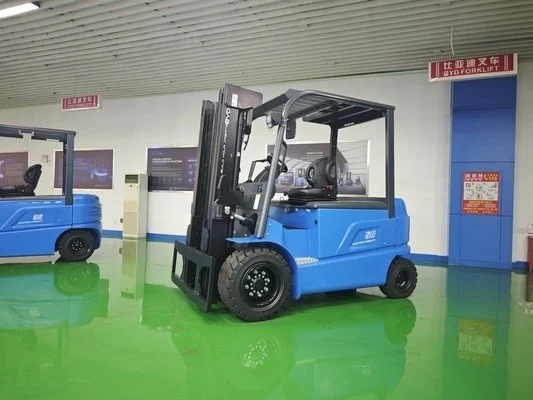
Fork thickness and the carriage interface
Fork thickness affects both strength and the vertical position of the load. A fork set with different dimensions from the original may not be compatible with the carriage or the attachment, and the resulting stack-up can change load distance. Confirm fork class, thickness, and mounting dimensions against the truck’s documentation.
Fork spacing and load stability
Spacing should suit the pallet and the load’s centre of gravity. Uneven or excessively wide spacing can reduce stability even when total weight is within the rating. Where loads vary, a written rule on spacing and fork selection prevents improvisation at the aisle.
Wear and inspection
Fork wear, tip deflection, and cracks reduce the safe working condition of the truck. A routine inspection routine — visual check before each shift and a more detailed inspection at intervals set by your maintenance plan — is part of preserving capacity in practice, not a separate concern.
Turning Checks into a Workable Selection Decision
Use the following sequence when specifying a 1.5 ton electric forklift or reviewing an existing one. It keeps the discussion anchored to verifiable inputs.
- Record the real load. Weight, dimensions, pallet depth, and where the centre of gravity sits.
- Record the real lift. Maximum lift height and the height at which the heaviest loads are handled, since capacity often falls as height rises.
- List attachments and fork specifications. Include attachment weight and added load distance where the supplier provides them.
- Request the residual capacity chart covering your load centre and lift height combination.
- Check the aisle and floor. Channel width, ground conditions, and any ramps or slopes affect whether a four-wheel counterbalance truck suits the site at all.
- Confirm the plate after fitting. The delivered configuration should match the documentation.
A short table helps frame the trade-offs, using placeholder values that must be replaced with your supplier’s verified figures:
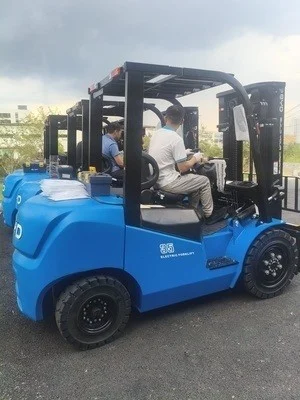
| Configuration | What changes | What to verify |
|---|---|---|
| Standard forks, no attachment | Baseline load centre | Data plate rating at your lift height |
| Side shifter fitted | Added weight, increased load distance | Residual capacity chart from supplier |
| Longer forks | Greater fork weight, changed load position | Fork class, carriage compatibility, revised rating |
| Attachment plus long forks | Combined offset and weight | Joint assessment by truck and attachment suppliers |
If you are evaluating a four-wheel counterbalance electric forklift and plan to use attachments, share your load weight, load centre, lift height, and intended attachment with the supplier before ordering. That information is what allows a configuration to be matched to your work rather than guessed at.
Frequently Asked Questions
Does fitting a side shifter always reduce capacity?
It usually does, because the attachment adds weight ahead of the carriage and moves the load further from the truck. The amount depends on the specific attachment and truck combination, so the supplier’s residual capacity chart is the figure to rely on.
Can I use longer forks to reach deeper loads?
Longer forks can help with deep loads, but they add weight and may change load distance and carriage compatibility. Check the revised rating and confirm the fork class suits the truck before putting them into service.
Is the data plate rating valid at every lift height?
No. Capacity is normally stated at a specific load centre and height. Many trucks have reduced capacity at higher lifts, so check the chart covering the heights where you handle your heaviest loads.
What should I send a supplier when asking about a 1.5 ton truck?
Provide load weight and dimensions, load centre, maximum lift height, the attachment or fork type you intend to use, aisle width, floor and slope conditions, and shift pattern. Those inputs let the supplier confirm whether the configuration suits your site and what capacity remains.