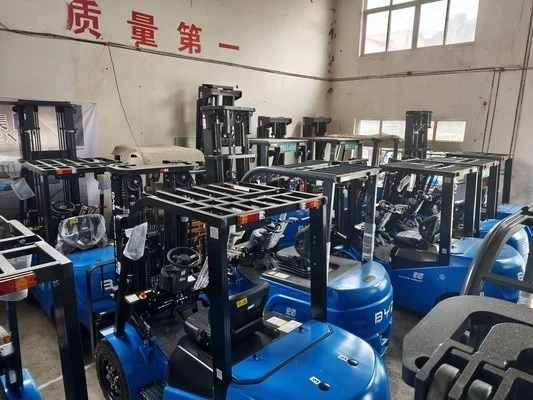
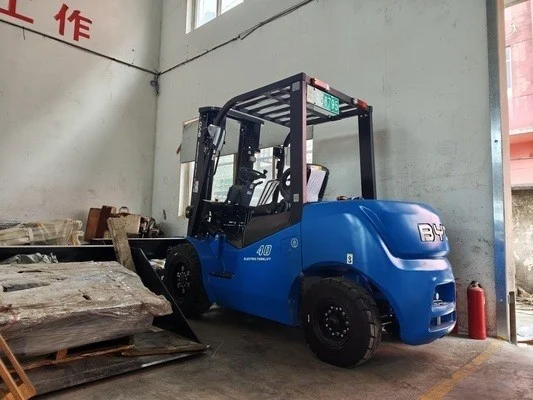
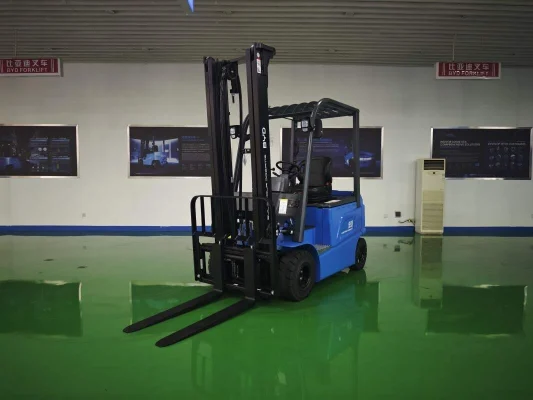
1.5 ton electric forklift: How to Plan a Battery Rotation and Charging Schedule Around Two-Shift Operations
News 13/11/2026
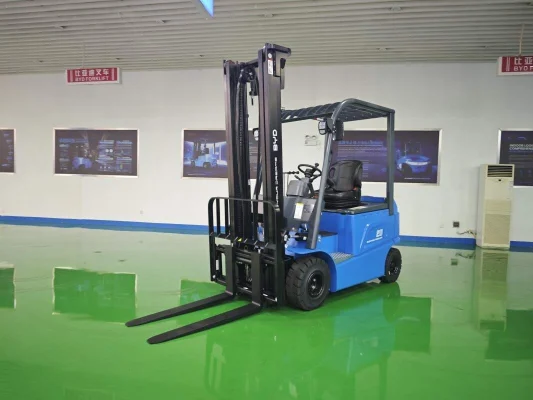
A 1.5 ton electric forklift working two shifts a day usually needs a battery plan, not just a charger. The core decision is whether one battery can cover both shifts with opportunity charging, or whether a second battery and a swap routine are safer. The answer depends on measured energy use per shift, charger output, break structure, and the battery chemistry and management system the manufacturer supplies. This guide walks through that planning process step by step, with the assumptions stated openly so you can replace them with your own numbers.
Start With the Duty Cycle, Not the Battery Label
Battery runtime figures quoted on a datasheet rarely match real operation. Before choosing a rotation or charging pattern, estimate how much energy each shift actually draws. The variables that matter most on a four-wheel counterbalance electric forklift are:
- Load and lift height: heavier loads and higher lifts draw more current. Confirm the rated capacity at your actual load center and lift height, not just the headline 1.5 ton rating.
- Travel distance and surface: long runs on smooth concrete differ from short cycles on ramps or uneven floors.
- Attachment use: clamps, rotators, and side shifters add hydraulic demand and reduce remaining capacity.
- Operator habits: aggressive acceleration and simultaneous lift-and-travel increase consumption.
- Ambient conditions: extreme heat or cold affects both usable capacity and charging behavior.
A practical method is to log state of charge at the start and end of several representative shifts, then average the drop. If that data does not exist yet, ask the supplier what test conditions their runtime figures assume, and plan a pilot period before committing to a single-battery schedule.
Why the 1.5 Ton Class Deserves Its Own Plan
Light and medium duty trucks are often bought in small fleets where one charger serves several vehicles, and where the same truck may do loading, put-away, and trailer work in one shift. That mixed pattern makes average consumption harder to predict than in a single-task operation. Treat any published runtime as a starting reference and verify it against your own cycle.
Choose Between Opportunity Charging and Battery Swapping
Two-shift operations generally fall into two patterns. Neither is universally better; each has conditions that make it workable.
Opportunity Charging
With opportunity charging, the truck is plugged in during scheduled breaks, shift changes, and idle periods. It suits operations where the truck returns to a fixed area frequently and the battery management system permits partial charging without harm. Lithium-ion batteries are commonly described as more tolerant of partial charging than flooded lead-acid types, but the acceptable charging window, current limits, and temperature range must come from the battery and charger documentation.
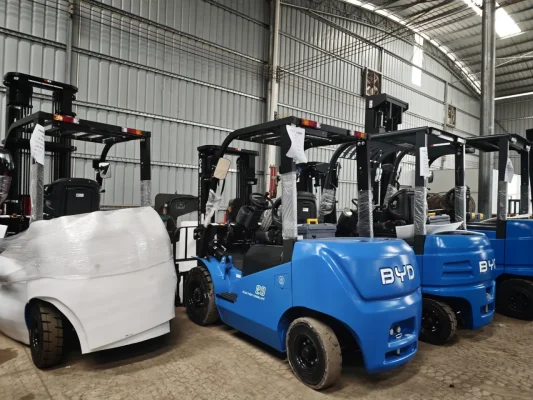
What to check before relying on this pattern:
- Charger output versus the energy consumed per shift, so breaks can replace what the truck uses.
- Whether the battery management system allows charging during short breaks without reducing available capacity later in the day.
- Charger location and cable routing, so plugging in does not interrupt traffic flow.
- Ambient temperature at the charging point, especially near docks or cold storage doors.
Battery Rotation and Swapping
A rotation plan keeps one battery in the truck while a second charges, then exchanges them at a defined point. It provides a predictable reserve but adds handling equipment, floor space, and a procedure operators must follow consistently. It is often the more conservative choice when shifts are long, consumption is high, or charging windows are short.
What to check before relying on this pattern:
- Battery weight and the lifting method: confirm the swap equipment and its rated capacity with the supplier.
- Whether the truck and battery were designed for exchange, including connector type and compartment access.
- Written swap steps, including isolation and connector handling, plus operator training.
- Storage conditions and temperature at the battery bay.
Comparison at a Glance
| Planning factor | Opportunity charging | Battery rotation | What to confirm with the supplier |
|---|---|---|---|
| Energy per shift | Must be replaceable during breaks | Reserve battery covers the gap | Measured consumption and charger output |
| Floor space | Charging point near work area | Charging bay plus swap area | Layout and traffic flow |
| Operator effort | Plug-in discipline | Swap procedure and training | Written procedure and training support |
| Temperature exposure | Charging point conditions | Storage bay conditions | Permitted operating, storage, and charging ranges |
| Cost structure | One battery, higher charger use | Second battery and handling equipment | Configuration and pricing on quotation |
The table lists decision factors rather than recommended values. Specific figures belong in the manufacturer’s documentation and your quotation.
Build the Schedule and Validate It
Once the pattern is chosen, write the schedule down and test it. A workable routine covers four elements: when charging happens, who does it, what triggers a swap, and how exceptions are handled.
A Step-by-Step Planning Sequence
- Measure. Record state of charge across at least several full shifts under normal conditions.
- Map the breaks. List every window long enough to add meaningful charge, including shift change and meal breaks.
- Match charger to window. Confirm the charger can deliver useful energy in the available time at the permitted current.
- Set a swap trigger. Define the state of charge at which the truck must be exchanged or taken out of service, based on the battery management system readout.
- Assign responsibility. Name who plugs in, who performs swaps, and who records the readings.
- Review weekly. Compare planned and actual state of charge and adjust the schedule before problems appear.
Common Mistakes
- Treating the datasheet runtime as a guarantee rather than a reference figure.
- Assuming a charger will fit a break without checking its output and the battery’s acceptance limits.
- Ignoring temperature at the charging point, particularly near doors and cold areas.
- Letting charging discipline depend on memory rather than a checklist or a visible reminder at the charging point.
- Buying a second battery without confirming the truck and handling equipment support safe exchange.
If your operation involves cold storage, ramps, or attachments, the energy picture changes and the schedule must be revisited. In those cases, share the actual load, lift height, aisle width, floor conditions, and shift pattern with the supplier so the configuration can be checked against real limits rather than general assumptions.
Frequently Asked Questions
Can one battery really cover two shifts on a 1.5 ton electric forklift?
It can in some operations, but only when measured energy use per shift is low enough that break-time charging replaces it. There is no general answer, because runtime depends on load, lift height, travel, attachments, and temperature. Measure first, then decide.
Is opportunity charging safe for the battery?
That depends on the battery chemistry, the management system, and the charger. Partial charging is common in lithium-ion fleets, but the permitted charging window and temperature range must be confirmed in the manufacturer’s documentation. Do not assume any pattern is acceptable without that confirmation.
How often should batteries be rotated?
The trigger should be a state of charge threshold or a fixed point in the shift, set from your own measurements. A fixed clock time works only if consumption is consistent. Review the trigger after the first weeks of operation and adjust it as the duty cycle changes.
What data should I collect before asking for a quotation?
Gather the load weight and load center, required lift height, aisle width, floor and ramp conditions, shift length and break pattern, ambient temperature at the work and charging areas, and any attachments. These determine whether a four-wheel counterbalance electric forklift configuration fits, and how the battery and charging plan should be set up.
Planning a two-shift battery routine is mostly a measurement exercise. Once you know what the truck consumes and what your breaks allow, the choice between opportunity charging and rotation becomes a documented decision rather than a guess. Share your actual duty cycle with our team to check the right configuration among our BYD four-wheel counterbalance electric forklifts.