Specifying a 2 Ton Electric Forklift: Fork Dimensions and Load Stability Checks Buyers Often Overlook
News 08/11/2026
A 2 ton electric forklift is often specified around rated capacity alone, yet the fork dimensions and stability data on the quotation determine whether that capacity is usable in your aisle. Two trucks with the same 2,000 kg rating can behave very differently once load length, load centre, lift height and attachment weight change the load moment. This procurement guide covers the checks buyers most often skip before issuing a purchase order, with the understanding that final figures must come from the manufacturer’s technical data sheet.
Start With the Load, Not the Capacity Label
Rated capacity is a conditional figure. A four-wheel counterbalance electric forklift rated at 2,000 kg typically achieves that rating at a stated load centre and a stated lift height, with a standard fork carriage and no attachment. Ask the supplier to confirm the exact conditions attached to the rating rather than assuming it applies at every height.
Before comparing quotes, collect these load facts:
- Actual load weight, including packaging, pallets and any residual liquid
- Load length and depth, which shift the centre of gravity away from the carriage
- Maximum lift height needed at the racking face, not the nominal mast height
- Whether a clamp, rotator, side-shifter or extension sleeve will be fitted, and its weight
- Ground conditions, ramp gradients and aisle width at the tightest point
These inputs let the supplier calculate derated capacity and recommend a mast and carriage combination that keeps the truck within its stability envelope.
Fork Dimensions That Change the Load Moment
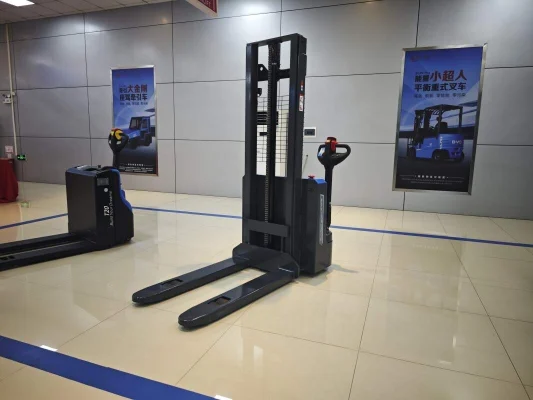
Fork length, width, thickness and spread are not interchangeable details. Longer forks move the load centre forward, reducing the capacity available at a given height. Thicker forks add weight ahead of the carriage. Narrow spreads can leave an unstable base under a wide pallet, while excessive spread may not suit the pallet entry points.
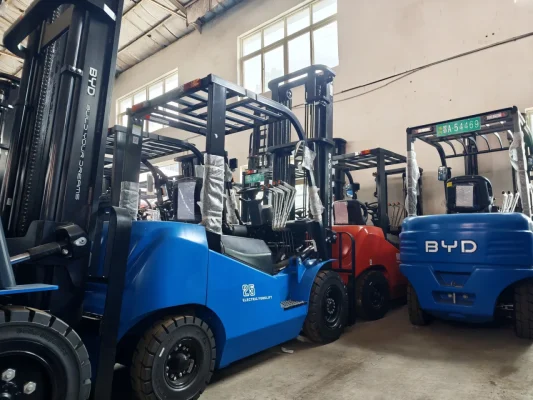
Check these points on the specification sheet:
- Length: long enough to support at least the full depth of the load, but no longer than necessary
- Section thickness and width: matched to the fork carriage rating and the load, not chosen by habit
- Spread: compatible with pallet openings and the carriage fork bars
- Taper and tip: suited to pallet entry conditions and floor joints
- Attachment interface: confirmed when a side-shifter or positioning device is added
Where the load is longer than the standard fork, ask whether a derated capacity chart applies at your lift height. Do not accept a verbal assurance that the truck “will handle it”; request the written capacity table.
Stability Checks Beyond the Data Plate
Stability depends on the combined centre of gravity of truck, carriage, attachment and load. The data plate gives a reference point, not a guarantee across all operating conditions. During specification, confirm the following with the supplier:
- Capacity at the actual lift height and load centre you will use
- Capacity with the intended attachment fitted, if any
- Recommended maximum travel speed on ramps and in turns
- Any restriction on lifting a load while the mast is tilted forward
- Battery weight and position, since these affect counterweight balance
Operational discipline matters as much as the specification. Travel with the load low, avoid simultaneous travel and lift, and keep within the derated capacity shown on the plate. If the application involves very long loads, high lifts or heavy attachments, state these clearly at inquiry stage so the supplier can propose a suitable configuration or explain the limits.
Documents and Questions to Settle Before Ordering
A procurement file should contain enough detail to compare offers on equal terms. Request the following from each supplier:
| Item to confirm | Why it matters |
|---|---|
| Capacity chart at relevant load centres and heights | Shows usable capacity, not just the headline rating |
| Fork dimensions and carriage rating | Confirms the load moment and attachment compatibility |
| Mast type, free lift and overall height | Affects doorways, racking and overhead clearance |
| Battery voltage, capacity and charger details | Supports shift planning and charging infrastructure |
| Turning radius and aisle requirement | Determines whether the truck fits your layout |
| Delivery, warranty and service terms | Clarifies support and total cost of ownership |
Where a supplier cannot provide a figure, record it as an open item rather than filling the gap with an assumption. If you are evaluating a four-wheel counterbalance electric forklift, share your load weight, load length, lift height, aisle width and charging arrangements so the configuration can be checked against your actual duty cycle.
Frequently Asked Questions
Does a 2 ton rating apply at every lift height?
No. Capacity is normally stated at a specific load centre and lift height. Higher lifts and longer load centres generally reduce the capacity available, so ask for the capacity chart covering your working conditions.
Can I fit longer forks to handle a longer load?
Longer forks can be fitted, but they move the load centre forward and can reduce usable capacity. Confirm the revised capacity with the supplier and check that the carriage and fork bars are rated accordingly.
How much capacity does an attachment take away?
It depends on the attachment type and weight, and on the load centre. There is no universal percentage. Request the derated capacity table that includes the specific attachment you intend to use.
What information should I send with an inquiry?
Provide load weight and dimensions, required lift height, aisle width, ground and ramp conditions, shift pattern, charging arrangements and any attachment requirements. These details allow a supplier to propose a configuration and identify open points.