5 Ton Four-Wheel Counterbalance Electric Forklift: Braking, Gradient and Travel Speed Checks Buyers Should Verify
News 01/11/2026
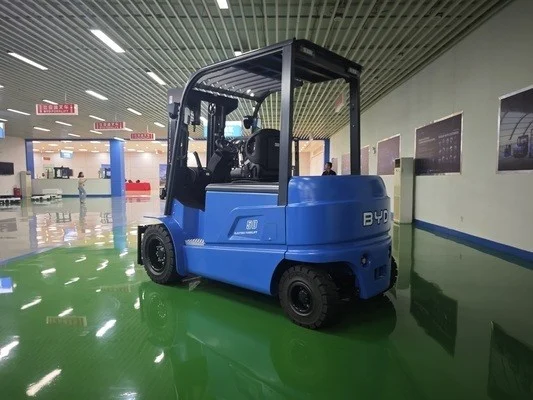
A 5 ton forklift purchase usually starts with load charts and price, yet the checks that decide whether the truck is safe and productive on your site sit elsewhere: braking behavior, gradient capability and travel speed under load. These three areas interact, and a machine that looks adequate on paper can still fail daily work if the site conditions were never matched to the configuration. This procurement guide lists the data to request, the questions to ask suppliers and the points to confirm at acceptance testing. It applies to four-wheel counterbalance electric forklifts, the type this site supplies in BYD lithium-battery configuration.
Why Braking, Gradient and Speed Belong in the Same Conversation
Braking distance depends on speed, total moving mass, tyre condition and floor friction. Gradient capability depends on tractive effort, motor and controller settings, and the friction available between tyres and floor. Travel speed determines how quickly a load reaches the rack or truck, but higher speed also lengthens stopping distance and raises the energy demand on a gradient. A configuration tuned only to one parameter can compromise the others.
Consider a simple assumption: a truck asked to climb a ramp at full speed with a rated load may need to slow down or stop partway. If the supplier sized the drive system on flat-floor duty, the buyer may discover the limit only after delivery. That is why the three checks should be requested together, with the test conditions stated.
Braking: What to Ask and What to Test
Information to request from the supplier
- Service brake type and whether it acts on the drive axle, the wheels or through regenerative braking, and how the systems combine.
- Parking brake type and the gradient it is rated to hold, with the load condition specified.
- Stated stopping distance or deceleration figures, including the speed, load and floor surface used to derive them.
- Behavior when the battery state of charge is low, since regenerative braking effort can change as the battery fills or drains.
- Any automatic speed reduction or brake assist tied to load sensing or travel speed.
Checks at acceptance
Test braking on the actual floor surfaces your operation uses: sealed concrete, worn concrete, coated epoxy or outdoor paving. Load the truck to the rated capacity and repeat at partial load. Record the approach speed, the load, the surface and the measured stopping distance. Repeat after several hours of work, when tyres and brakes are warm. Ask the operator to note any pull to one side, unusual noise or delayed response. If the site has wet or contaminated floors, test there as well and ask the supplier how moisture affects the brake rating.
Gradient Capability and Travel Speed Under Real Loads
Gradient questions
Gradient claims mean little without conditions. Ask the supplier to confirm the maximum gradeability at rated load, the speed at which the truck can climb it, and whether the figure assumes a dry, high-friction surface. Also ask about starting on a gradient from rest, holding a load on the ramp, and descending with a load, where braking and motor control matter as much as climbing ability.
Ramps, dock levellers and yard slopes on your site should be measured rather than estimated. Note the length, the rise and the surface. A short steep ramp and a long gentle one place different demands on the truck. If the route includes a gradient plus a turn or a doorway, check the path with the actual load dimensions.
Travel speed questions
Request the unladen and laden travel speeds, and ask whether these are governed settings that can be adjusted. Speed affects cycle time, but it also affects braking distance, energy consumption and operator confidence. On mixed routes, a truck that is fast on open floor but must slow sharply at every aisle entrance may not deliver the expected throughput.
At acceptance, time a typical route with a representative load and record the speeds achieved. Compare these with the quoted figures and note where the truck slows. Ask how the settings are protected and who may change them.
Procurement Checklist and Acceptance Points
Use the table below to organize the request. The right-hand column is where you record the supplier’s answer and the test result, so the specification and the delivered truck can be compared directly.
| Item | What to confirm | Record |
|---|---|---|
| Rated capacity and load center | Capacity at the load center your loads require | Load chart reference |
| Braking | Type, rated gradient hold, stopping distance conditions | Test result by surface and load |
| Gradient | Gradeability at rated load, climb speed, surface assumption | Measured ramp on site |
| Travel speed | Laden and unladen figures, adjustability | Timed route result |
| Battery and charging | Capacity, charge time, charging location and shift pattern | Shift coverage plan |
| Aisle and doorway | Turning radius, right-angle stacking aisle, overhead clearance | Measured layout |
| Tyres and floor | Tyre type matched to indoor or outdoor surface | Surface survey notes |
Before requesting a quotation, gather the actual load weights, the lift heights, the rack beam levels, the narrowest aisle, the steepest ramp and the daily shift pattern. Share these with the supplier so the proposed BYD four-wheel counterbalance electric forklift is configured against real conditions rather than a generic rating. Ask which figures come from published technical data and which depend on site testing. Confirm warranty terms, spare parts availability and service response in writing, and keep the agreed test conditions attached to the purchase order. At acceptance, repeat the braking, gradient and speed checks with the agreed load and record the results; these records become the baseline when the truck is serviced later.
Frequently Asked Questions
Does a higher travel speed always shorten the work cycle?
Not necessarily. Acceleration, braking, aisle entry, doorways and load handling often dominate the cycle. A truck that reaches a high speed briefly may save little time compared with one that maintains steady progress through the route. Measure a representative route rather than relying on top speed alone.
Can the same 5 ton forklift handle both indoor floors and outdoor ramps?
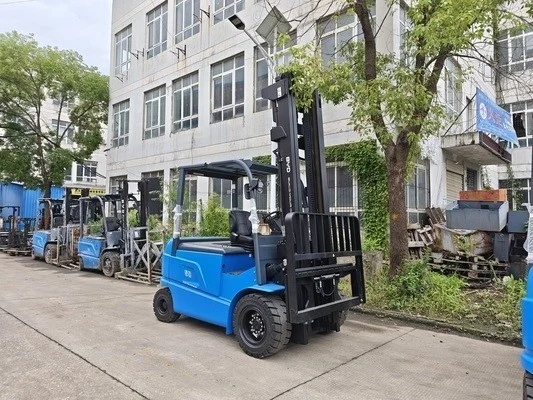
It can work in both areas only when the tyres, braking and gradient ratings suit each surface. Indoor sealed floors and outdoor paving offer different friction, and wet conditions change it again. Ask the supplier to confirm the configuration against each surface and to state any restriction, such as reducing speed or load on a ramp.
What should I do if the delivered truck’s braking distance is longer than expected?
First confirm the test conditions: load, speed, surface and tyre condition. Compare them with the agreed specification. If the gap remains, raise it with the supplier in writing, request the brake settings be checked and ask whether the configuration matches the order. Do not adjust brake or speed settings yourself unless the supplier authorizes it.
How does battery state of charge affect these checks?
Electric trucks can behave differently as the battery discharges, particularly where regenerative braking contributes. Ask the supplier how braking and speed are affected at low state of charge, and repeat the acceptance checks at a realistic end-of-shift charge level rather than only on a full battery.