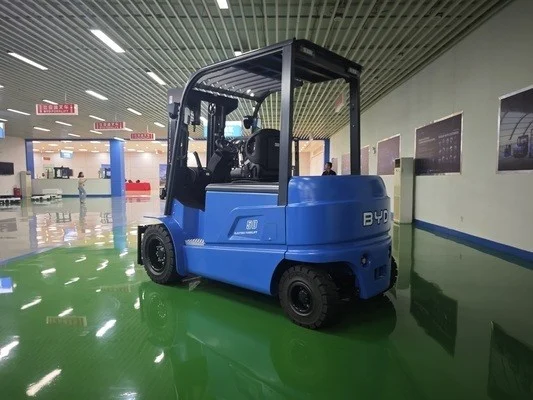
Buying a 2 Ton Electric Forklift: Load Chart, Mast Height, and Battery Specs Buyers Must Verify
News 31/10/2026
A 2 ton electric forklift looks straightforward on a quotation sheet, yet the numbers that decide whether it works on your floor are spread across three documents: the load chart, the mast specification, and the battery data sheet. A rated capacity of 2,000 kg is only the starting point. That figure applies at a stated load center and lift height, with a specific mast and carriage, and with a battery of a given voltage and capacity. This procurement guide explains what to verify before you send an inquiry, what to ask suppliers to put in writing, and how to check the delivered machine against the agreed specification. It applies to four-wheel counterbalance electric forklifts, the configuration this site supplies.
Start with the Load Chart, Not the Rated Capacity
The rated capacity printed on the data plate is a derated value tied to defined conditions. The load chart shows how capacity falls as the load center moves forward and as the fork carriage rises. Two machines both sold as 2 ton units can behave very differently once you lift a long load or stack at height.
Verify these points against the manufacturer’s technical documentation:
- Rated load center: confirm the distance from the fork face to the load center used to establish the 2,000 kg rating. Loads that shift that center forward reduce permissible weight.
- Capacity at height: ask for the capacity value at your maximum stacking height, not only at ground level.
- Mast and attachment effect: a different mast type, longer forks, or a side-shifter can change the rating. Ask whether the quoted capacity already accounts the attachment you need.
- Actual load profile: weigh or estimate the heaviest load, including pallet, packaging, and any overhang. A load that sits far from the fork face is not the same as a compact block.
A practical check: divide your heaviest real load by the capacity shown at your working height and load center. If the margin is thin, revisit the load center or choose a different capacity class rather than relying on the headline rating.
Mast Height and the Numbers Behind It
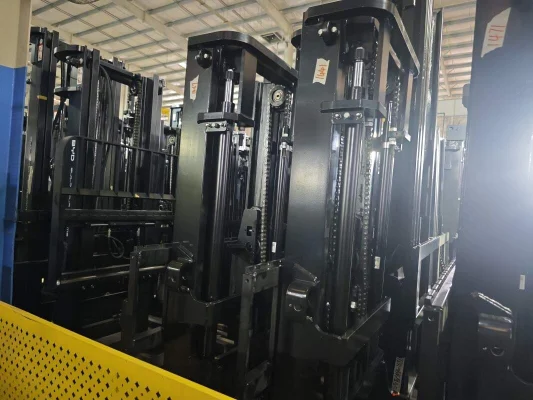
Mast selection involves at least three heights, and buyers often quote only one. Confirm each value in writing, since terminology varies between suppliers.
| Height term | What it describes | Why it matters |
|---|---|---|
| Lowered mast height | Overall height with the mast fully retracted | Doorways, container entries, and low-clearance aisles |
| Free lift | Height the forks reach before the mast sections extend | Stacking in low-overhead areas such as containers or mezzanine levels |
| Raised height | Maximum fork height at full extension | Top rack level and any required clearance above the load |
| Overhead guard height | Height of the operator protection structure | Clearance along the travel path, not just at the rack |
Match the raised height to your highest pick with a working margin, and check that the lowered height passes every doorway and trailer opening on the route. Free lift is frequently overlooked; a mast without enough free lift cannot enter a low opening even when the forks are down. Also confirm the mast type and whether the quoted capacity applies to that mast, since capacity and height are linked.
Battery and Charging Details to Confirm
Battery specification affects shift coverage, charging infrastructure, and the machine’s counterweight balance. Ask the supplier to state the following in the technical offer:
- Chemistry and voltage: confirm whether the machine uses a lithium battery and the nominal voltage, and that the battery is matched to the quoted truck configuration.
- Capacity: the rated capacity in the manufacturer’s documentation, together with the duty cycle assumptions behind any runtime claim. Treat runtime figures as conditional until the supplier states the test conditions.
- Charger compatibility: charger model, input power available at your site, and whether opportunity charging is supported.
- Battery weight and counterweight: the battery contributes to stability. If the battery is changed or replaced with a different weight, confirm the truck’s rating still applies.
- Battery management and service: what monitoring the battery provides, expected service access, and the warranty terms covering the battery separately from the truck.
Site conditions also shape the choice. Available charging time between shifts, the number of trucks sharing a charger, and whether charging can happen during breaks all influence whether one battery per truck is adequate. Where these details are unclear, ask the supplier to explain the assumptions rather than accepting a single runtime number.
Inquiry Checklist and Delivery Verification
Provide your operating data with the inquiry so the supplier can quote a configuration rather than a generic model. Useful inputs include the heaviest load and its dimensions, required lift height, aisle width, floor surface and any ramps, daily operating hours, charging window, and door or container clearances. Our team can then discuss the appropriate four-wheel counterbalance electric forklift configuration and the documentation you should receive.
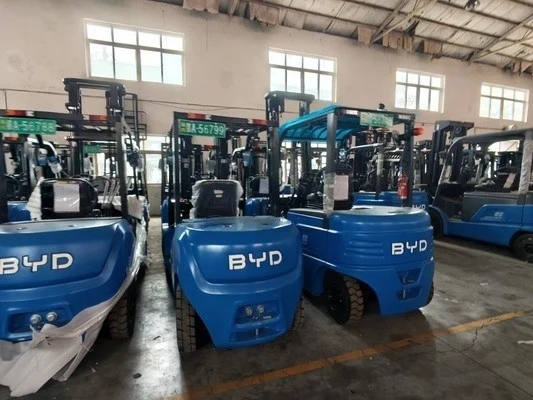
At delivery, verify the machine against the agreed documents:
- Compare the data plate capacity and load center with the quotation and load chart.
- Measure lowered height, free lift, and raised height, and check them against the specification.
- Confirm battery voltage, capacity, and charger model match the order.
- Check that the load chart and operator manual supplied with the truck correspond to the delivered mast and attachments.
- Record any deviation in writing before accepting the machine.
If a figure is missing from the offer, ask the supplier to supply it with its test conditions. A specification you can trace back to the manufacturer’s documentation is more useful than a headline capacity alone.
Frequently Asked Questions
Does a 2 ton rating mean the forklift can lift 2,000 kg at any height?
No. The rating applies at a stated load center and usually at a defined height, and capacity typically decreases as the load center moves forward or the carriage rises. Check the load chart at your actual working height and load dimensions.
Which mast height should I specify?
Specify at least the lowered height, free lift, and maximum raised height, plus the overhead guard height. Your highest rack level and the lowest opening on the travel route set the limits, and the working margin between them depends on your loads and handling practice.
Can I use a different battery in the same truck?
Only after confirming compatibility. Battery weight contributes to counterweight balance, and voltage and capacity must match the truck’s design. Ask the supplier to confirm in writing that the truck’s rating remains valid with the replacement battery.
What should I include in an initial inquiry?
Share the heaviest load and its dimensions, required lift height, aisle and door clearances, floor and ramp conditions, operating hours, and charging arrangements. These details let the supplier propose a configuration and state which specifications still need confirmation.