Specifying a 3 Ton Electric Forklift Attachment Package: Load Capacity, Hydraulic Flow, and Counterbalance Trade-offs
News 02/11/2026
A 3 ton electric forklift rarely lifts three tonnes once an attachment is fitted. The attachment adds weight ahead of the carriage, moves the load centre forward, and consumes hydraulic flow that the mast and steering also need. Getting the package right means reconciling four things: the attachment’s own mass, the revised load centre, the hydraulic supply available at the carriage, and the counterweight margin left over. This article walks through that reconciliation using four-wheel counterbalance electric forklifts as the reference machine, and it flags where only the manufacturer’s data can settle the question.
Why the Rated Capacity Stops Applying
A forklift’s rated capacity is a statement about a specific load centre, usually 500 mm or 600 mm from the fork face, measured with a standard fork carriage. An attachment changes the geometry. A side-shifting fork positioner, a clamp, a rotating head or a push-pull unit all place steel and hydraulics between the carriage and the load, and most of them push the effective load centre further out.
The consequence is a de-rating curve, not a single number. The manufacturer publishes residual capacity at increasing load centres and increasing lift heights. Two rules follow. First, never subtract the attachment weight from the rated capacity and treat the result as safe; the load centre shift usually costs more than the attachment mass alone. Second, the de-rating must be read at the height you actually work at, because capacity falls as the carriage rises.
Practical checks when you specify:
- Ask the forklift supplier to confirm residual capacity with the specific attachment model fitted, at your maximum lift height and your actual load centre.
- Ask the attachment supplier to state the attachment’s mass and its horizontal load centre contribution, measured from the carriage face.
- Combine the two figures yourself and compare against your heaviest real load, including pallet, packaging and any clamp or slip-sheet hardware.
- Re-check if you later add a different attachment; a package approved with one clamp is not approved with another.
Where a supplier cannot provide a de-rating curve, the honest answer is that the combination has not been verified, and the load should be reduced until it is.
Hydraulic Flow and Pressure: Matching the Attachment to the Truck
Attachments are hydraulic consumers. A simple side-shifter needs a modest, intermittent supply. A rotating clamp, a fork positioner with two functions, or a push-pull unit may need more flow, higher pressure, or two independent circuits so that clamp and rotate can operate without fighting each other.
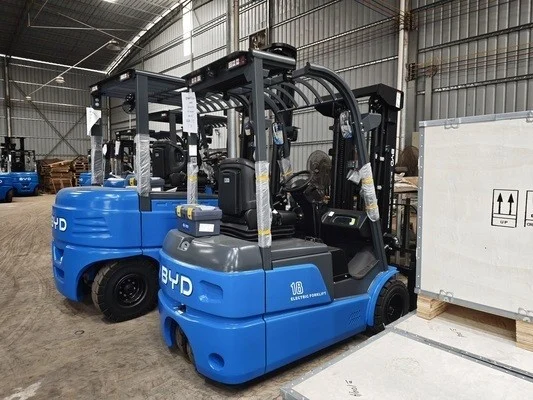
The truck side of the equation is the auxiliary circuit: the number of valve sections, the rated flow and pressure the pump can deliver at working engine or motor speed, and whether the circuit is controlled proportionally. On an electric truck the hydraulic pump is driven by a motor, so flow depends on pump speed and on how the controller allocates power between traction and hydraulics. That allocation matters in a working cycle where the operator lifts and travels at the same time.
What to confirm before ordering
- Number of hydraulic functions the attachment requires, and whether any must operate simultaneously.
- Required flow and pressure at the attachment, as stated by the attachment maker, not assumed from the truck’s headline figure.
- Whether the truck’s auxiliary valve sections and hose routing are factory-standard, optional, or a dealer modification, and who accepts responsibility for the integration.
- Hose length, coupling type and routing so that hoses do not foul the mast or the operator’s line of sight through a full lift cycle.
A slow attachment is often a flow mismatch rather than a fault. If the clamp closes sluggishly, the first question is whether the pump delivers the attachment’s rated flow at the pressure the clamp needs, not whether the clamp is defective.
Counterbalance Trade-offs and a Specification Comparison
Every attachment package shifts the truck’s centre of gravity forward and, in most cases, upward. The counterweight is fixed at the factory, so the only variables left are load, load centre and lift height. Three trade-offs recur.
Stability versus reach. A load held further from the carriage reduces the margin against tipping, particularly with the mast raised and the truck turning. Travel with the load lowered is not a formality; it is the operating condition the stability margin assumes.
Attachment mass versus payload. The attachment itself is carried load. A heavier attachment consumes capacity before any goods are picked up, so a package that looks generous on paper may leave little usable payload.
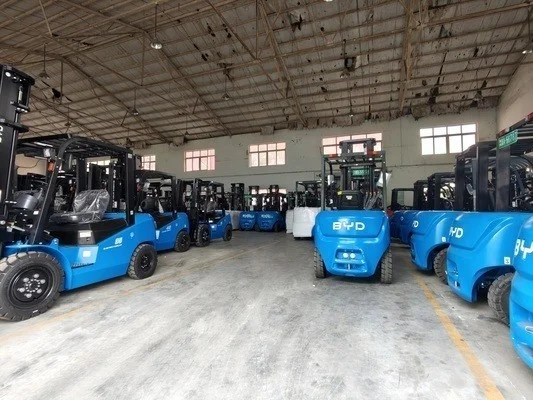
Hydraulic demand versus duty cycle. More functions and higher flow draw on the battery and the pump. In a shift with frequent clamping and lifting, the practical question is whether the battery and hydraulic system can sustain the cycle, which only the manufacturer’s duty-cycle data can answer.
The table below sets out the parameters that decide the package, the risks each carries, and what to request from suppliers. It distinguishes standard supply from options and from items that must be confirmed case by case.
| Parameter | Why it matters | What to request | Status |
|---|---|---|---|
| Residual capacity at load centre and lift height | Determines the real payload after the attachment is fitted | Manufacturer de-rating curve covering the exact attachment model | Must be confirmed |
| Attachment mass and load centre offset | Shifts the centre of gravity and reduces usable capacity | Dimensional drawing and mass statement from the attachment maker | Must be confirmed |
| Auxiliary hydraulic circuits | Determines how many functions can run and how fast | Number of valve sections, flow and pressure at working speed | Standard or optional, depending on configuration |
| Hose routing and mast clearance | Prevents fouling and preserves visibility | Routing drawing, hose length, coupling type | Confirm at integration |
| Battery and duty cycle | Hydraulic work draws on stored energy | Duty-cycle guidance and charging arrangement from the manufacturer | Must be confirmed |
| Tyres and floor conditions | Affects stability and traction with a forward-shifted load | Recommended tyre type and floor specification | Case by case |
In a hypothetical application scenario, a warehouse handling baled material with a rotating clamp would need the clamp’s mass and load centre offset, the truck’s residual capacity at the working lift height, and confirmation that the auxiliary circuit supplies the clamp’s rated flow. None of those can be assumed from the truck’s nominal 3 tonne rating.
Frequently Asked Questions
Can a 3 ton electric forklift lift 3 tonnes with a clamp fitted?
Usually not at the full rated figure. The clamp’s mass and the forward shift in load centre reduce residual capacity, and the reduction grows with lift height. The correct figure comes from the manufacturer’s de-rating data for that attachment on that truck, at your load centre and maximum lift height.
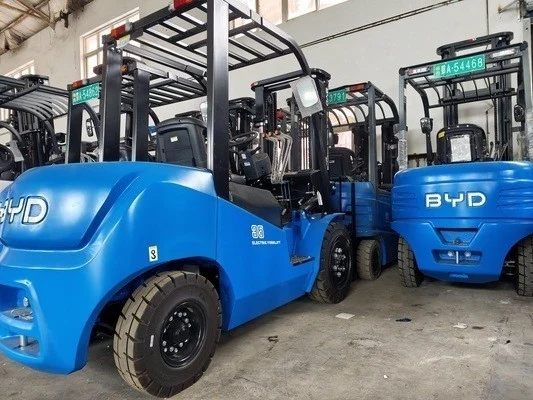
Does a larger hydraulic pump solve a slow attachment?
Not automatically. Flow, pressure and valve configuration must all match what the attachment requires, and the truck’s hydraulic system has to be rated to deliver them. Increasing flow beyond the attachment’s specification can cause overheating or damage, so the attachment maker’s stated requirements should govern.
Is a four-wheel counterbalance truck the right choice for every attachment job?
It is a common general-purpose choice where the aisle width, floor and lift height suit a counterbalance machine. Where aisles are narrow or the attachment demands a different truck architecture, a four-wheel counterbalance model may not be the appropriate platform, and that should be established before the attachment is ordered.
What information should I gather before requesting a quotation?
Maximum load weight including pallet and attachment hardware, the load centre you actually handle, maximum lift height, aisle width, floor type and slope, shift pattern and charging arrangements, plus the attachment model and its hydraulic requirements. These let the supplier check residual capacity and circuit configuration against real conditions rather than a nominal rating.
Readers considering a four-wheel counterbalance electric forklift with an attachment package can share their load, lift height and attachment details so that the selection and configuration can be checked against the manufacturer’s data.