Selecting a 5 Ton Electric Forklift Attachment Package: Hydraulic Flow, Load Chart Derating, and Counterbalance Stability Checks
News 31/10/2026
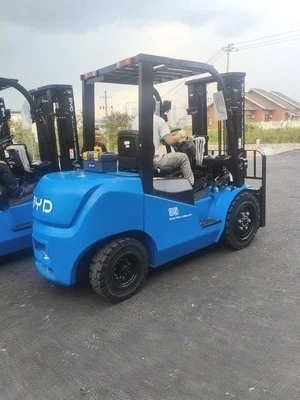
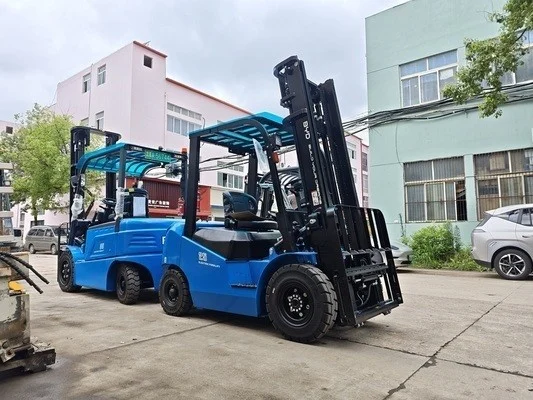
A 5 ton electric forklift can only use an attachment safely when three conditions line up: the hydraulic system delivers enough flow and pressure at the attachment couplers, the load chart has been derated to account the attachment’s own weight and its shifted load center, and the truck’s counterbalance stability still holds at the required lift height and tilt. Buyers often choose the attachment first and check compatibility later, which is where most problems begin. This guide walks through the checks in the order that protects both the equipment and the people working around it, and it treats the four-wheel counterbalance electric forklift as the base machine throughout, since that is the platform these attachments are normally paired with.
Start With the Attachment Duty Cycle, Not the Attachment Catalog
The attachment package should follow from what the truck actually does all shift. Before comparing clamps, rotators, or positioners, write down the work profile in plain terms. The answers determine which attachment class is even worth quoting.
- Handled load: unit weight, dimensions, and whether the load is rigid, crushable, or loose.
- Attachment mass: the attachment’s own weight counts against the rated capacity, so a heavier unit reduces usable load before any load is picked up.
- Load center: the horizontal distance from the carriage face to the load’s center of gravity once the attachment is fitted. Attachments typically move this distance forward, and the load chart must reflect that.
- Lift height and tilt use: maximum height during travel and during placement, plus whether forward or backward tilt is needed while loaded.
- Cycle frequency: how many open-close or rotate cycles occur per hour, which affects hydraulic oil heating and component wear.
- Aisle and door widths: an attachment adds forward projection, which changes the turning envelope.
A hypothetical example makes the trade-off concrete: a warehouse handling bagged material at 4,500 kg per unit with a clamp that adds roughly 600 kg and moves the load center forward will not be able to use the full 5,000 kg rating. The rated capacity applies at a stated load center with a standard carriage; once an attachment is added, the usable capacity drops. The exact figure must come from the truck manufacturer’s derated load chart, not from arithmetic done at the sales desk.
Hydraulic Flow, Pressure, and Coupler Compatibility
Attachments are hydraulic consumers. A clamp needs a specific flow and pressure range to close with enough force, and a rotator needs continuous flow to turn at a workable speed. If the truck’s auxiliary circuit delivers less flow than the attachment expects, the attachment will operate slowly and may not develop full clamping force. If pressure exceeds the attachment’s rating, seals and cylinders are at risk.
What to collect before ordering
Ask the attachment supplier and the truck manufacturer each of the following, and compare the two sets of numbers directly:
- Required flow at the attachment couplers, in liters per minute, at a stated pressure.
- Required and maximum working pressure.
- Number of hydraulic functions needed (single-acting, double-acting, or multiple circuits).
- Coupler type and port size, so hoses and quick-disconnects match.
- Whether the truck’s auxiliary valve is controlled proportionally or on-off, since fine clamping control matters with crushable loads.
Where the truck’s published auxiliary flow does not meet the attachment’s requirement, the options are a different attachment model, a different truck configuration, or accepting slower operation. Do not assume a larger pump can be added later; hydraulic configuration is normally fixed at order. If the data sheets do not state flow at the couplers, request it in writing rather than estimating from motor power.
Oil heating and duty cycle
Continuous rotation or rapid clamp cycling converts hydraulic energy into heat. On an electric truck the hydraulic system shares the battery’s energy budget, so heavy attachment use shortens the work time between charges. Estimate cycles per hour and discuss with the supplier whether the planned duty is within the attachment’s continuous rating. This is a planning question, not a performance claim; the answer depends on the specific components.
Load Chart Derating and Counterbalance Stability Checks
The load chart is the controlling document. A standard chart lists rated capacity at a defined load center and lift height, with a standard carriage. Fitting an attachment changes two variables at once: it adds weight at the carriage, and it moves the load’s center of gravity forward. Both reduce the capacity available at height, and the reduction is usually larger at higher lift.
The three checks that must pass together
- Derated capacity at the working load center: obtain a chart that includes the specific attachment, or a derating table the manufacturer provides. Confirm the heaviest unit load plus any pallet or fixture weight falls below the derated figure at the maximum lift height used.
- Forward stability with tilt: check the chart’s conditions on tilt while loaded and at height. Some charts restrict forward tilt with the load raised; follow those restrictions rather than operator habit.
- Rear axle and counterweight limits: the truck’s stability depends on the counterweight and rear axle load. An attachment that shifts the combined center of gravity forward reduces the margin. The manufacturer’s derating accounts this; improvised counterweights do not, and adding ballast without approval can overload the axle or brakes.
Two common errors deserve emphasis. The first is subtracting attachment weight from rated capacity and calling it derated; that ignores the load center shift, which is often the larger effect. The second is using a chart from a similar truck. Derating is specific to the truck model, mast, attachment, and load center, so a chart from a different configuration proves nothing.
Field verification before daily use
Once the truck and attachment are together, verify the actual load center with the attachment fitted, confirm the mast and carriage are rated the attachment, and check that hoses route without chafing through the full lift and tilt range. Test with a representative load at low height first, in a clear area, following the site’s safe operating procedures. Record the derated capacity on a plate visible to operators so the limit travels with the truck.
Frequently Asked Questions
Can any 5 ton electric forklift take a clamp or rotator?
Not automatically. The truck needs an auxiliary hydraulic circuit with adequate flow and pressure, a carriage and mast rated the attachment, and a derated load chart covering the combination. A four-wheel counterbalance electric forklift is a common base machine, but the specific model’s configuration decides whether a given attachment is approved.
How much capacity is lost when an attachment is fitted?
There is no universal percentage. The loss depends on the attachment’s weight, how far forward it moves the load center, and the lift height. Use the manufacturer’s derated chart the exact truck, mast, and attachment. If that chart is unavailable, the combination should not be placed into service until it is obtained.
Does more hydraulic flow always mean better attachment performance?
No. Each attachment has a flow and pressure range. Excess flow can make a clamp close too fast and damage crushable loads, and excess pressure can stress seals. Match the truck’s auxiliary circuit to the attachment’s stated requirement, and confirm control modulation if the load is delicate.
What should I send when requesting a selection review?
Provide the unit load weight and dimensions, the attachment type and its published weight and load center, required lift height, tilt needs, aisle and door widths, cycles per hour, and your charging and shift pattern. With those inputs, a supplier can check the derated capacity and hydraulic configuration against the actual four-wheel counterbalance electric forklift model rather than a generic rating.