Lithium Ion Forklift Procurement: Verifying Residual Capacity and Battery Health Before Accepting a Four-Wheel Counterbalance Electric Truck
News 12/11/2026
Accepting a four-wheel counterbalance electric forklift with a lithium-ion battery requires more than a visual inspection and a short test drive. Residual capacity and battery health determine whether the truck can deliver the shift length and load handling you are paying for. This guide outlines the documents, checks, and acceptance criteria to agree on before signing off, so that the condition you receive matches the condition you specified.
Define the Duty Cycle Before You Inspect Anything
Battery health only has meaning against a defined workload. Before inspecting a truck, record the operating conditions that the battery must support. Ask the supplier to confirm the following against the truck’s technical data sheet:
- Rated load and load center, plus the actual loads you will lift
- Required lift height and any attachments that change capacity
- Shift length and expected operating hours per day
- Charging window, available charger output, and opportunity-charging plans
- Ambient temperature range in the warehouse or yard
These inputs let you judge whether the quoted battery capacity and state of health are adequate, rather than accepting a generic assurance that the battery is “in good condition.” Where the supplier cannot provide verified figures, treat the gap as an open item, not a detail to resolve after delivery.
Documents and Data to Request Before Acceptance
Procurement decisions rest on records. Request the following and check that serial numbers on the documents match the truck and battery pack:
- Battery specification sheet: chemistry, nominal voltage, rated capacity, and usable capacity
- State-of-health (SOH) report from the battery management system (BMS), with the date and test conditions
- Charge and discharge cycle count, where the BMS logs it
- Charger specification and compatibility confirmation
- Maintenance and service history, including any cell or module replacement
- Warranty terms covering the battery, clearly stating what is excluded
An SOH figure without context is weak evidence. Ask how it was derived: a BMS estimate, a controlled discharge test, or a capacity check at a stated temperature and discharge rate. Different methods can produce different results, so the acceptance criterion should name the method you will both rely on.
Practical Checks on the Truck and Battery
With the duty cycle and documents in hand, carry out checks that connect the paperwork to the physical machine. The following sequence works well as an acceptance walkthrough.
Battery pack and BMS
Confirm the pack model and serial number against the specification sheet. Review BMS logs for fault codes, over-temperature events, and cell voltage imbalance. Ask the supplier to explain any logged event rather than clearing it silently. Verify that the charger matches the pack voltage and chemistry and that charging instructions are documented.
Residual capacity under load
A capacity check should reflect real use. Agree in advance on a test method, such as a controlled discharge at a stated rate and temperature, and record the result against rated capacity. If a full test is impractical at acceptance, agree on a shorter verification plus a written SOH baseline that both parties sign.
Truck condition
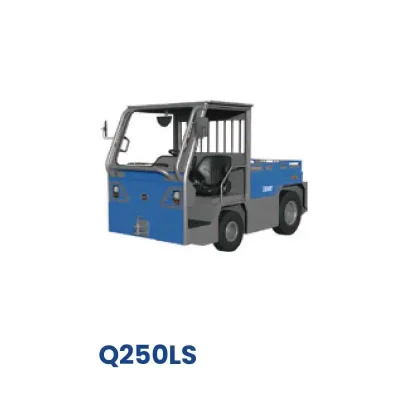
Inspect the mast, chains, forks, hydraulic system, brakes, steering, and tires. Check hour meter readings against the service history. Test lifting and lowering with a representative load at the heights you will actually use, and confirm that capacity remains adequate at your load center.
Safety and labeling
Confirm that capacity plates, warning labels, and the operator manual are present and legible. Verify that the emergency disconnect and any battery isolation features function as described in the documentation.
Open Items to Confirm With the Supplier
Some questions cannot be settled by inspection alone. Put them in writing before acceptance, especially where the answer affects total cost of ownership:
- What SOH threshold triggers a warranty claim, and who performs the test?
- How is capacity measured, and at what temperature and discharge rate?
- What is the expected battery service life under your duty cycle, and on what basis is that stated?
- Which spare parts and service support are available locally?
- What training is provided on charging, storage, and daily checks?
If your operation involves multi-shift use or limited charging windows, share those details when requesting a configuration. Our team can review your load, lift height, aisle width, floor conditions, and charging arrangements and propose a four-wheel counterbalance electric forklift configuration that fits, using verified specifications from the manufacturer’s technical data. We do not quote performance figures without a documented basis.
Frequently Asked Questions
What state of health should a used lithium-ion forklift battery have?
There is no universal threshold. The acceptable SOH depends on your shift length, load profile, and how much capacity margin you want. Set the minimum in the purchase agreement, name the test method, and require the result to be recorded before acceptance.
Can a BMS report replace a capacity test?
A BMS report is useful evidence but is usually an estimate derived from operating data. A controlled discharge test at agreed conditions gives a more direct comparison with rated capacity. Ideally, use both: the BMS history to screen for faults and the test to confirm residual capacity.
How do I verify the charger suits the battery?
Check that charger voltage, current, and charging profile match the battery specification sheet, and confirm the supplier supports the combination in writing. Also verify the charger is rated for your available power supply and charging window.
What should be included in the acceptance record?
Include serial numbers, the SOH baseline and test method, hour meter readings, fault log review, inspection findings, and a signed list of open items with deadlines. This record supports warranty claims and later service decisions.