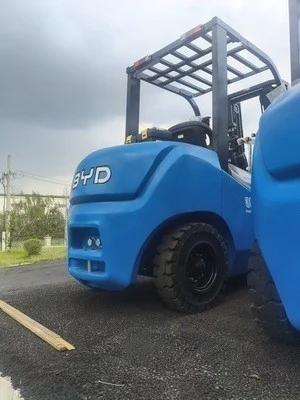
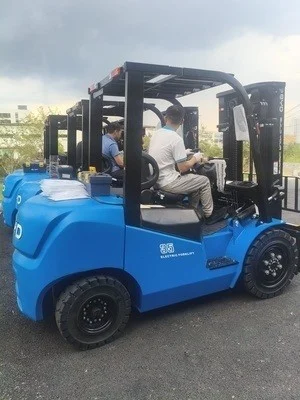
2 ton electric forklift: How Tire Selection Impacts Maneuverability and Floor Protection
News 10/10/2026
Most 2 ton electric forklift operate across diverse facility environments, from warehouses with polished concrete to outdoor yards with uneven gravel. Tire selection stands among the most impactful choices operators and fleet managers make when optimizing unit performance. Wrong tires create excess steering effort, damage sensitive facility flooring, and increase maintenance costs over time. This guide compares common tire options, breaks down their specific effects on maneuverability and floor protection, and outlines clear selection criteria matching your work environment.
Common Tire Types Used on 2 Ton Electric Forklift
Solid Cushion Tires
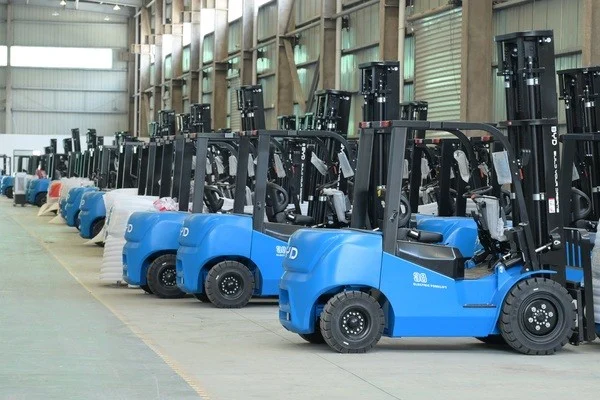
Solid cushion tires consist of thick, solid rubber compounds mounted directly onto steel wheel rims. These tires fit most standard 2 ton electric forklift designed primarily indoor operation. Their low profile creates a lower center of gravity, which improves stability when lifting loads near maximum capacity.
Because solid tires lack air pockets, they never go flat. This feature reduces unplanned downtime across facilities with high daily usage. The compact tread design also delivers a tight turning radius, which enhances maneuverability in small aisles common to distribution centers.
Pneumatic Tires
Pneumatic tires feature air-filled internal chambers and deep, aggressive tread patterns. They work best 2 ton electric forklift operating primarily outdoors. The air cushion absorbs shock from uneven ground, potholes, and debris, which creates a smoother ride operators.
The deep tread increases traction across loose surfaces like gravel, mud, or uneven pavement. However, their larger size increases overall forklift footprint, which reduces maneuverability in tight indoor aisles. Pneumatic tires also carry higher risk of punctures and flat spots, which requires more frequent maintenance checks.
Non-Marking Solid Tires
Non-marking solid tires use clean, carbon-free rubber compounds that avoid leaving black scuff marks on polished concrete, epoxy, and other finished indoor flooring. These tires share core structure with standard solid cushion tires, so they deliver similar stability and flat-free performance. Their main difference lies in rubber composition and impact on floor surface integrity.
Polyurethane Foam-Filled Pneumatic Tires
Polyurethane foam-filled pneumatic tires combine outer pneumatic tread design with solid foam core instead of air. This eliminates flat tire risk while retaining shock absorption benefits of air-filled models. They suit mixed-use operations that split time across indoor and outdoor spaces.
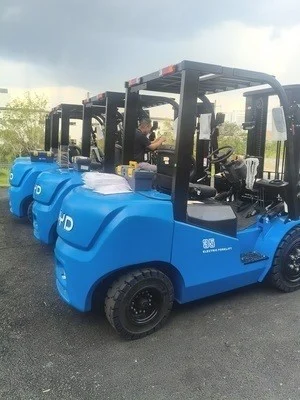
Impact on Maneuverability
Maneuverability directly affects productivity and safety in any facility operating 2 ton electric forklift. Several tire properties change how your unit handles turns, navigates tight spaces, and responds to steering input.
Turning Radius and Aisle Width Requirements
Solid cushion tires have smaller overall diameter than equivalent pneumatic options. This reduces the overall turning radius of your 2 ton electric forklift, allowing operation in narrower aisles. Most standard 2 ton electric forklift with solid tires work safely in aisles 10-12 feet wide, while the same model with pneumatic tires often requires 1-2 feet of additional clearance.
Steering Effort and Operator Fatigue
Tire tread and compound affect how much force operators need to turn the steering wheel. Solid cushion tires sit lower to ground and have smaller contact patch with hard surfaces, which reduces steering effort during repeated tight turns. This lowers operator fatigue during long shifts. Pneumatic tires have larger contact patches and more rolling resistance on hard concrete, which increases steering effort over full work days.
Traction and Control on Different Surfaces
Traction prevents slipping during acceleration, turning, and braking. Pneumatic and foam-filled tires deliver far better traction on uneven outdoor surfaces than solid cushion options. Solid cushion tires can slide easily across loose gravel or wet grass, which reduces operator control. Indoor hard concrete surfaces, solid and non-marking solid tires deliver sufficient traction under most normal operating conditions.
Impact on Floor Protection
Facility flooring represents significant capital investment across many operations. Tire selection directly determines how much damage, wear, and marking your flooring sees over years of use.
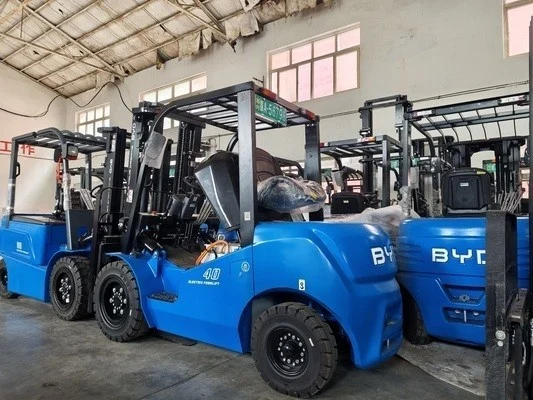
Scuffing and Marking Finished Floors
Standard black rubber solid tires leave permanent black scuff marks whenever the tire turns or slips on polished concrete or epoxy flooring. These marks require frequent cleaning to maintain professional appearance, which adds unplanned labor costs. Non-marking tires eliminate this issue, as their rubber compound leaves no visible residue on finished surfaces.
Abrasion and Long-Term Floor Wear
Solid tires with harder rubber compounds create less abrasion on finished flooring than softer pneumatic tires. Pneumatic tires with aggressive tread can grind small particles into soft flooring, creating micro-scratches over time. This wear becomes noticeable after several years of daily use, requiring premature resurfacing.
Weight Distribution and Surface Damage
A 2 ton electric forklift places consistent concentrated weight on its four tires. Tires with smaller contact patches distribute weight across a smaller area, which can create dents or depressions in softer floor materials like vinyl or industrial wood. Wider tires spread weight more evenly, reducing this type of damage.
Selection Guide Based on Work Environment
Use these clear criteria to narrow your tire choice matching your 2 ton electric forklift primary operating space:
- 100% Indoor Operation, Finished Flooring: Choose non-marking solid cushion tires. They deliver tight turning radius, low steering effort, and zero scuff marks on polished and epoxy flooring.
- 100% Indoor Operation, Unfinished Concrete: Standard solid cushion tires work well. They cost less than non-marking options and deliver identical maneuverability benefits.
- 100% Outdoor Operation: Choose pneumatic tires if debris risk is low, or foam-filled pneumatic tires if puncture risk remains high. Both options deliver better traction and shock absorption on uneven outdoor surfaces.
- Mixed Indoor/Outdoor Operation: Foam-filled pneumatic tires balance flat-free reliability, decent indoor maneuverability, and outdoor traction. Non-marking foam options add floor protection to facilities with finished indoor flooring.
Always check your 2 ton electric forklift manufacturer wheel and tire size specifications before purchasing new tires. Incorrect sizing alters center of gravity and load capacity, creating safety hazards.
Frequently Asked Questions
Can I switch tire types on my existing 2 ton electric forklift?
Most 2 ton electric forklift support tire type swaps as long as new tires match required wheel rim dimensions. You should confirm load rating matches manufacturer specifications before making changes. Some older units may require new wheel rims to accommodate different tire types.
Do non-marking tires wear faster than standard black solid tires?
Modern non-marking rubber compounds match the lifespan of standard black solid tires across most indoor applications. Early non-marking designs had faster wear rates, but current manufacturing technology eliminates this gap across most use cases.
How often should I replace 2 ton electric forklift tires?
Replacement timing depends on daily usage, operating environment, and tire type. Most solid tires need replacement when tread depth falls below manufacturer minimum recommendation, or when visible cracks or damage appear on the tire surface. Pneumatic tires need replacement after punctures that cannot be repaired, or when tread wears down to unsafe levels.
Do wider tires improve maneuverability on my 2 ton electric forklift?
Wider tires improve weight distribution and reduce floor damage, but they can increase turning radius and reduce maneuverability in tight aisles. Narrower solid tires work better in spaces with limited aisle clearance.
Tire selection delivers immediate, measurable improvements to 2 ton electric forklift performance, productivity, and long-term facility maintenance costs. By matching tire type to your primary operating environment, you get better maneuverability, lower operator fatigue, and longer life your facility flooring. Always confirm size, load rating, and rim compatibility before purchasing new tires to ensure safe, reliable operation.