What 5 ton electric forklift design features support consistent heavy load operation across uneven outdoor terrain
News 06/10/2026
Many industrial operations need to move 5 ton loads across uneven outdoor ground, including construction yards, lumber storage lots, and unimproved distribution yards. Electric forklifts gain traction across these industries thanks to lower emissions and reduced long-term operating costs, but not all 5 ton units deliver consistent performance on non-level ground. This guide breaks down key design features that maintain stable, reliable heavy load operation across uneven outdoor terrain.
Chassis and Suspension Design Adjustments
Wide Track Stance and Lower Center of Gravity
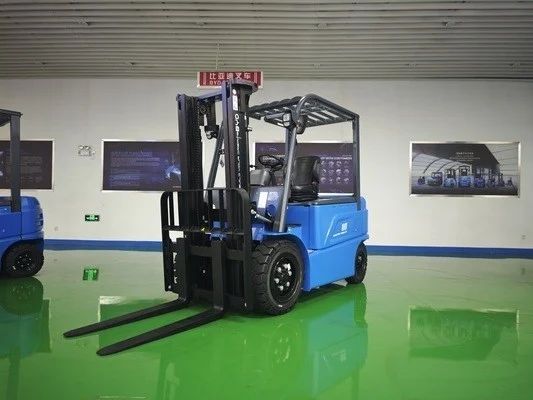
A wider track stance increases lateral stability when navigating dips, ridges or soft ground. This design reduces side-to-side tipping risk when carrying full 5 ton loads at full lift height. A lower center of gravity, achieved by placing heavy battery packs near the chassis base, further dampens rocking movement on uneven surfaces. Unlike smaller indoor-focused electric units, 5 ton models built to support outdoor operation extend the track width 10-15% over indoor variants to improve overall stability.
Heavy-Duty Tuned Suspension Systems
Solid axle suspension with heavy dampening absorbs small impacts from uneven ground instead of transferring movement to the load and chassis. Some designs use leaf spring suspension matched to the 5 ton maximum load capacity, keeping the mast and load stable during travel. Articulated chassis designs, common in rough terrain-focused equipment, also adapt to uneven ground by keeping all four wheels in contact with the surface at all times. This maintains consistent traction and prevents load shifting during movement.
Tire and Traction System Features
High-Traction Thick Tread Pneumatic or Solid Pneumatic Tires
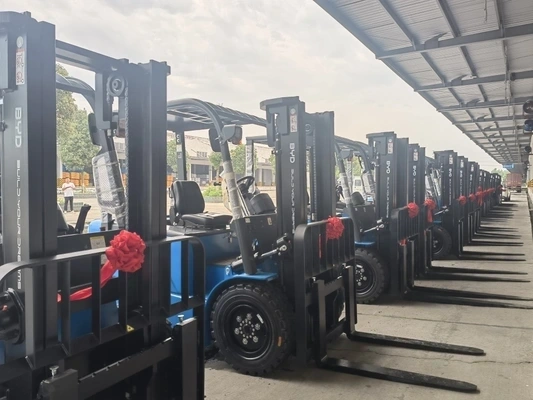
Indoor electric forklifts typically use smooth solid tires that slip easily on wet, uneven outdoor ground. 5 ton electric units built to handle uneven terrain use thick-tread pneumatic or solid pneumatic tires with deep lugs. The lugs grip loose gravel, mud, and sloped uneven ground, reducing wheel spin when accelerating or carrying full loads. Solid pneumatic tires offer extra benefit: they avoid flat tires from debris common in outdoor work areas, reducing unplanned downtime.
Independent Dual Motor Traction Control
Many modern 5 ton electric forklifts built to handle uneven terrain use independent traction motors for each drive wheel. The control system adjusts power output to wheels with the most grip, reducing spin on slippery or uneven ground. This feature maintains consistent forward movement even when one wheel encounters a dip or loose surface that cuts traction. Unlike single motor systems with differential gears, independent motor control delivers more reliable traction in variable outdoor conditions.
Mast and Load Handling Stabilization Features
Reinforced Mast Sections and Integrated Stabilization
When carrying 5 ton loads across uneven ground, mast flex can cause load shifting or instability. 5 ton models built to support outdoor uneven terrain use thicker steel mast sections to reduce flex under full load. Integrated side shifters with built-in stabilization also let operators adjust load position on the fly to correct for slight tilt from uneven ground, keeping the load balanced during travel.
Load Sensing Hydraulic Systems
Load sensing hydraulic systems adjust fluid flow and pressure based on current load weight and terrain conditions. This delivers consistent, smooth control when lifting or positioning heavy loads on uneven ground, avoiding sudden jolts that can shift the load. The system also reduces energy waste compared to constant flow systems, extending battery run time across full work shifts.
Battery and Power System Design
Temperature swings common in outdoor environments impact electric forklift battery performance. 5 ton models built to support outdoor use include insulated battery enclosures that maintain optimal operating temperature across hot and cold conditions. This preserves consistent power output when carrying heavy loads up slopes across uneven ground, avoiding unexpected power dips. Many models also offer optional higher capacity lithium iron phosphate batteries that deliver more consistent power output under heavy load than traditional lead acid batteries, with longer cycle life for frequent outdoor use.
Key limitation: even with enhanced insulation, extreme temperatures below -10C or above 45C will reduce battery run time and power output, so operators should plan extra charging breaks during severe weather.
Practical Selection Guidance and Application Limits
For applications like lumber yards with slightly uneven packed gravel, standard 5 ton electric forklifts with wide stance and pneumatic tires work well. For more extreme uneven terrain, like construction sites with ungraded ground or gentle slopes, prioritize models with articulated chassis and dual traction motors.
Critical limits to remember: Even the best designed 5 ton electric forklift has maximum slope ratings, typically between 10-15% when fully loaded. Exceeding this rating increases tipping risk regardless of design features. Also, always confirm the unit’s maximum load capacity applies at full lift height on uneven terrain, as some models reduce capacity when operating on non-level ground.
Frequently Asked Questions
Can all 5 ton electric forklifts work on uneven outdoor terrain?
No. Many 5 ton electric forklifts are built to serve indoor applications on smooth concrete. These units lack the wider stance, rugged tires and stabilization features needed to handle uneven ground safely. Only units specifically built to support outdoor operation deliver consistent heavy load performance on uneven terrain.
What terrain types work with these design features?
These features support operation on mildly to moderately uneven ground, including packed gravel lots, unimproved storage yards, paved lots with cracks or settling, and moderately graded construction access roads. They do not support extreme off-road use like deep mud, steep ungraded slopes, or rocky construction sites that require purpose-built rough terrain forklifts.
Do design features supporting uneven terrain impact battery life?
Some features, like traction control and load sensing hydraulics, improve energy efficiency which can extend run time compared to outdated designs. Working on uneven terrain generally requires more power than working on smooth indoor ground, so expect slightly shorter run time per charge than you get in indoor operation.
Do I need special maintenance for 5 ton electric forklifts operating on uneven terrain?
Yes. You should inspect suspension components, tire tread, and chassis bolts more frequently than you would for indoor-only units. Outdoor operation exposes the unit to more dust and debris, so you also need to clean battery vents and electrical connections more often to prevent performance issues.
Conclusion
Consistent heavy load operation of 5 ton electric forklifts across uneven outdoor terrain depends on targeted design choices across chassis, suspension, traction, load handling, and power systems. When selecting a unit, match the design features to the severity of terrain you encounter. Stick to published load and slope limits to maintain safe, reliable operation. This approach helps you capture the benefits of electric power without sacrificing performance in outdoor uneven terrain environments.