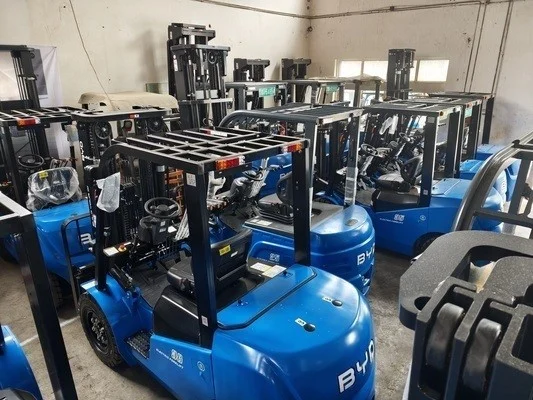
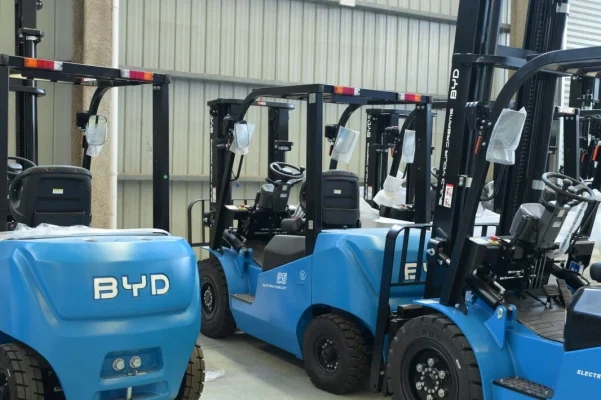
5 Ton Four-Wheel Counterbalance Electric Forklift: Key Questions Industrial Buyers Should Ask Before Specifying a Unit
News 07/11/2026
A 5 ton forklift sits at the upper end of what many general-purpose industrial sites can use, and a four-wheel counterbalance electric model brings battery, charging, and floor-loading questions into the decision. Before you specify a unit, the useful work is not comparing headline prices. It is confirming duty cycle, load geometry, lift height, aisle width, and the electrical capacity your site can actually support. The questions below help you build a specification sheet that suppliers can answer precisely, and they show where missing data should pause the process rather than be filled with assumptions.
What Duty Does the Truck Actually Face?
Start with the work, not the rating. A 5 ton capacity figure is a maximum, and it only holds under defined load center and lift conditions. Ask yourself how often the truck carries near its limit, how high the forks must travel, and how many hours per shift it runs. A truck that moves full loads at low height in a yard has different demands from one stacking loads at height in a warehouse.
Record these points before requesting a configuration:
- Typical and maximum load weight, including attachments or pallets
- Load center distance and whether loads are uniform
- Required lift height and free lift needs
- Shift length, breaks, and charging windows
- Floor surface, ramps, and gradient percentages
- Indoor, outdoor, or mixed operation and any moisture or dust
These inputs decide whether a four-wheel counterbalance electric forklift suits the task at all, and they define which battery and charger options make sense. If your operation needs very high lift or narrow aisles, say so early; those conditions may point to a different truck class, and a supplier should tell you honestly rather than force a counterbalance unit into an unsuitable role.
Which Technical Details Should Appear in the Inquiry?
A vague request invites a vague quote. Build an inquiry that states your operating conditions and asks the supplier to confirm rated capacity at your actual load center and lift height, not just the headline number. Request the manufacturer datasheet and note the test conditions behind any performance figure.
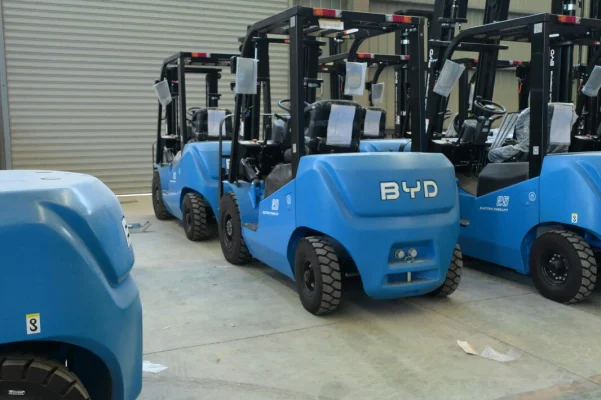
Capacity, geometry, and stability
Ask how rated capacity changes as the load center moves outward and as lift height increases. Confirm mast type, overall dimensions, turning radius, and right-angle stack aisle requirements. These numbers determine whether the truck fits your building, and they are more useful than a single capacity claim.
Power, charging, and shift coverage
For a lithium battery model, ask about usable capacity, charge time, and whether opportunity charging between shifts is supported. Confirm the charger input your site can provide and whether charging infrastructure needs upgrading. Do not accept runtime claims without the duty cycle they assume.
Site and safety conditions
State floor loading limits, doorway and rack clearances, ramp gradients, and any hazardous-area restrictions. Ask which safety features are standard and which are options. Where local regulations apply, ask the supplier to identify the standards the truck is declared to meet, and verify those declarations independently.
How Should You Compare Offers and Plan Acceptance?
Compare offers on the same specification sheet. A lower price often reflects a different battery capacity, charger, mast, or attachment set, so normalize each quote against your agreed parameters before judging value. Ask each supplier to list exclusions clearly: delivery, commissioning, operator training, warranty terms, and spare-part lead times.
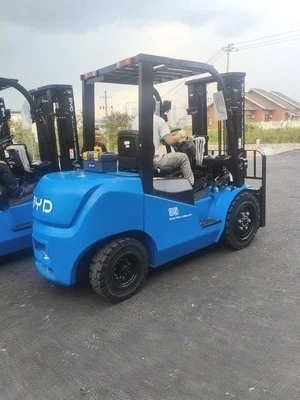
| Item to confirm | Why it matters |
|---|---|
| Rated capacity at your load center and lift height | Headline rating may not apply to your loads |
| Battery type, usable capacity, charger included | Affects shift coverage and electrical work |
| Mast, dimensions, aisle requirement | Determines building fit |
| Warranty scope and service response | Shapes long-term operating cost |
| Documentation and declaration of conformity | Supports regulatory checks |
Plan acceptance before delivery. Agree on a pre-delivery checklist covering configuration, battery and charger, and documentation, then a handover inspection confirming the truck matches the order. Include a practical operating check on your own floor and loads where possible. If any figure cannot be documented, treat it as unconfirmed and ask again.
When you are ready to specify, share your load weights, lift height, aisle dimensions, floor conditions, and charging arrangements with our team so we can match a BYD four-wheel counterbalance electric forklift configuration to your actual operation.
Frequently Asked Questions
Is a 5 ton rating the same as the load I can lift at any height?
No. Rated capacity applies under specified load center and lift conditions. As the load center moves outward or lift height increases, the safe capacity typically falls. Ask the supplier to confirm capacity at your real load geometry.
Can a lithium battery model cover a full multi-shift operation?
It depends on duty cycle, battery capacity, and charging opportunities. Opportunity charging during breaks can help, but you need the supplier’s stated assumptions and your site’s electrical capacity confirmed before relying on it.
What should I do if my aisles are narrow or my lift height is very high?
Raise these conditions in the first conversation. A four-wheel counterbalance truck may not be the best fit, and an honest supplier should explain the limits rather than adjust the specification to fit.
Which documents should accompany a quotation?
Ask for the manufacturer datasheet, a configuration list, warranty terms, and any declaration of conformity relevant to your market. Verify regulatory requirements with your own advisers.