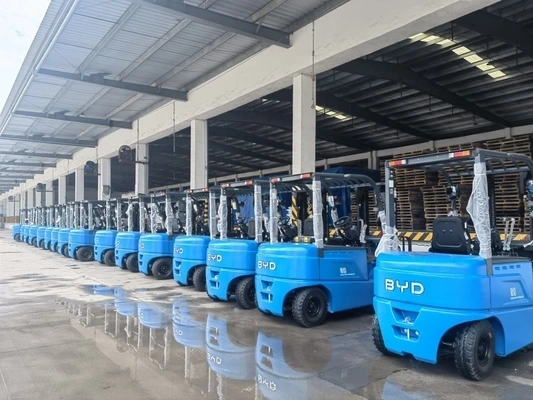
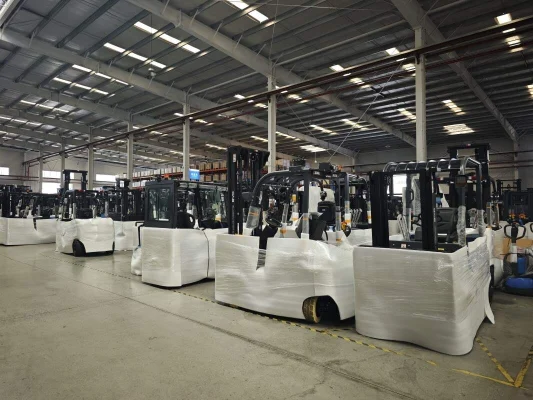
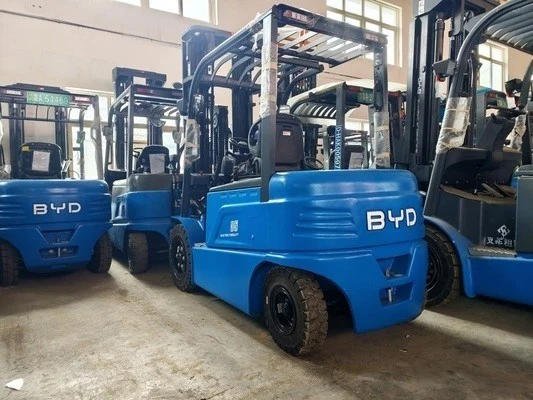
Aligning Lift Height and Mast Configuration With Racking Profiles When Specifying a Four-Wheel Counterbalance Electrical Forklift
News 22/10/2026
Warehouse operations rely on properly matched forklift specs and racking layouts to maximize storage space and keep work safe. Four-wheel counterbalance electrical forklifts serve as common general purpose options in many standard warehouse racking setups, but misalignment between lift height, mast configuration and racking profiles leads to wasted capacity, safety risks and unnecessary costs. This guide breaks down key considerations you need to align these specs correctly.
Key Racking Profile Dimensions That Impact Forklift Spec Selection
Racking profiles differ based on storage density, pallet size and maximum vertical storage level. Each variation places unique demands on your forklift’s lift height and mast design. Consider these core dimensions before you finalize any order:
- Top beam elevation: This measures how high the highest storage beam sits above warehouse floor. Your forklift needs enough lift to place pallets on this beam plus additional clearance to maneuver the load into position.
- Lower doorway or overhead obstruction height: Areas such as shipping container entrances, building entry doors and overhead ductwork limit how tall your forklift’s mast can sit when fully collapsed. A mast that stays too tall when lowered cannot access key work zones.
- Load depth within racking: Deeper racking setups require mast designs that allow lift without hitting upper rack structures before the load reaches its target position.
Common Racking Density Variations and Their Core Demands
Standard single-deep pallet racking, the most common setup in general warehouses, places one row of pallets per rack opening. This setup works well with most standard four-wheel counterbalance electrical forklift configurations, as long as lift height matches top beam elevation. Higher density setups such as double-deep racking increase storage density but place extra demands on mast design and lift clearance.
Vertical storage growth often pushes operations to increase top beam elevation, which requires taller mast designs. Taller masts change your forklift’s center of gravity, so you must confirm load capacity remains within safe limits at maximum lift height.
Matching Lift Height and Mast Configuration to Racking Requirements
Lift height and mast configuration work together to match your racking profile. Below, you will find a comparison of common racking types, their core requirements and key items you need confirm with your supplier:
| Racking Type | Key Lift Height Requirement | Typical Mast Configuration | Items to Confirm With Supplier |
|---|---|---|---|
| Single-Deep Pallet Racking | Total lift = top beam height + minimum 300mm clearance | Standard duplex or triplex mast | Overall collapsed mast height, free lift allowance |
| Double-Deep Pallet Racking | Same lift height as single-deep, plus clearance for extended load positioning | Extended free lift mast | Load retention capacity at full lift, mast deflection under maximum load |
| Bulk Storage Racking (Double Stacked) | Maximum lift height exceeds standard industry levels | Triplex or quadplex mast | Collapsed mast height fits low entry points, stability rating at full height |
| High-Level Static Racking | Maximum lift above 6 meters | Full free lift mast | Mast deflection under full load, overhead clearance within your warehouse |
When you calculate required lift height, always add enough clearance to accommodate any unevenness in your warehouse floor and any attachments your forklift carries. Attachments such as side shifters or fork positioners add length to the front of your forklift, which changes required clearance when placing loads into racks.
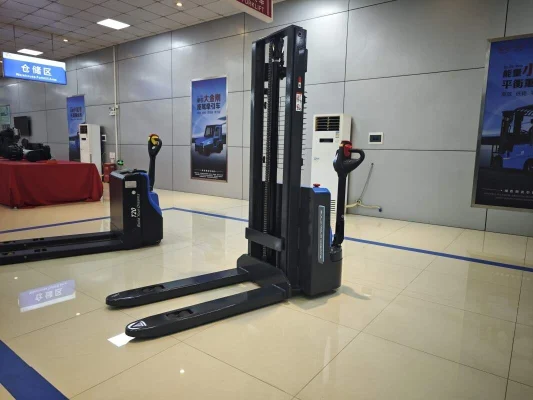
Mast type selection also depends on your work flow. Free lift masts allow the forks to rise without extending the outer mast sections first. This design helps work within areas with low overhead clearance, such as inside delivery trucks or low-ceiling storage areas before you move loads to higher racking levels.
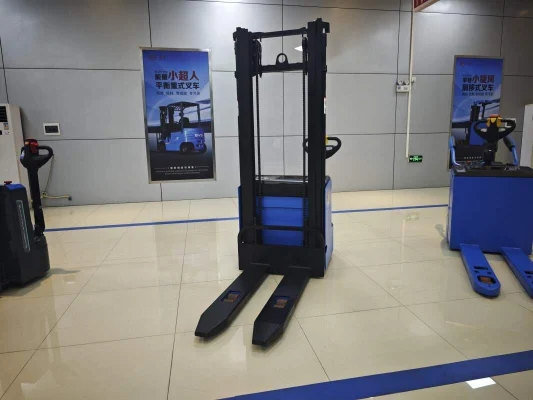
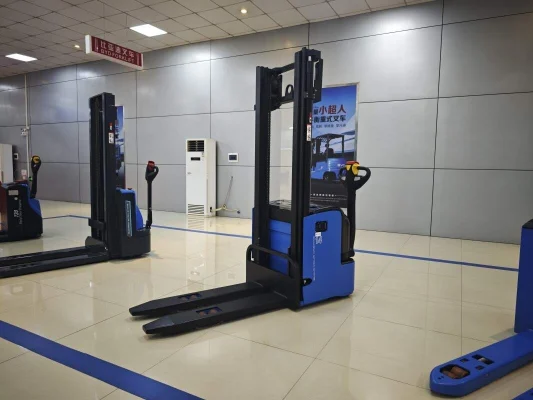
Four-wheel counterbalance electrical forklifts work well with most standard racking profiles found in general warehouses. If your racking setup uses extremely narrow aisles or requires lift heights beyond the maximum rated range of your selected model, you must confirm compatibility with your supplier before placing an order. BYD four-wheel counterbalance electrical forklifts offer multiple mast and lift height options, but not every configuration suits every racking layout.
Before you finalize your order, collect these key data points to share with your supplier:
- Exact elevation of your highest storage beam from warehouse floor
- Minimum height of any overhead obstruction or entry door your forklift must pass through
- Maximum load weight you will place on the highest rack level
- Any attachments you plan to use with the forklift
- Aisle width between racking rows
Sharing these details helps your supplier confirm whether the selected mast configuration and lift height match your racking profile safely.
Frequently Asked Questions
What issues come from misaligned mast specs and racking profiles?
Misalignment causes multiple operational and safety issues. If your forklift’s maximum lift falls short of your top beam elevation, you cannot use your top storage level, which wastes valuable warehouse space. If your collapsed mast height exceeds your entry door clearance, your forklift cannot access parts of your facility, limiting its utility. Excess mast deflection at full lift height causes unstable loads, which increases risk of falling goods and workplace accidents.
Can a single four-wheel counterbalance electrical forklift work with mixed racking profiles within one warehouse?
Yes, as long as you select configuration that meets the most demanding requirement within your facility. If your warehouse mixes 4-meter single-deep racking and 8-meter high-level racking, select lift height and mast configuration that meets the 8-meter requirement. You must also confirm load capacity at the maximum lift height matches your heaviest load placed at that elevation. If your facility has extremely narrow aisles alongside standard width aisles, confirm your four-wheel counterbalance model’s turning radius fits the narrowest aisle you need to access.
Can I modify an existing mast to match new racking profiles after purchase?
Modifying an existing mast requires full review from the original equipment manufacturer. Mast design ties directly into the forklift’s overall weight balance and stability rating. Any unapproved changes can compromise safety and void any existing product coverage. If you upgrade your racking system after purchasing your forklift, contact your supplier to review whether your existing unit can accommodate the new requirements, or whether you need a new unit with matching specs.
Once you collect all your racking profile dimensions and load requirements, you can reach out to our team to review available BYD four-wheel counterbalance electrical forklift configurations that match your warehouse needs.