How to Plan Battery Swap and Opportunity Charging Logistics When Running a 3.5 ton electric forklift Across Multiple Shifts
News 09/11/2026
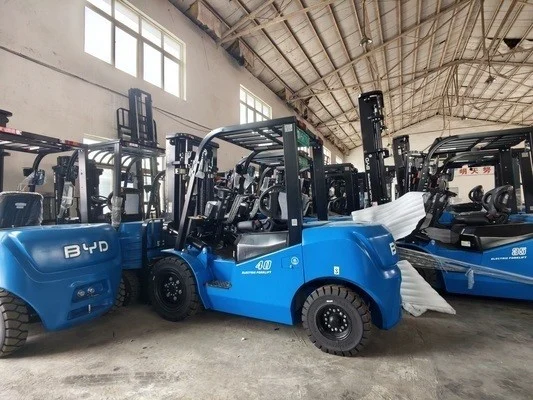
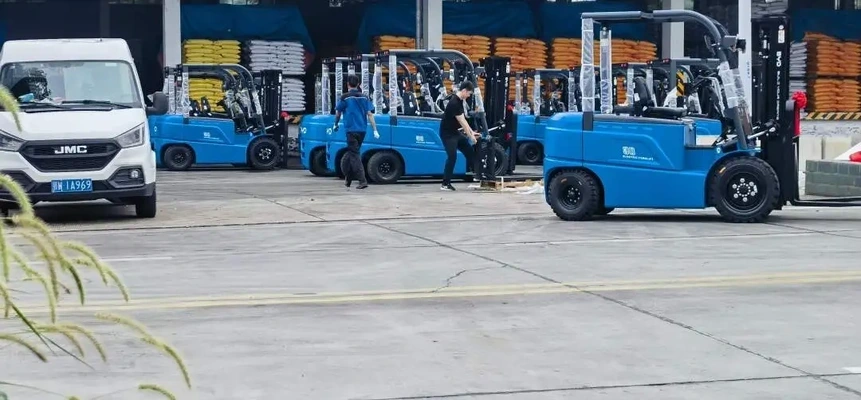
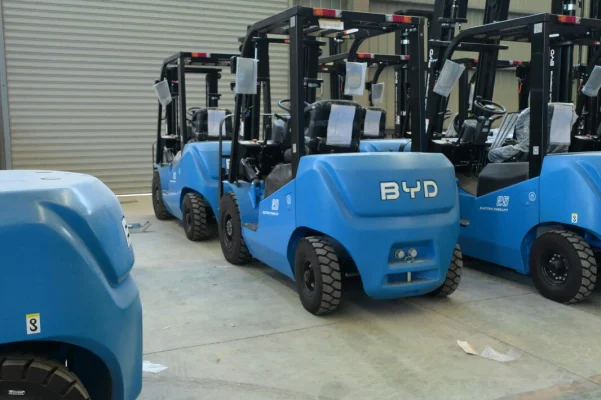
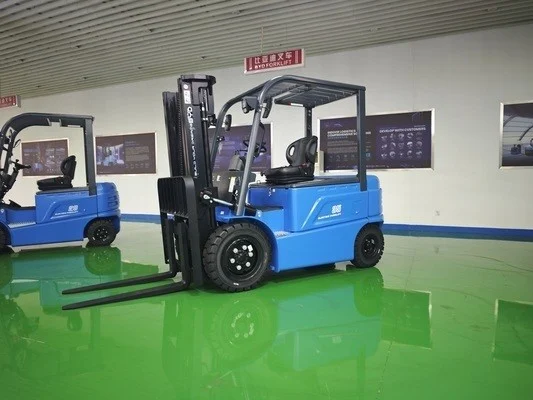
Planning battery swap and opportunity charging logistics a 3.5 ton electric forklift across multiple shifts starts with matching energy replenishment to your actual duty cycle. A 3.5 ton electric forklift—typically a four-wheel counterbalance electric forklift—draws significant current during heavy lifting and travel, so shift length, load weight, lift height, and available charging windows determine whether you need battery swapping, opportunity charging, or a combination. This article outlines a practical planning process, key parameters to verify, and configuration decisions that affect uptime and battery life. All recommendations assume a four-wheel counterbalance electric forklift within the scope of BYD electric forklifts; other forklift types are outside this discussion.
Understand Your Duty Cycle and Energy Demand
Before choosing between battery swap and opportunity charging, quantify how the forklift will work. A 3.5 ton electric forklift moving heavy loads at height consumes more energy per hour than light pallet handling. Gather these inputs:
- Shift pattern: Number of shifts per day, hours per shift, and breaks.
- Load profile: Average and maximum load weight, lift heights, and attachment use (if any).
- Travel distance and surface: Route length, floor conditions, and ramps.
- Idle time: Periods when the forklift is parked but not charging.
Use these inputs to estimate energy consumption. Without manufacturer data, ask your supplier to provide consumption figures based on a similar duty cycle. Do not assume a fixed run time; it varies with load, speed, and temperature.
Compare Battery Swap and Opportunity Charging Approaches
Both strategies aim to keep the forklift productive, but they suit different operations.
Battery Swap
Battery swapping replaces a depleted battery with a charged one, typically using a battery exchange cart or overhead system. It suits operations with:
- Long, continuous shifts where charging time is unavailable.
- High-throughput environments where every minute of uptime matters.
- Multiple batteries available and a dedicated charging room.
Limitations: Requires additional batteries (capital cost), space for charging and storage, and a safe swap procedure. Battery weight can be significant; ensure lifting equipment and training are adequate.
Opportunity Charging
Opportunity charging means plugging in during breaks, lunches, or other idle periods to top up the battery. It works well when:
- Shifts include regular breaks of 15–30 minutes or more.
- Charging infrastructure is accessible at break locations.
- The battery and charger support frequent partial charging without undue degradation.
Limitations: Requires disciplined operator behavior and reliable charger access. Not all batteries tolerate frequent opportunity charging equally; check the manufacturer’s recommendations.
Many multi-shift operations combine both: opportunity charging during short breaks and a battery swap during longer changeovers. The right mix depends on your energy demand and infrastructure.
Key Parameters and Configuration Details to Verify
When planning logistics, focus on these technical and operational factors. The table below summarizes what to check and why it matters.
| Parameter | Why It Matters | What to Confirm with Supplier | Configuration Notes |
|---|---|---|---|
| Battery capacity (kWh) | Determines run time between charges; affects swap frequency. | Usable capacity and recommended depth of discharge. | Standard or optional larger battery; verify physical dimensions. |
| Charger output and profile | Affects charging speed and battery health. | Charger compatibility with battery chemistry; charging curve. | Opportunity charging may require a specific charger profile. |
| Swap method and time | Impacts labor and downtime. | Recommended swap procedure, required equipment, and typical time. | Manual, semi-automated, or automated swap; training needs. |
| Battery management system (BMS) | Protects battery and provides data. | BMS limits on charge/discharge rates; data logging capability. | Some BMS allow remote monitoring; check compatibility. |
| Operating temperature range | Affects performance and charging in extreme environments. | Minimum and maximum operating and charging temperatures. | Cold-weather packages may be available; confirm. |
| Facility power capacity | Ensures chargers can operate without overloading. | Site power availability and charger electrical requirements. | May need electrical upgrades; plan with an electrician. |
For each item, obtain written specifications from the manufacturer. Do not rely on generic estimates. In particular, confirm the battery’s tolerance for frequent partial charging if you plan opportunity charging, and verify the swap procedure’s safety requirements.
Plan Your Charging and Swap Schedule
Create a schedule that matches energy replenishment to shift patterns. Follow these steps:
- Map available windows: List all breaks, shift changes, and idle periods where charging or swapping can occur.
- Estimate energy needed per window: Use consumption data to determine how much charge is required to complete the next segment.
- Match charger capacity: Ensure chargers can deliver the needed energy within the window. For opportunity charging, a higher-power charger may be needed.
- Allocate batteries: If swapping, calculate the number of batteries needed to cover the longest shift plus charging time.
- Assign responsibilities: Define who performs swaps, who connects chargers, and who monitors battery status.
- Document and train: Write a standard procedure and train operators.
Consider a hypothetical example: A warehouse runs three 8-hour shifts with a 3.5 ton electric forklift. The forklift consumes about 20% of battery capacity per shift. Opportunity charging during a 30-minute lunch break can add roughly 10–15% charge, depending on charger and battery. A battery swap during shift change might take 15 minutes. By combining both, the operation avoids deep discharges and keeps the forklift available. This is an illustrative scenario; actual figures must come from your supplier.
Frequently Asked Questions
How do I decide between battery swap and opportunity charging?
Start by quantifying your energy demand and available charging windows. If your shifts are long and breaks are short, battery swap may be necessary. If breaks are frequent and chargers are accessible, opportunity charging can work. Many operations use both. Consult your forklift supplier for a duty-cycle analysis.
Can I opportunity charge a lithium-ion battery without damaging it?
Lithium-ion batteries generally tolerate partial charging better than lead-acid, but you must follow the manufacturer’s recommendations. Check the BMS specifications and charger compatibility. Avoid charging outside the specified temperature range.
What safety precautions are needed for battery swapping?
Battery swapping involves heavy components and electrical connections. Use appropriate lifting equipment, train staff, and follow lockout/tagout procedures. Ensure the charging area is well ventilated and equipped with fire safety measures as advised by the manufacturer.
How many spare batteries should I plan for?
The number depends on shift length, energy consumption, and charging time. Calculate the total energy needed per day and divide by usable battery capacity, then add a buffer for charging and maintenance. Your supplier can help with this calculation based on your duty cycle.
Conclusion
Effective battery swap and opportunity charging logistics a 3.5 ton electric forklift across multiple shifts require a clear understanding of your duty cycle, careful selection of charging and swapping methods, and verification of key parameters with your supplier. Use the steps and table above to structure your planning. To tailor a solution, gather your actual load weights, lift heights, shift patterns, and facility power details, then consult a BYD four-wheel counterbalance electric forklift specialist to confirm configuration and compatibility.