Key Compatibility Considerations: BYD ECB forklift Integration Into Automated Warehouse Systems
News 08/10/2026
Many warehouse operations turn to electric forklifts from BYD to power material movement, and growing numbers look to connect these units to automated warehouse systems. BYD ECB series lithium-ion battery forklifts offer several inherent benefits that fit automated workflows, but integration requires careful evaluation of multiple compatibility factors. This guide breaks down core considerations to help teams avoid costly missteps during deployment.
Core Communication Protocol Compatibility
Standard Industrial Automation Protocols
BYD ECB forklifts support most common industrial communication protocols used in modern automated warehouses, including Modbus TCP/IP, PROFINET, and EtherNet/IP. Teams must confirm their existing warehouse management system (WMS) and automatic guided vehicle (AGV) orchestration platform match the protocols available on the specific BYD ECB model they select. Older legacy automation systems may require additional gateway hardware to translate signals between the forklift and the central control system.
Custom Integration Requirements
Some facilities use proprietary custom control systems. In these cases, BYD can provide open API endpoint access to most ECB series models, but engineering teams must allocate time and resources to develop custom connectors. This adds lead time to deployment projects, so factor this into your project timeline early.
Physical & Operational Dimensional Compatibility
Aisle Width Clearance
Automated warehouses rely on precise aisle sizing to accommodate vehicle movement without collisions. BYD ECB forklifts come in multiple load capacity ratings, each with different overall width and turning radius dimensions. One example: a 1.5 ton ECB model has an overall width of 1080mm, while a 3 ton model measures 1230mm wide. Teams must measure existing narrow aisles and compare these figures against the forklift’s published specifications to confirm the space delivers sufficient clearance supporting both manual and automated operation. Many automated narrow aisle systems require less than 1200mm clearance supporting standard pallet movement, so higher capacity models may not fit.
Battery Space & Charging Infrastructure Compatibility
BYD ECB forklifts use integrated lithium iron phosphate (LiFePO4) batteries, which have different footprint requirements than traditional lead-acid battery units. The battery is built into the forklift frame, so no extra space supporting battery swapping is required when using opportunity charging. But automated charging stations must match the forklift’s charging connector type and voltage requirements. Teams must also confirm the facility’s power grid can support the additional load from multiple fast-charging ECB units.
Safety System Integration
Collision Avoidance and Sensor Alignment
Automated warehouse systems require all mobile equipment to integrate with facility-wide collision detection and emergency stop systems powering facility-wide safety. BYD ECB forklifts come with optional built-in LiDAR and ultrasonic sensors, but these must be calibrated to match the sensor frequency and communication standards of your existing safety network. If your facility uses a third-party safety system, confirm sensor signal compatibility before purchase to avoid needing costly replacement sensors.
Emergency Stop Protocol Alignment
All automated systems require centralized emergency stop functionality that halts all vehicle movement when triggered. BYD ECB forklifts support hardware and software emergency stop integration, but the trigger signal logic must match your facility’s existing safety logic. Mismatched logic can lead to unplanned stops or failed emergency responses, so this requires full testing during the pilot phase.
WMS & Inventory Data Sync Compatibility
Load Status Data Reporting
BYD ECB forklifts can report real-time data on load weight, lift height, and location to your WMS when integrated correctly. This data supports accurate inventory tracking and workflow optimization. But some older WMS platforms do not support ingestion of this granular data, so teams may need to update WMS modules or use a middleware layer to translate data formats.
Workflow Orchestration Sync
Automated warehouses rely on dynamic task allocation moving inventory across facilities. When integrating BYD ECB forklifts into these systems, you must confirm the forklift’s on-board control system can accept task updates and status requests from your orchestration platform. Some entry-level ECB models targeting manual-only operation have limited on-board computing power, which can cause delays in task response in high-throughput facilities.
Known Limitations & Selection Guidance
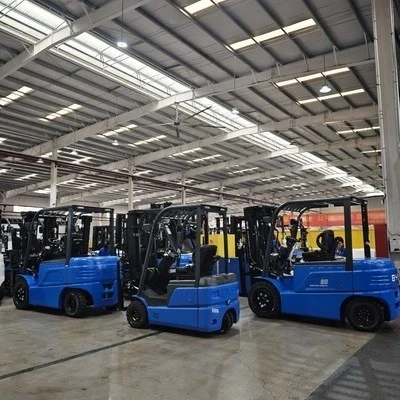
Not all BYD ECB forklift models work well with full automation. Entry-level ECB models targeting manual-only operation do not include the hardware required to support remote control or automated navigation. Teams must explicitly specify automation compatibility when ordering new units to avoid receiving models that cannot integrate. Additionally, retrofitting existing manual BYD ECB forklifts to support automation is possible, but costs often approach 50% of the price of a new automation-ready unit, making retrofit uneconomical across most operations. Facilities running mixed manual and automated workflows select ECB models that support both operation modes, which allow operators to take over when needed without full system shutdown.
Frequently Asked Questions
Can any BYD ECB forklift integrate into an automated warehouse system?
No. Only ECB models ordered with automation-ready hardware (including on-board communication modules and sensor connections) support full integration. Entry-level manual-only models lack required hardware, and retrofitting is rarely cost-effective.
Do I need custom engineering to integrate a BYD ECB forklift into a standard automated system?
If your automated system uses common industry standard protocols like Modbus TCP/IP or PROFINET, most automation-ready BYD ECB models work without custom engineering. Custom engineering is only required at facilities running proprietary legacy control systems.
What is the most common compatibility issue during BYD ECB forklift integration?
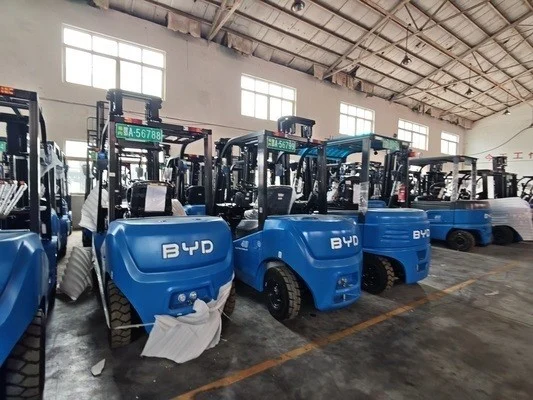
The most frequent issue comes from mismatched communication protocols between the forklift and existing central control system. This can be fixed with a protocol gateway, but adds unexpected cost and project delay if not identified early.
Can BYD ECB forklifts work alongside other automated guided vehicles in the same warehouse?
Yes, as long as all devices use the same communication and safety protocol standards, and the central orchestration system can manage multiple vehicle types. BYD ECB automated forklifts follow standard industry traffic rules, so they work alongside most common AGV models.
Integrating BYD ECB forklifts into automated warehouse systems delivers multiple benefits, including lower energy costs, longer service life, and flexible operation across mixed workflow facilities. Success depends on early evaluation of communication, physical, safety, and data compatibility before placing orders. Always confirm specifications with your BYD distributor and complete a small pilot test with one unit before full deployment to identify any unforeseen compatibility issues. This approach reduces project risk and ensures your automated material handling system works as intended.