BYD ECB Forklift Tender Documentation: Technical Parameters Buyers Should Require From Suppliers
News 03/11/2026
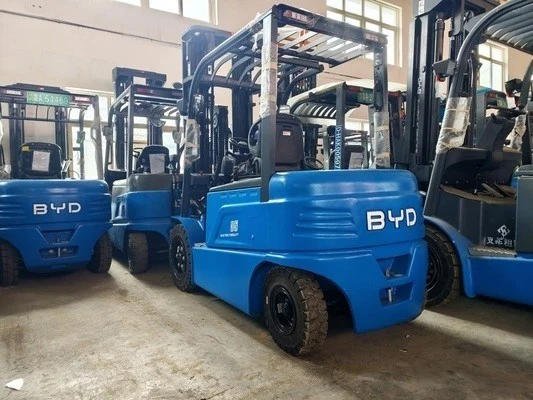
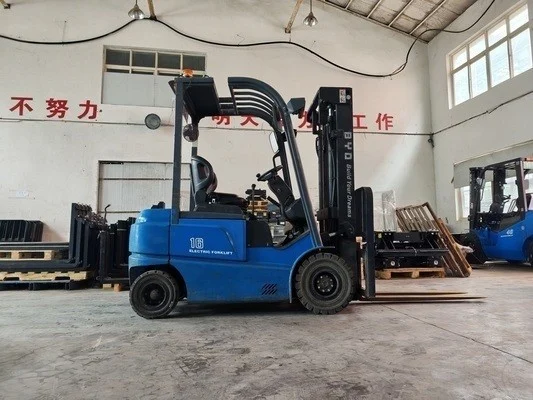
A tender document should turn a vague request into a set of measurable, verifiable requirements. When the equipment under consideration is a BYD ECB forklift, the tender must describe a four-wheel counterbalance electric forklift precisely enough that every supplier responds to the same scope, and clearly enough that the receiving team can check the delivered unit against the contract. The most common failure is not a missing price; it is a specification sheet that leaves load center, lift height, battery configuration, or test conditions undefined, so offers cannot be compared and acceptance becomes subjective.
This guide lists the technical parameters worth requiring, the documents worth requesting alongside them, and the points to confirm before an order is placed. Values must come from the manufacturer’s published technical data; where a value is not yet known, the tender should require the supplier to state it and to identify the test condition behind it.
Core specification fields a tender should define
Start with the duty the forklift must perform, then require the supplier to confirm that the offered model meets it. A useful tender table asks each bidder to fill in the same fields in the same units, with no blank cells.
| Parameter | What the tender should require | Why it matters |
|---|---|---|
| Rated capacity | Capacity at a stated load center, in kilograms | Capacity quoted at one load center does not apply at another |
| Load center | Distance from the fork face to the load center, in millimeters | Defines the basis of the capacity rating |
| Lift height | Maximum fork height and the height at which rated capacity applies | Capacity typically falls as lift height and load center increase |
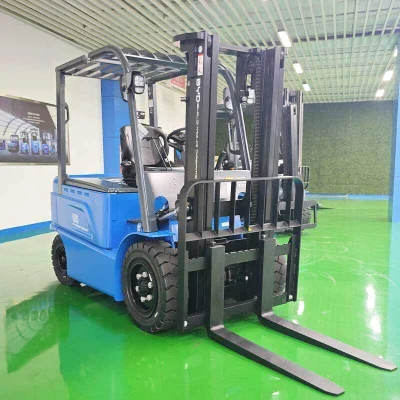
| Mast type | Mast stages and free-lift requirement, if any | Affects headroom, visibility, and trailer or rack entry |
| Dimensions | Overall length, width, height, wheelbase, and turning radius | Determines aisle and door clearance |
| Power source | Battery chemistry, voltage, capacity in kWh or Ah, and charger rating | Sets charging time, shift coverage, and electrical supply needs |
| Travel and lift speeds | Figures with laden and unladen conditions stated | Speeds quoted without load condition cannot be compared |
| Gradeability | Maximum gradient with a stated load | Ramps and dock inclines change the safe working load |
Ask suppliers to attach the manufacturer’s datasheet that supports each figure. A tender that accepts a filled-in table without a source document invites transcription errors.
Documents and verification points to request with the offer
Battery, charger, and electrical compatibility
Because the BYD ECB range is a lithium-powered counterbalance design, the tender should state the charging model the site can support: opportunity charging during breaks, a single full charge between shifts, or a spare-battery rotation. Require the supplier to confirm the battery voltage, capacity, charger input voltage and current, connector type, and the charging time from a stated depth of discharge. Also ask whether the charger is included, and whether the site’s electrical supply and any ventilation or fire-safety requirements have been checked. Do not accept a charging time quoted without a starting state of charge.
Safety and operator-environment features
List the features the site requires rather than leaving them to the bidder: overhead guard, load backrest, seat belt or operator presence system, audible and visual warnings, work lights, and mirrors. Where the site handles specific loads, state the attachments required and require the supplier to confirm the derated capacity when an attachment is fitted. A tender that lists a clamp or side-shifter without a revised capacity figure leaves the buyer exposed.
Service, parts, and warranty terms
Require the supplier to state the warranty period and what it covers, the response time and location of service support, the availability of spare parts, and the training offered to operators and maintenance staff. These are contractual terms, not marketing claims; ask each bidder to put them in writing and to identify the party responsible.
Acceptance and handover
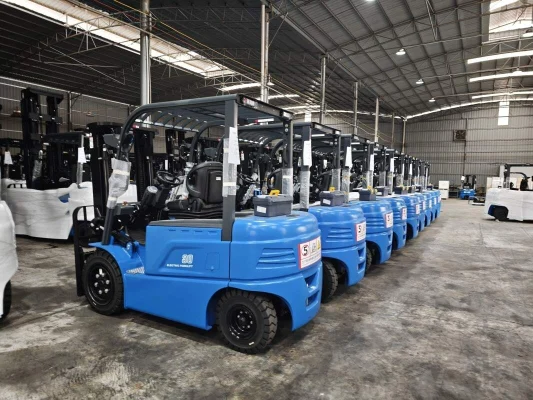
Define how the delivered forklift will be checked. A practical acceptance clause covers the serial number and model against the order, a visual inspection, a function test of lift, lower, tilt, travel, braking, and steering, confirmation that the battery and charger match the specification, and a check that the delivered datasheet and manuals match the offer. State who performs the test, where, and what happens if a parameter falls outside the agreed range.
Questions to settle before the tender is issued
Several decisions belong to the buyer, not the supplier. Resolving them first keeps bids comparable.
- Load and load center: the heaviest load, its dimensions, and how far its center sits from the fork face. A load that is long or off-center reduces usable capacity.
- Lift height and racking: the highest shelf or trailer deck the forklift must reach, plus the overhead clearance available.
- Aisle and door width: measure the narrowest point the forklift must pass, and compare it with the turning radius and dimensions the supplier quotes.
- Floor and ramps: surface condition, any slopes, and the loaded gradient the forklift will climb.
- Shift pattern: hours per shift, number of shifts, and the breaks available for charging.
- Environment: indoor or outdoor use, dust, moisture, cold-store operation, or flammable-atmosphere restrictions, each of which may require a specific configuration.
Where a site condition is unusual, describe it in the tender and ask bidders to confirm suitability in writing rather than assuming the standard model applies. If a requirement falls outside the four-wheel counterbalance scope, such as very narrow aisles requiring a different truck type, the tender should say so instead of forcing a counterbalance unit into an unsuitable duty.
Finally, invite each supplier to state any parameter it cannot confirm and to explain what testing or documentation would be needed. An honest gap is easier to manage than an unsupported figure, and it gives the buyer a clear list of items to verify before signing.