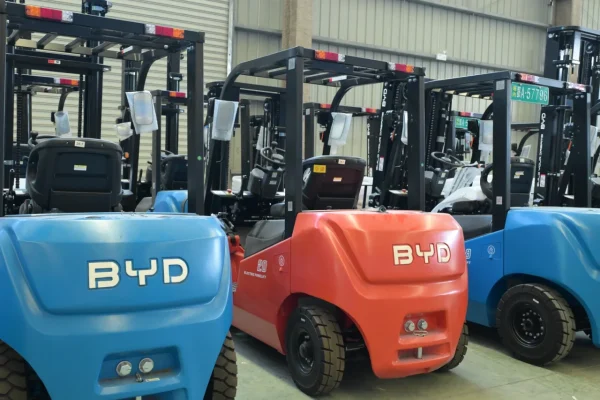
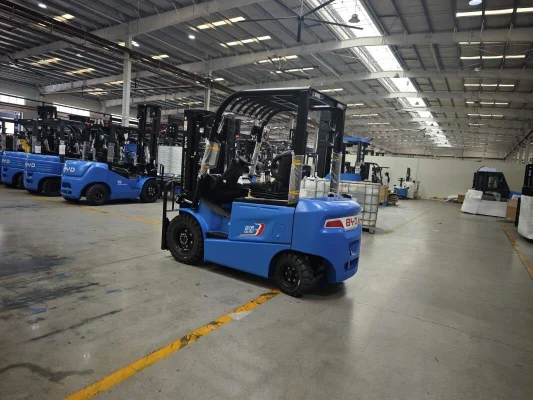
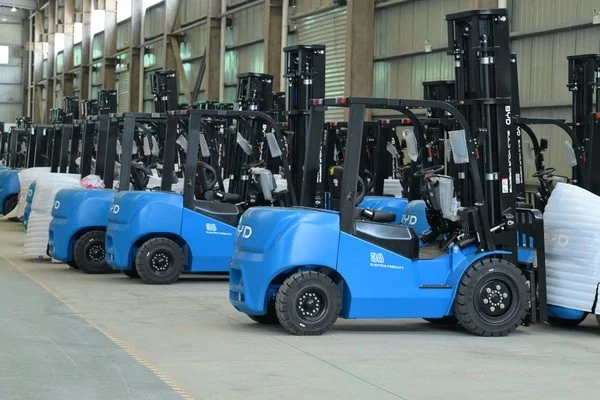
BYD Electric Forklift Procurement Guide: Matching Battery Capacity and Charging Strategy to Multi-Shift Duty Cycles
News 01/11/2026
Procuring a BYD electric forklift across multiple shifts means answering one question before comparing price: can the battery and charging plan keep the truck working through the busiest shift without slowing the operation? Battery capacity, opportunity charging, and shift patterns are linked decisions. A truck bought on nameplate amp-hours alone can end up parked during peak hours, while an oversized battery adds cost and weight without a real benefit. This guide sets out the information a buyer should gather, the technical points to confirm with the supplier, and the acceptance checks worth writing into the order.
Define the Duty Cycle Before Discussing Battery Capacity
Battery sizing starts with energy use per shift, not with the number of hours on the clock. A four-wheel counterbalance electric forklift that lifts heavy loads to high racks, travels long distances, and climbs ramps uses more energy than one handling light loads on a flat floor. Before requesting a configuration, record the following:
- Shift pattern: number of shifts per day, hours per shift, and breaks during which charging could take place.
- Load profile: typical and maximum load weight, plus the load center at which the truck will operate.
- Lift profile: average and maximum lift height, and how often the mast raises a full load.
- Travel and floor: route length, surface condition, ramps or dock levellers, and aisle width.
- Attachments: any clamp, push-pull, or other attachment that adds weight and draws hydraulic power.
- Ambient conditions: indoor or outdoor use, temperature range, and exposure to dust or moisture.
These inputs let the supplier estimate energy demand honestly. Buyers who provide only a load weight and a lift height usually receive a generic recommendation that may not match actual use.
Battery and Charging Choices That Fit Multi-Shift Work
Lithium-ion batteries change the charging conversation. Unlike lead-acid batteries, which generally need a full charge and a cooling period before reuse, lithium-ion packs can accept opportunity charges during breaks. That does not mean every lithium battery suits every schedule. The charger, the battery management system, and the truck’s rated voltage must work as one system, and the supplier should confirm the combination in writing.
Capacity Versus Opportunity Charging
There are two broad strategies. The first uses a larger battery to cover a full shift or more, charging mainly between shifts. The second uses a smaller battery and relies on short charges during breaks and shift changes. The right balance depends on how much idle time the truck actually has. A truck that runs continuously through a busy shift has fewer opportunities to charge, so capacity matters more. A truck with predictable breaks can often use a smaller pack and a disciplined charging routine.
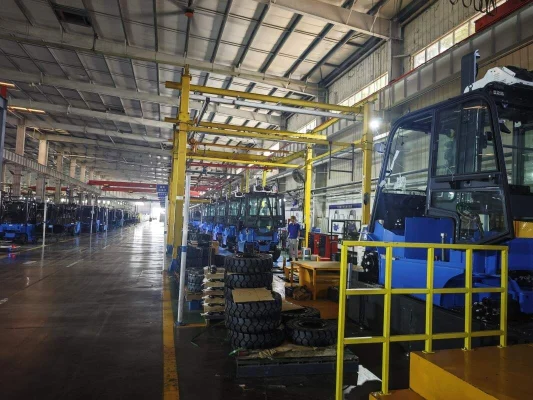
Charger Sizing and Site Power
Charger output must match the battery’s accepted charge rate and the site’s electrical supply. Confirm the available voltage and current at the charging location, whether charging points are shared, and whether the electrical installation supports the planned charger. Installing a high-output charger on an inadequate supply creates tripping and downtime. Ask the supplier to state the charger model, input requirements, and expected charge time under defined conditions rather than a single headline figure.
Questions to Put to the Supplier
- Which battery capacity and voltage are recommended, and what duty cycle does that recommendation assume?
- What charge time applies at the stated charger output, and from what starting state of charge?
- Does the battery management system limit charging at high or low ambient temperatures?
- What is the warranted capacity retention, and under what operating and charging conditions?
- Which charger models are compatible, and what site power does each require?
Record the answers in the quotation. Verbal assurances are difficult to enforce at acceptance.
Procurement Documents, Acceptance Checks, and Common Mistakes
A clear technical specification protects both buyer and supplier. The purchase order should identify the truck configuration, battery type and capacity, charger model, and the duty cycle the configuration is intended to serve. Where the supplier’s technical data sheet states performance figures, attach it as a reference and confirm that the delivered equipment matches.
Acceptance Checks
- Verify the battery nameplate capacity, voltage, and chemistry against the order.
- Confirm the charger model and its electrical requirements match the site installation.
- Check that the battery management system and charger communicate correctly and that charging starts and stops as expected.
- Run a representative work cycle and compare energy consumption with the supplier’s estimate, allowing for normal variation.
- Confirm that operator training covers charging routines, break scheduling, and fault reporting.
Frequent Buying Errors
The most common mistake is sizing the battery to the shift length alone while ignoring load weight, lift height, and travel distance. Another is assuming that any lithium battery can be opportunity charged at any rate; the charger and management system set the real limits. Buyers also overlook site power capacity, then discover that the planned charger cannot be installed without electrical work. Finally, some orders omit the duty cycle from the specification, leaving no agreed basis to assess whether the delivered truck meets the need.
Because exact capacities, charge times, and warranties vary by model and must come from current manufacturer documentation, treat any figure not supported by a data sheet as unconfirmed. The practical next step is to send the supplier your shift pattern, load and lift data, route details, and charging location so the recommended four-wheel counterbalance electric forklift configuration can be checked against your actual operation.
Frequently Asked Questions
Can a BYD electric forklift run multiple shifts on one battery?
That depends on the battery capacity selected and the energy the truck uses per shift. A larger pack can cover longer work periods, but the supplier should confirm the match using your load, lift height, and travel data. Opportunity charging during breaks may reduce the capacity needed.
Is opportunity charging safe during a shift?
Lithium-ion packs are generally suited to partial charging, but the battery management system and charger define the safe routine. Follow the manufacturer’s instructions on charge timing, temperature limits, and connector handling rather than assuming any break is suitable.
What information should accompany a request for quotation?
Provide shift length and count, typical and maximum loads, lift heights, route and floor conditions, ramps, attachments, ambient conditions, and the available electrical supply at the charging point. These details let the supplier propose a configuration with a stated basis.
How should battery capacity be verified on delivery?
Compare the battery nameplate and documentation with the purchase order, confirm the charger matches the agreed model, and check that charging behaves as described. A representative work cycle can show whether energy use is broadly in line with the supplier’s estimate.