BYD Lithium Forklift: Matching Battery Voltage and Capacity to Your Four-Wheel Counterbalance Electric Forklift Duty Cycle
News 31/10/2026
A BYD lithium forklift battery decision starts with two questions: what voltage does the truck’s drive and hydraulic system require, and how much usable energy does one shift actually consume? Voltage is fixed by the vehicle platform, so it is a matching task. Capacity is a sizing task driven by your duty cycle. Getting the second wrong is the common mistake: buyers often copy the lead-acid amp-hour rating from an old truck onto a lithium pack, even though the two chemistries behave differently under load and during charging.
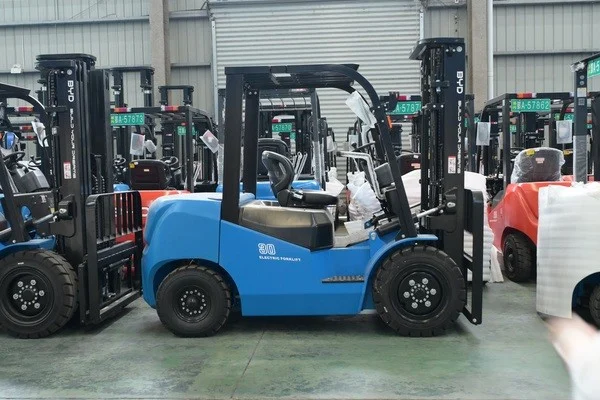
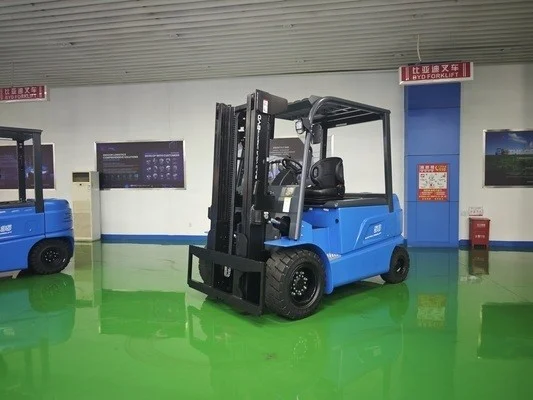
This article covers a four-wheel counterbalance electric forklift, the platform this site supplies. It is not a universal guide to every battery-electric vehicle type. Use it to prepare the right questions and data before you ask a supplier to confirm a configuration.
Start With the Truck’s Voltage, Then Size Capacity to the Work
Battery voltage must match the forklift’s motor, controller, and charger design. A four-wheel counterbalance truck is typically built around one nominal voltage class, and the manufacturer’s technical data sheet states it. You do not choose voltage to gain performance; you confirm it so the pack, charger, and vehicle electronics work as one system.
Capacity, measured in amp-hours or kilowatt-hours, determines how long the truck can work between charging opportunities. It is not a simple copy of a nameplate number. The useful figure depends on the load profile, ambient temperature, how deeply the battery is discharged, and the charging window available in your operation.
Voltage checks before ordering
- Confirm the nominal voltage on the truck’s data plate and technical documentation.
- Confirm the charger’s input and output specification matches the pack, including any communication protocol between battery management system and charger.
- Check that connectors, cables, and fusing suit the intended current, not just the voltage.
- Ask whether the battery is supplied as an integrated part of the truck configuration or as a separately matched component.
Capacity checks driven by duty cycle
Build a simple duty-cycle profile: hours worked per shift, number of shifts, average and peak lifting, travel distance, ramp use, and the time and location available for charging. A truck that lifts near its rated load all day draws more energy than one moving empty pallets. A truck working in a cold store may have less usable capacity at low temperature, which is a battery and system limitation to confirm with the supplier rather than assume.
Specification and Configuration Points That Change the Answer
The following table lists the items that most often decide whether a proposed battery configuration fits a real operation. Values are not given here because they must come from the manufacturer’s current technical data and your own measured duty cycle.
| Item to confirm | Why the operation cares | How to verify | Typical status |
|---|---|---|---|
| Nominal voltage and compatible charger | Wrong voltage prevents safe operation or charging | Truck data plate, charger nameplate, supplier written confirmation | Fixed by platform |
| Rated capacity and usable energy window | Determines work time between charges | Supplier datasheet plus your measured shift energy use | Configuration choice |
| Charge time and opportunity charging rules | Sets whether one pack can cover multiple shifts | Charger specification and battery management system limits | Confirm with supplier |
| Operating and charging temperature range | Cold stores and unheated warehouses reduce usable capacity | Written battery and truck limits, including storage conditions | Confirm with supplier |
| Load, lift height, and attachment effect on remaining capacity | Heavy or high lifts draw more energy and change stability limits | Load chart and application review | Application-specific |
| Aisle width and turning radius | Affects whether a four-wheel counterbalance truck suits the layout | Site measurement against truck dimensions | Site-specific |
Reading capacity claims correctly
Nameplate amp-hours are measured under defined conditions. Ask the supplier what test conditions apply and whether the figure represents total or usable capacity. Also ask how the battery management system limits discharge at low state of charge and at temperature extremes. These answers matter more than a single headline number.
Charging strategy and shift patterns
A lithium pack can often be opportunity-charged during breaks if the charger and battery management system permit it. That flexibility may let one pack cover a longer working day, but it depends on charger availability, electrical capacity at the charging point, and the supplier’s approved charging profile. Do not assume unlimited opportunity charging; confirm the rules in writing.
Where a four-wheel counterbalance truck fits, and where it does not
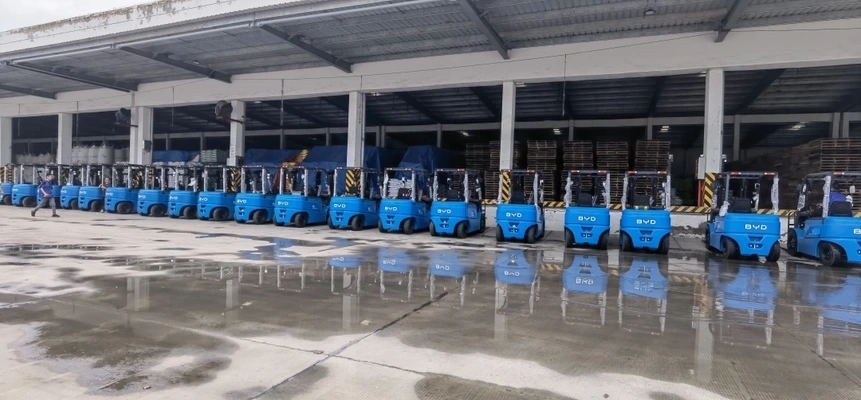
Four-wheel counterbalance electric trucks are common general-purpose machines in factories, loading docks, and warehouse transfer work. They suit many pallet-handling tasks where the aisle, floor, and load conditions allow. Very narrow aisles or specialized high-bay tasks may call for different equipment types, and a counterbalance truck should not be presented as a universal answer. Match the truck type to the layout first, then size the battery.
Frequently Asked Questions
Can I replace a lead-acid battery with a lithium pack of the same amp-hour rating?
Not automatically. The voltage class must match the truck, and the usable energy, charging profile, weight, and physical fit must all be confirmed against the manufacturer’s data. A like-for-like amp-hour number does not guarantee equivalent runtime or compatibility.
How do I estimate the capacity my shift requires?
Record actual working hours, lift counts, travel distance, ramp use, and load weights over several representative shifts. Share this profile with the supplier so the proposed pack can be checked against real demand rather than a guess.
Does cold storage change the battery choice?
Low temperatures can reduce usable capacity and affect charging. Confirm the approved operating, storage, and charging temperature ranges, and ask whether the configuration includes any cold-environment provisions. Do not assume a standard pack suits a freezer application without written confirmation.
What should I send a supplier before requesting a configuration?
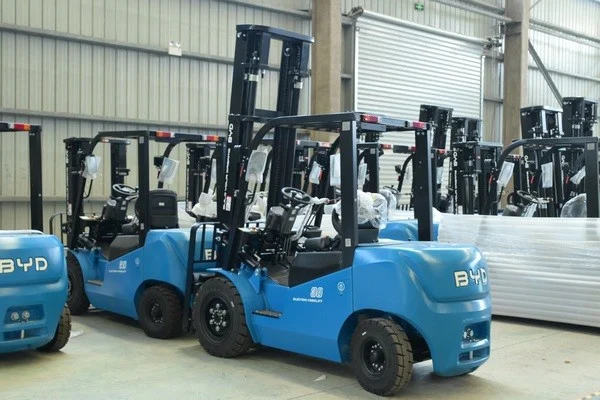
Provide the truck model and voltage, load weights, lift heights, aisle and door dimensions, floor and ramp conditions, shifts per day, charging location and available power, and ambient temperature range. These details let the supplier confirm a suitable BYD lithium forklift configuration or explain its limits.
Is a larger battery always the better choice?
No. Oversizing adds cost and weight and may not fit the compartment. The right size covers the duty cycle with a sensible charging plan while respecting the truck’s approved configuration. Confirm weight and dimensions as part of the selection.
Before purchase, complete your data list and ask the supplier to confirm voltage, usable capacity, charge profile, temperature limits, physical fit, and the load chart implications of your attachments. A configuration that matches both the truck and the real duty cycle is the goal; a headline capacity figure alone is not enough.