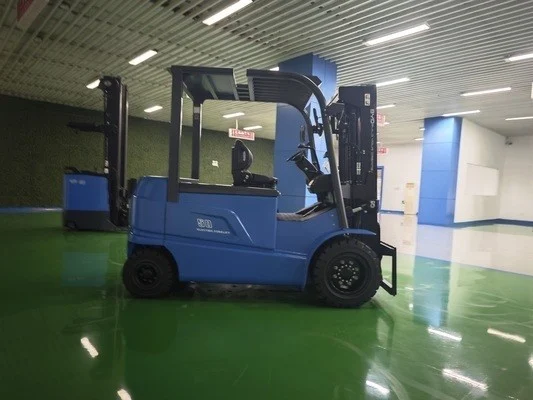
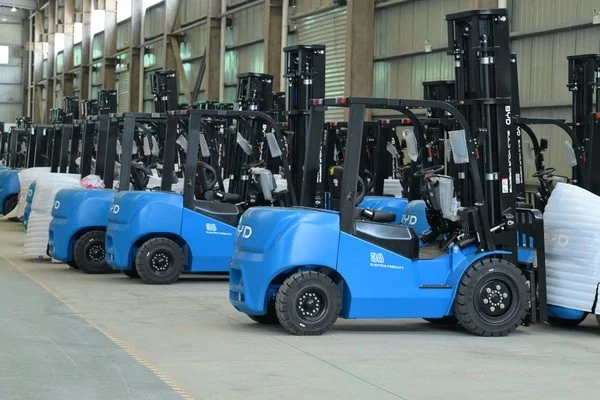
BYD Lithium Forklift: How to Plan Battery Swap and Charging Windows Around Peak Outbound Loading Periods
News 09/11/2026
Peak outbound loading periods leave little room for a truck parked at a charger. If you run a BYD lithium forklift in a four-wheel counterbalance configuration, the practical question is not whether fast charging is possible but when the truck can leave the workflow without breaking the loading schedule. This article walks through a planning method you can apply with your own shift data, plus the equipment details worth confirming before you commit to a swap or opportunity-charging routine.
Start With the Outbound Loading Profile, Not the Battery
Charging and swap windows only make sense when they are built around the actual loading curve. Before choosing a charging strategy, map the outbound day in blocks: when trailers arrive, when staging lanes fill, when the busiest loading hours begin and end, and how many trucks must be active during each block.
Three inputs matter most:
- Truck-hours of demand. Count how many counterbalance trucks must be working during the peak block, not the average across the day.
- Task mix. A truck that only lifts pallets onto a dock leveller spends energy differently from one that climbs ramps and stacks high in a racking bay. Duty cycle drives energy use more than run time alone.
- Recovery tolerance. Decide how much of the peak block can tolerate one fewer truck. If the answer is none, charging must happen outside the peak or be covered by a spare truck.
Write these numbers down before talking to a supplier. They determine whether you need opportunity charging, a battery swap, or simply a disciplined charging schedule.
Compare Charging Windows and Battery Swap Options
There is no universally better method. Each option has a place, and the right choice depends on shift structure, available floor space and how strictly the loading peak must be protected.
Opportunity charging during natural breaks
Opportunity charging means plugging in during short pauses: meal breaks, shift handovers, or gaps between trailer arrivals. It suits operations with predictable idle windows and a charger located close to the loading area. The main limitation is that short charging sessions only restore part of the battery’s usable capacity, so the accumulated energy must still cover the next working block. Confirm with the manufacturer the recommended charging profile, the effect of frequent partial charging on the specific battery supplied, and the charger power available at your site.
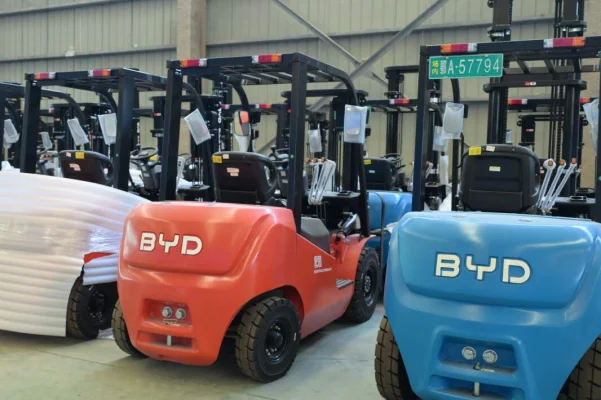
Scheduled full-shift charging
A truck charged during an off-peak block and used during the peak is the simplest arrangement. It requires either a spare truck or a loading plan that does not need every truck at once. This option is easiest to audit because charging happens at a fixed time each day.
Battery swap
A swap replaces a depleted battery with a charged one, returning the truck to service quickly. It demands more than a spare battery: you need a safe swap area, lifting or transfer equipment suited to the battery weight, trained personnel, and a charging station sized to recharge the removed battery before it is needed again. Battery weight and handling method vary by truck model, so treat swap design as an engineering question to confirm with the supplier rather than a generic add-on.
Comparing the options
| Option | Best fit | Main constraint | Confirm with supplier |
|---|---|---|---|
| Opportunity charging | Predictable short breaks near the loading area | Partial recharge may not cover a full peak block | Charging profile, charger power, battery tolerance to frequent partial cycles |
| Scheduled charging | Operations with a spare truck or flexible peak staffing | Requires a truck to be offline during the charge window | Charge duration, charger siting, ventilation and electrical supply |
| Battery swap | Long peaks where no truck can stand down | Space, handling equipment, training and a second battery | Battery weight, handling method, swap procedure, warranty terms |
None of these figures can be set from a general rule. The energy a truck consumes per hour depends on load weight, lift height, travel distance, ramp gradients and operator behaviour. Ask the supplier to help size the charging plan against your measured duty cycle rather than a nominal run-time claim.
Match the Truck and Charging Setup to the Loading Environment
Outbound loading areas often combine tight dock aprons, ramps, wet floors and mixed pallet weights. A four-wheel counterbalance electric forklift is a common general-purpose choice in these settings, but suitability still depends on specific conditions.
Parameters that shape the planning decision
- Rated capacity and load centre. Confirm the capacity at the load centre you actually handle. Attachments and non-standard pallet dimensions reduce remaining capacity, so verify the derated figure rather than the headline rating.
- Lift height and mast choice. Higher lifts and free-lift requirements change both stability and energy use. State the maximum lift height and the racking beam heights you work with.
- Aisle and dock geometry. Measure the narrowest aisle and the turning space at the dock. If the layout is too tight, a counterbalance truck may not be the right fit, and that should be stated honestly rather than worked around.
- Floor and ramp conditions. Gradients, dock levellers and wet surfaces affect traction and braking. Describe them so the supplier can advise on tyres and braking configuration.
- Charging location and power. Confirm the available electrical supply, distance from the loading area, and whether the charger can be installed where trucks naturally pause.
Configuration questions worth asking
Ask which items are standard, which are optional and which require factory confirmation. Typical areas to clarify include charger type and power, battery capacity options, onboard charging capability if offered, display and telemetry features, cold-store or washdown protection if relevant, and any site-specific safety additions. Do not assume a feature is included on every model; obtain the specification sheet the supplier will stand behind.
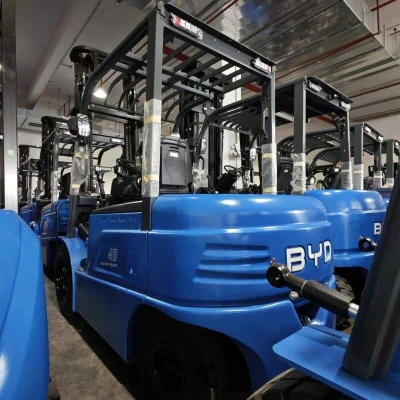
Build a Repeatable Weekly Charging Plan
Once the options are understood, turn them into a schedule the loading team can follow. A simple routine works better than an elaborate one that nobody maintains.
- Block the week by peak and non-peak periods. Mark outbound peaks on a shared calendar and protect them from planned charging.
- Assign each truck a charging slot. Tie slots to natural breaks or low-demand blocks, and identify the backup truck if one is needed.
- Record state of charge at handover. A short log at shift change reveals whether the plan is holding or quietly eroding.
- Review exceptions weekly. Late trailers, breakdowns and seasonal volume changes all disturb the plan. Adjust the schedule rather than pushing trucks past their limits.
- Keep the swap procedure current. If you use battery swaps, document the steps, the handling equipment and the training requirement, and review them when personnel change.
A plan built on measured duty cycles and confirmed charger capacity is more reliable than one built on assumed run times. Where data is missing, collect it before expanding the fleet or changing the charging method.
Frequently Asked Questions
Can a BYD lithium forklift be opportunity charged during short loading breaks?
It may be feasible, but the answer depends on the charger power available, the battery configuration supplied and how much energy the next working block requires. Ask the supplier to confirm the recommended charging profile and the effect of frequent partial charging on your specific battery.
How do I decide between a battery swap and scheduled charging?
Start with the peak loading profile. If no truck can stand down during the peak and floor space allows a safe swap area, a swap may suit. If a spare truck or flexible staffing exists, scheduled charging is simpler to manage. Both require confirmed battery weight, handling method and charger capacity.
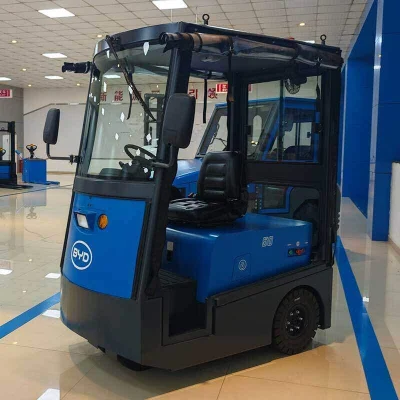
What information should I give a supplier before requesting a configuration?
Provide maximum load weight and load centre, maximum lift height, narrowest aisle and dock turning space, ramp gradients and floor conditions, shift pattern, peak loading hours, available electrical supply and the intended charger location. These details let the supplier check whether a four-wheel counterbalance electric forklift suits the site and which configuration to quote.
Does charging strategy affect battery life?
Charging and discharging patterns can influence battery ageing, but the specific effect depends on the battery chemistry, battery management system and operating conditions. Request the manufacturer’s guidance on charging frequency, depth of discharge and operating temperature range rather than relying on general claims.
What should be checked before accepting a delivered truck?
Verify the rated capacity at the stated load centre, lift height, mast type, tyres, charger compatibility and any optional features listed on the order. Confirm the operating and charging temperature limits, the recommended charging procedure and the documentation supplied. Test the truck under your actual loads and aisle conditions before signing off.
To move from planning to a concrete proposal, gather your peak loading profile, load and lift requirements, aisle dimensions and charging location, then ask about the BYD four-wheel counterbalance electric forklift configuration that matches those conditions.