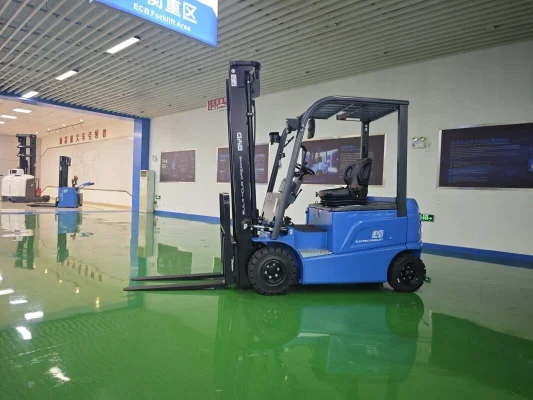
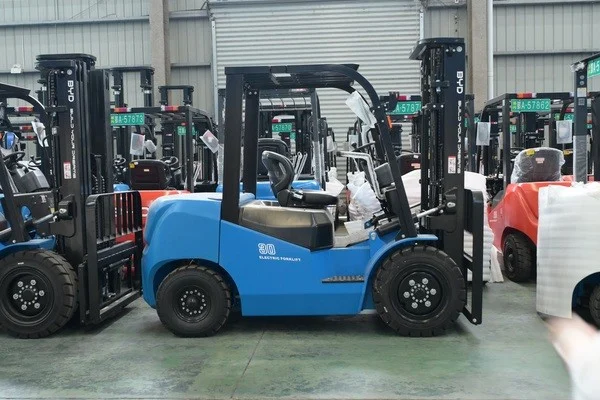
BYD Lithium Forklift: A Procurement Checklist Comparing Duty Ratings and Configuration Options Across Four-Wheel Counterbalance Electric Forklift Models
News 02/11/2026
A BYD lithium forklift purchase usually stalls on the same question: two four-wheel counterbalance electric forklift models can look nearly identical on a brochure, yet differ in duty rating, battery configuration and hydraulic setup. This checklist turns that comparison into a sequence of verifiable decisions. It covers the parameters to collect, the configuration choices that change the price and the operating envelope, and the points to confirm in writing before a purchase order. All specifications below must be checked against the current manufacturer technical data sheet; where a figure is not supplied, treat it as unconfirmed rather than assumed.
Start With the Duty Rating, Not the Price List
Duty rating describes how intensively a truck is designed to work, and it drives motor, controller and cooling choices. Vendors may express it as a percentage of time in use, as shifts per day, or as a light, medium or heavy class. Because labels vary between suppliers, the only reliable comparison is a written definition of the duty cycle that applies to each model you shortlist.
Data to collect from the supplier
- The stated duty class and its definition, including the assumed operating hours per shift.
- Rated capacity at the standard load centre, and the derating curve at longer load centres.
- Maximum lift height and the residual capacity at that height.
- Travel and lift speeds, with the condition under which they are measured (laden or unladen).
- Any restriction on continuous operation, such as a duty cycle limit or a recommended rest period.
A common procurement error is matching a truck to the heaviest single lift rather than to the average shift. A model rated for occasional handling may be the wrong choice where the truck works continuously, and a heavier-duty model may cost more than the task justifies. Neither conclusion can be drawn without the supplier’s duty definition and your own measured hours. If your operation runs multiple shifts, record the actual running hours per shift and the number of starts and stops, since these affect thermal load as much as tonnage does.
Configuration Choices That Change Fit and Cost
Once the duty class is settled, configuration decides whether the truck suits the building. The items below are the ones most often left until late, when changes become expensive.
Battery and charging
Lithium traction batteries are the defining feature of this product family, but the purchase decision still depends on charging logistics. Confirm the battery voltage and capacity offered with each model, the charger type and its power supply requirement, and whether opportunity charging is permitted by the manufacturer. Ask how charging time relates to your shift pattern and whether a spare battery is needed. Do not accept a runtime figure unless the supplier states the test condition behind it.
Mast, carriage and hydraulics
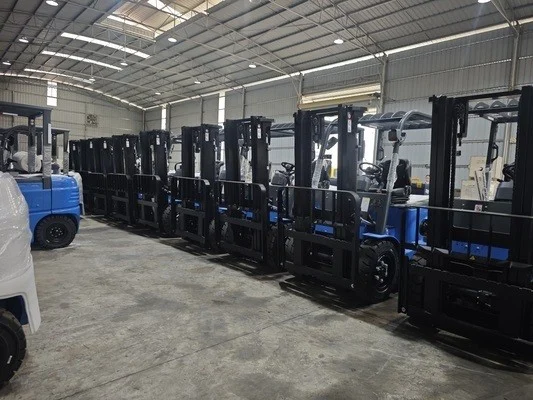
Mast type, free lift, closed height and tilt angles determine whether the truck enters a trailer or a low doorway. For each candidate, obtain the mast dimensions and the residual capacity at your required lift height. Attachments such as side shift or fork positioners add carriage weight and reduce net capacity, so the rated capacity must be read together with the attachment fitted.
Tyres, dimensions and the aisle
Wheelbase, overall width and turning radius set the minimum aisle your racking layout allows. Measure the narrowest aisle and the doorway the truck must pass, then compare these with the published dimensions. Tyre type should match the floor: smooth indoor surfaces and outdoor yards place different demands on traction and wear, and the supplier should confirm which tyre options are available on the model you select.
Operator environment and site conditions
Consider the operator compartment, visibility through the mast, lighting and any cold-store or wash-down requirement. Slopes, dock levellers and floor condition also matter; confirm the permissible gradient and floor loading with the supplier rather than inferring them from the model name.
A Side-by-Side Comparison Sheet and Questions to Ask
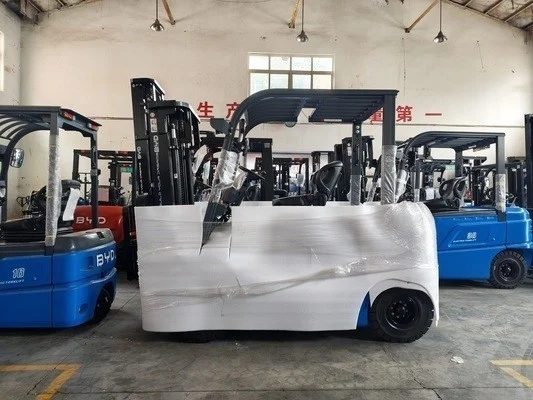
The table below is a template, not a set of specifications. Fill each column from the supplier’s current documentation and leave a field blank when no verified figure exists.
| Comparison item | Model A | Model B | Evidence required |
|---|---|---|---|
| Duty class and definition | Written definition from supplier | ||
| Rated capacity and load centre | Data sheet plus derating curve | ||
| Capacity at required lift height | Residual capacity table | ||
| Battery voltage, capacity, charger | Configuration sheet | ||
| Charging time and opportunity charging | Manufacturer statement | ||
| Mast type, free lift, closed height | Mast drawing | ||
| Turning radius and aisle requirement | Dimension drawing | ||
| Tyres and floor suitability | Option list | ||
| Permissible gradient | Supplier confirmation | ||
| Delivery, warranty and service terms | Quotation and contract |
Use the completed sheet to ask three questions of every supplier: which duty definition applies to this model, what the net capacity is with the attachment and mast you have chosen, and which of your site conditions fall outside the published operating limits. A supplier who answers all three in writing gives you something a brochure cannot.
A hypothetical example shows how the sheet works. A warehouse handling mixed pallets indoors, with a narrow aisle and a single shift, may find that a lighter-duty configuration meets the task, while a yard operation with slopes and continuous loading may need a higher duty class and different tyres. Neither outcome can be declared correct without the measured aisle width, pallet weights, lift height and shift hours. Bring those figures to the discussion; they shorten the selection process more than any general recommendation.
When you are ready to compare specific four-wheel counterbalance electric forklift models, share your load weights, required lift height, aisle dimensions, floor and slope conditions, shift pattern and charging arrangements. Those inputs let the selection and configuration discussion focus on models that genuinely fit, rather than on a list of options that cannot be verified.
Frequently Asked Questions
Is a higher duty rating always the safer purchase?
No. A higher duty class normally means a more robust specification and a higher price, but it only helps if your operation actually needs it. Match the rating to measured shift hours and handling intensity, and confirm the supplier’s definition of the class before deciding.
How do I compare lithium battery options between two models?
Compare voltage, capacity, charger type, charging time and whether the manufacturer permits opportunity charging. Ask for the test conditions behind any runtime claim. If a figure is not documented, record it as unconfirmed and request it in writing.
Can I add an attachment after choosing a model?
Attachments change carriage weight and load centre, which affects net capacity. Confirm with the supplier that the attachment is approved for the model and obtain the revised capacity rating before committing to the configuration.
What site measurements should I take before requesting a quotation?
Measure the narrowest aisle, doorway and trailer opening, note floor type and any slopes, record typical and maximum pallet weights, and state the required lift height and shift pattern. These figures allow a meaningful comparison of models and configurations.