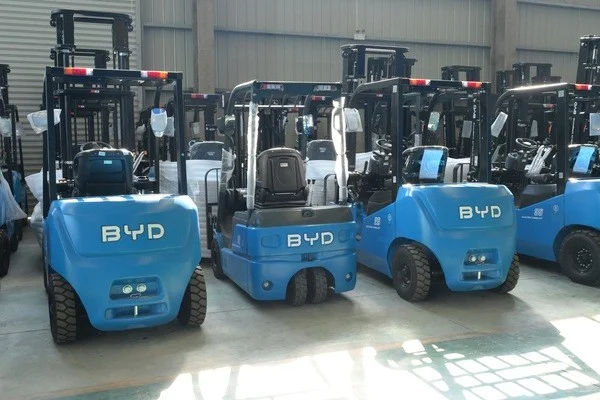
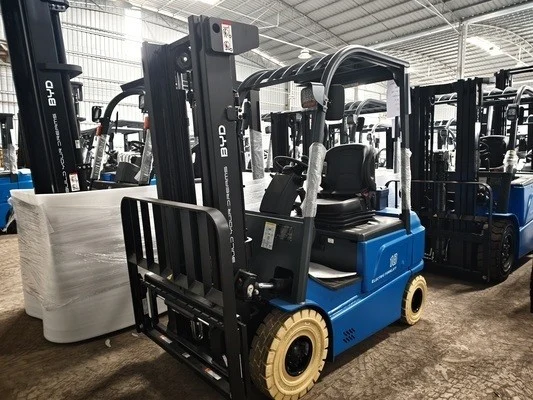
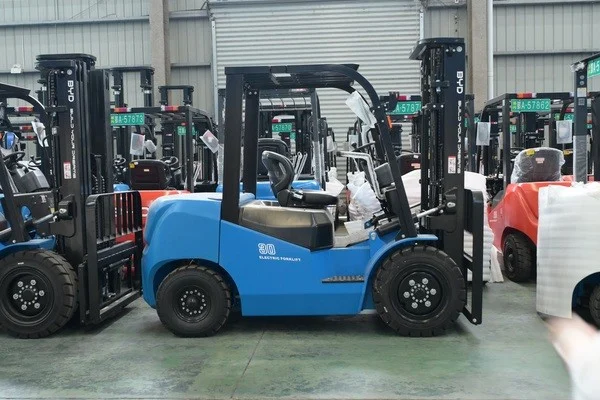
BYD lithium forklift: Load Capacity and Operational Stability Assessment Heavy Duty Outdoor Material Handling Applications
News 14/10/2026
Heavy duty outdoor material handling requires equipment capable of carrying consistent heavy loads while maintaining safe operation across variable ground conditions. BYD, a leading global manufacturer of electric powered industrial equipment, produces a range of lithium forklift models built to serve this work. Understanding available load capacity ranges and how design impacts operational stability helps organizations evaluate whether these units meet their specific needs.
Key Load Capacity Ranges BYD Lithium Forklifts Deliver
Standard Heavy Duty Class Offerings
BYD organizes its lithium forklift line around different use cases, with heavy duty outdoor models spanning 3-ton to 16-ton maximum load ratings. Lower end 3 to 5-ton models work well in general yard storage, loading and unloading trucks, and moving bulk building materials. Mid-range 6 to 10-ton models support common port intermodal work, moving empty and partially loaded shipping containers around terminal yards. The highest capacity 12 to 16-ton models handle fully loaded shipping containers and large bulk material shipments that require heavy lift capability.
Unlike lead acid powered electric forklifts, lithium battery units deliver consistent power output across nearly the full discharge cycle. This means load handling performance stays consistent through an entire work shift, rather than dropping off as the battery loses charge. The compact lithium battery design also eliminates the need to swap batteries frequently, which keeps heavy duty operations running without unplanned downtime.
Factors That Alter Real World Load Performance
Published maximum load capacity applies under ideal flat, level conditions. Several common outdoor factors reduce the safe maximum load a BYD lithium forklift can handle:
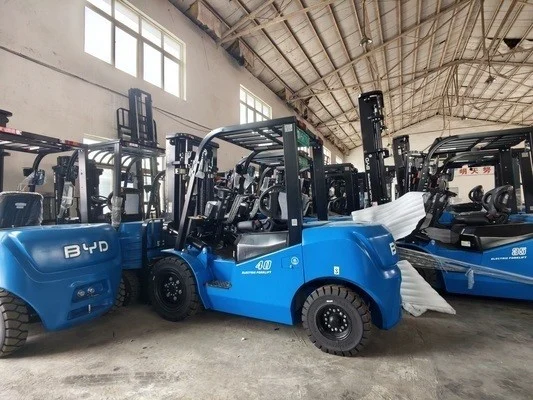
- Operating on gradients shifts the equipment’s center of gravity. Any slope steeper than 3% reduces maximum safe load by 10% to 20%, depending on gradient steepness.
- Uneven ground or soft surfaces cause subtle chassis tilt, which further lowers safe load limits.
- Extreme temperature environments impact lithium battery output. Temperatures below -10C or above 40C can reduce peak power output by up to 15%, which limits the ability to move and lift heavy loads.
Operational Stability in Outdoor Environments
Design Elements That Improve Outdoor Stability
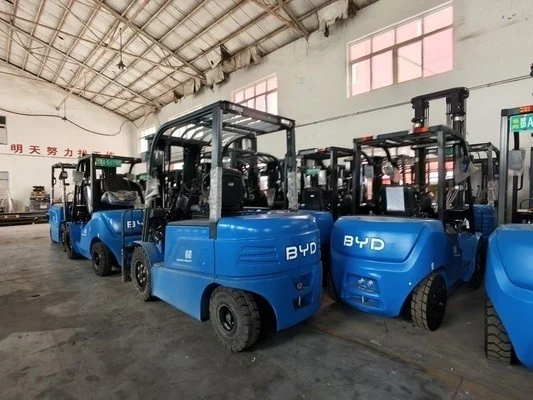
BYD designs heavy duty outdoor lithium forklifts with several features targeted at improving stability on variable ground. Most models include wider axle tracks than comparable indoor-only forklifts, which increases the base footprint and lowers tipping risk. Reinforced high-strength steel chassis add structural rigidity that resists flexing when carrying maximum loads across uneven ground.
Lithium batteries mount low within the chassis, near the front axle, which lowers the overall center of gravity. This low center of gravity is one of the biggest stability advantages of lithium powered designs compared to other power sources, as it reduces shift when lifting loads to full height. Most outdoor models also come standard with solid pneumatic tires that provide better traction on loose or uneven surfaces compared to smooth cushion tires used indoors.
Known Stability Limitations
Even with these design improvements, BYD lithium forklifts have specific stability limitations users must acknowledge. Soft, unimproved ground like loose sand, mud after heavy rain, or snow-covered uneven terrain can reduce traction and cause chassis sinking, which compromises stability. Users must avoid carrying maximum loads on these surface types, even with heavy duty outdoor models.
Lifting a maximum rated load to the full lift height also increases tipping risk on any non-level surface, regardless of equipment design. Users must follow standard forklift safety practices: lower loads during travel across uneven ground, and avoid turning with loads lifted to full height. Corrosion from long-term exposure to heavy rain or salt air near coastal areas can also weaken chassis components over time, which reduces stability if routine maintenance and corrosion treatment does not happen on schedule.
Frequently Asked Questions
Can BYD lithium forklifts handle full-time outdoor heavy duty work?
Most heavy duty BYD lithium forklift models built to work outdoors include sealed electrical components and corrosion-resistant coating on chassis and frame parts. These design elements support consistent daily operation in most temperate and cold climates. Always verify that the model you evaluate includes outdoor-specific weatherproofing before committing to purchase, as some BYD lithium forklift models are designed only to work indoors.
How does load capacity of a BYD lithium forklift compare to a comparable diesel model?
BYD lithium forklifts offer similar maximum load ratings to comparable diesel-powered models serving the same applications. Lithium batteries weigh less than lead acid batteries but more than diesel powertrain components, so chassis design adjustments keep load capacity and center of gravity consistent across power options within equivalent model classes.
What selection criteria apply when evaluating a BYD lithium forklift to use on my worksite?
First, match the model’s published maximum load capacity to the heaviest load you regularly move, and add a 10% safety buffer to accommodate outdoor working conditions. Second, confirm the model includes outdoor-specific design features like sealed electronics, corrosion protection and solid pneumatic tires. Third, test operation on your worksite’s typical ground conditions to check stability before putting the unit into full-time use. Finally, verify local service access to support routine maintenance and repairs.