How Many Types of Forklift Are There: A Classification Breakdown Based On Automation Level And Operational Autonomy Guiding Industrial Equipment Selection
News 19/10/2026
The number of forklift types varies depending on classification criteria. This guide groups all common forklifts by automation level and operational autonomy, directly addressing the core question how many types of forklift are there and helping industrial operations select the right option matching their workflow.
Core Classification Framework: Grouped By Automation & Autonomy
Many classification systems sort forklifts by power source, load capacity or usage scenario. This framework focuses on automation level and operational autonomy, the most relevant criteria modern industrial operations use when making purchasing decisions. Each group aligns with different site requirements, budget levels and workflow complexity. You can match your operation needs against each group to narrow options quickly.
Manual Forklifts: Lowest Automation, Full Operator Control
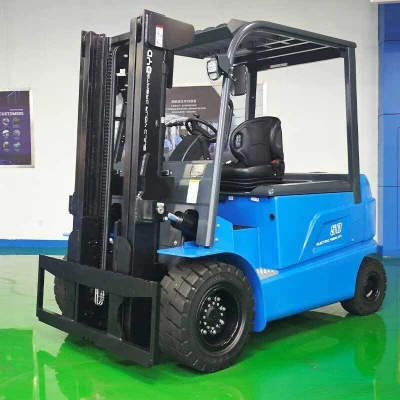
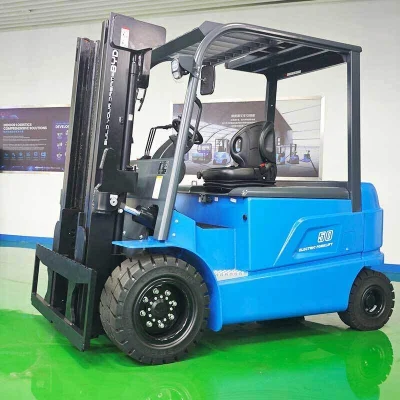
This first group includes all forklifts requiring full human control across every operation. All movement, load lifting, load positioning and storage tasks depend entirely on on-site operator input. Common variants in this group include:
- Counterbalance forklifts, the most common option in traditional warehouse use
- Pallet jacks, designed to move palletized loads across short distances
- Reach trucks, built to access high rack storage in narrow warehouse aisles
Manual forklifts fit small operations with low throughput, irregular workflow or limited capital budget. They require ongoing labor costs, but lower upfront investment. They also offer maximum flexibility when handling non-standard loads that need human judgment. Key limitations include higher risk of human error, lower throughput and ongoing labor requirements.
Semi-Automated Forklifts: Partial Autonomy, Shared Control
This group sits between manual and fully automated options. A human operator handles high-level decision making and complex maneuvers, while the system automates repetitive core tasks. Common automated functions include automatic load leveling, automatic navigation along pre-marked routes and automatic speed adjustment around pedestrian areas.
Common variants include:
- Operator-assisted forklifts with automated load stabilization
- Guided semi-autonomous units that follow wired or magnetic tracks within fixed routes
Semi-automated forklifts balance throughput and capital investment. They fit operations with some consistent repetitive routes, but still need human input handling non-standard tasks such as loading delivery trucks or handling odd-sized loads. They reduce common operator errors like load dropping or rack impact, while keeping flexibility human input provides. Upfront costs sit higher than manual units, but lower than fully automated systems.
Fully Automated Forklifts: Full Operational Autonomy
This top automation group includes forklifts that complete entire workflows without ongoing human intervention. Advanced sensor systems, mapping software and fleet management software handle navigation, obstacle avoidance, load picking and load placement tasks. Common variants include automated guided vehicles (AGVs) and autonomous mobile forklifts (AMFs).
AGVs rely on fixed infrastructure such as wires, magnets or QR codes to navigate within facilities. AMFs use simultaneous localization and mapping (SLAM) technology to navigate dynamically across changing warehouse layouts.
Fully autonomous forklifts fit large scale operations with high, consistent throughput. Common use cases include large distribution centers, automated storage and retrieval systems (AS/RS) and manufacturing facilities with steady 24/7 workflows. Key benefits include consistent throughput, reduced labor related injuries and lower long-term labor costs. Upfront investment remains the biggest barrier, plus integration with existing warehouse management systems requires specialized technical support. This option does not work well in facilities with highly variable workflows or frequent layout changes.
Frequently Asked Questions
Does classification by power source change this grouping?
No. This framework groups all forklifts by autonomy regardless of power source. Manual, semi-automated and fully automated forklifts all come in electric, internal combustion and hybrid power variants. You can combine power source selection with this automation level classification to narrow your options further.
What site size works best with each automation group?
Small sites with fewer than 10,000 square feet of operation space almost always benefit most from manual forklifts. Midsize sites between 10,000 and 50,000 square feet with consistent workflow often see good value from semi-automated options. Large sites over 50,000 square feet with steady high volume operations gain most from fully automated systems. This general guidance may shift based on your specific throughput and workflow variability.
Can I upgrade a manual forklift to add automation features?
Most standard manual forklifts do not support aftermarket automation upgrades. Some manufacturers offer semi-automated features as add-ons during original purchase, but retrofitting existing manual units rarely makes economic or technical sense. You should plan your automation level requirement before placing your order.
When selecting your next forklift, start by assessing your workflow consistency, annual throughput, available budget and long-term labor plans. This classification framework helps you eliminate options that do not align with your core operational needs before you dive into specific model comparisons.