What Industrial Buyers Should Verify in a Four-Wheel Counterbalance Electric Forklift Quote: Battery, Charger and Warranty Scope
News 30/10/2026
A four-wheel counterbalance electric forklift quote can look complete while leaving the three costliest items undefined: the battery, the charger, and what the warranty actually covers. Industrial buyers should treat a quote as a technical document, not a price sheet. Before comparing totals, confirm what is included in each of those areas, which assumptions the supplier made about your operation, and which details still need written clarification. This guide sets out the checks that matter most and the questions to send back before you approve an order.
Start With the Duty Cycle Behind the Quote
Battery and charger specifications only make sense against a stated workload. A quote built on a light single-shift assumption will not serve a two-shift operation with heavy lifting, and the reverse can mean paying for capacity you never use. Ask the supplier to record the assumptions used to size the package.
- Shift length and number of shifts per day, including breaks when the truck may recharge
- Load weight and how often the truck runs near its rated capacity
- Lift height and travel distance per cycle
- Charging window available between shifts and whether opportunity charging is expected
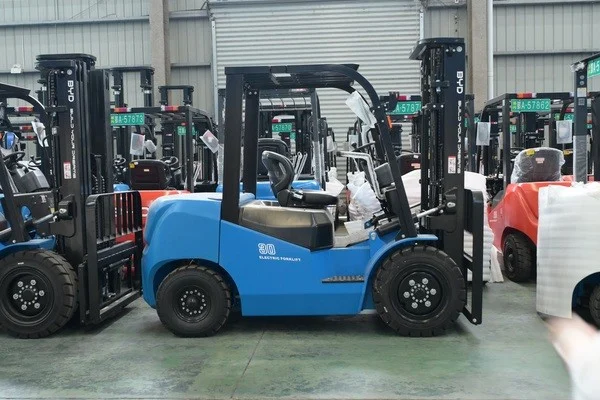
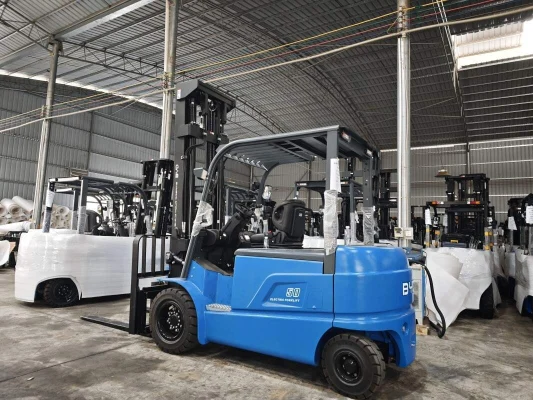
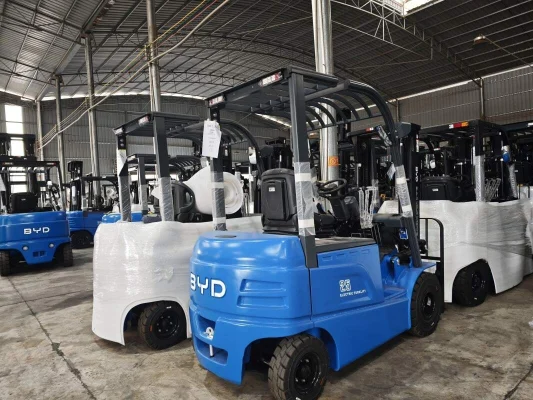
If those figures are missing from the quote, the battery and charger selection is a guess. Send the real numbers and request a revised configuration. A four-wheel counterbalance electric forklift is a common general-purpose choice in factories, loading areas, and warehouse transfer work, but the battery package must match the duty cycle rather than the model name.
Battery Details to Confirm in Writing
Lithium-ion packs vary in chemistry, capacity, and how the manufacturer specifies usable energy. A quote that lists only a voltage and a model number is not enough to compare offers.
Capacity, voltage, and usable energy
Check the rated voltage and rated capacity, and ask how usable capacity is defined. Confirm whether the figure refers to the full pack or a recommended depth of discharge. Where the supplier cannot provide a datasheet, mark the item as unverified rather than assuming a value.
Physical fit and compatibility
Confirm the battery is approved for the specific truck model and that counterweight, compartment dimensions, and connector type match. A pack that fits physically may still be incompatible with the truck’s control system.
Battery management and charging limits
Ask what the battery management system monitors and protects, what temperature range applies to charging and discharging, and what charging current the pack accepts. These limits determine whether your planned charging window is realistic.
Documentation and traceability
Request the battery datasheet, serial number tracking, and the terms covering capacity or health guarantees. If the quote mentions a warranty on the pack, the duration, the measured condition, and the party responsible should all be stated.
Charger Scope and Site Readiness
The charger is frequently the item that turns a tidy quote into an unexpected project. Verify what is supplied and what your site must provide.
| Item | What to confirm |
|---|---|
| Charger type and rating | Model, output voltage and current, and compatibility with the quoted battery |
| Power supply | Site voltage, phase, and available current; whether the charger suits your electrical installation |
| Installation | Who mounts and connects the charger, and what cabling or protection the site must supply |
| Location | Ventilation, ambient temperature, and distance from the parking area |
| Charging routine | Expected charge time and whether the plan relies on opportunity charging |
Also ask whether the charger is included in the truck price or quoted separately, and whether more than one charger is needed to keep the fleet running across shifts. Electrical work is usually outside the forklift supplier’s scope, so clarify the boundary before signing.
Warranty Scope: Read the Exclusions
Warranty language is where quotes differ most. Two offers with the same headline duration can cover very different things.
Components and periods
List the warranty period separately for the truck, the battery, and the charger. Ask whether coverage is full, pro-rated, or limited to specific parts, and whether labour and travel are included.
Conditions that void coverage
Common conditions include exceeding rated capacity, using unapproved chargers, missed maintenance, water or dust ingress beyond the stated rating, and unauthorized repairs. Ask which of these apply and how compliance is demonstrated.
Wear items and service obligations
Tyres, brake components, hydraulic hoses, and similar wear parts are often excluded. Confirm the maintenance schedule the warranty depends on and whether a service agreement is required.
Claims process
Ask who receives a claim, what response time is promised, and whether replacement parts are shipped or installed. Keep these answers with the quote, because they shape the real cost of ownership.
Questions to Send Back Before Approval
A short written clarification list resolves most ambiguity. Adapt these points to your site and request answers in the quote itself.
- What duty cycle and charging window did you assume, and which of my figures did you use?
- Please attach the battery datasheet, including usable capacity and charging temperature limits.
- Is the charger included, and what electrical supply and installation work does my site provide?
- What are the warranty periods and exclusions for the truck, battery, and charger?
- Which maintenance tasks must be completed to keep coverage valid?
- Which specifications remain unconfirmed pending a site survey?
Treat any item left blank as a risk, not a minor detail. When you are ready to compare configurations, share your load weight, lift height, shift pattern, and charging conditions so the four-wheel counterbalance electric forklift package can be quoted against your actual operation.
Frequently Asked Questions
Should the battery and charger appear as separate line items?
They should be identifiable even when bundled into one price. Separate line items make it easier to compare offers and to see what changes if your duty cycle shifts.
How can I compare battery capacity between two quotes?
Compare rated voltage, rated capacity, and the definition of usable capacity, then check the charging limits. If one supplier cannot provide a datasheet, the comparison is incomplete.
Does a longer warranty always mean better coverage?
No. Check which components are covered, whether labour is included, and which conditions void the warranty. A shorter warranty with clear terms can be easier to rely on than a long one with broad exclusions.
What if my site cannot supply the charger’s electrical requirements?
Raise it before ordering. The supplier can confirm whether a different charger configuration suits your supply, and your electrician can assess the installation work separately.