Four-Wheel Counterbalance Electric Forklift Procurement: Matching Site Clearance and Turning Radius to Your Yard Layout
News 13/11/2026
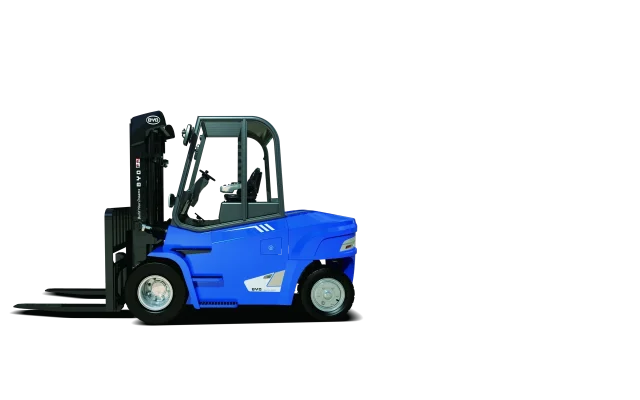
Yard layout decides whether a four-wheel counterbalance electric forklift can work efficiently or simply fit. Two figures matter most during procurement: the aisle width your site can realistically provide, and the turning radius the truck needs to maneuver inside it. Getting these wrong shows up later as damaged racking, slow cycles, or a truck that cannot enter a doorway it was bought to serve.
This guide explains how to collect site measurements, how turning radius relates to aisle and doorway dimensions, and which technical documents to request before you confirm an order. It focuses on four-wheel counterbalance electric forklifts; other truck types appear only where the boundary between designs needs clarification.
Measure the Site Before You Compare Trucks
Start with the yard, not the catalog. A useful measurement set covers every point the truck must pass and every point it must turn.
- Travel aisles: measure the narrowest clear width along the main routes, not the widest.
- Racking and stacking aisles: record the clear distance between rack uprights or stored loads, including any protrusions.
- Doorways and gates: note clear opening width and height, plus threshold height and any ramp slope.
- Turns and corners: measure inside and outside corner radii and check what sits at the corner, such as columns, bollards, or wall-mounted equipment.
- Floor condition: note surface type, joints, drains, and gradients along the route.
- Overhead limits: record clearance under mezzanines, pipework, doors, and lighting.
Measure at the tightest realistic operating condition. If pallets overhang aisle edges when stored, the effective clear width is smaller than the marked dimension.
How Turning Radius Interacts With Aisle Width
Turning radius is usually quoted as the distance from the truck’s center of rotation to the outermost point of the chassis or load during a turn. Suppliers may quote an inside radius or an outer radius, and the two are not interchangeable. Always confirm which definition appears on the datasheet and whether the figure includes the load.
Three dimensions combine to determine whether a truck can turn in a given aisle:
- The turning radius itself.
- The truck’s overall width, including any counterweight overhang.
- The load dimensions, especially load length and any overhang beyond the fork face.
A practical check is to compare the required aisle width stated by the supplier against your measured clear width, then subtract a working margin. The margin accounts for operator variation, load sway, and steering corrections. The correct margin depends on your operation, floor surface, and operator skill, so agree on it with your supplier rather than assuming a figure.
Turning radius versus right-angle stacking aisle
Right-angle stacking aisle width describes the space needed to turn 90 degrees into a rack bay. It is normally larger than the travel-aisle requirement because the load swings outward during the turn. Ask the supplier to state the stacking aisle width at your intended load length and load center, not at a generic reference load. If your racking is fixed and the measured stacking aisle is below the supplier’s figure, the layout, the load, or the truck type needs review before purchase.
Technical Documents to Request Before You Confirm an Order
Procurement decisions should rest on documents you can check, not on verbal assurances. Request the following with any quotation:
| Document or data point | What to verify |
|---|---|
| Dimensional drawing | Overall length, width, height, wheelbase, and fork dimensions |
| Turning radius statement | Inside or outside radius, and whether load is included |
| Aisle width data | Travel and right-angle stacking figures at your load length and load center |
| Rated capacity chart | Capacity at your required lift height and load center, not only at the fork face |
| Battery and charger details | Battery type, voltage, charger rating, and charging time from the manufacturer’s technical data |
| Floor loading information | Wheel loads and ground pressure to compare with your floor’s rated capacity |
Where a figure is missing, ask the supplier to confirm it in writing. Do not fill gaps with assumptions, and do not accept a capacity rating quoted only at a short load center if your loads sit further out.
Configuration choices that affect clearance
Fork length, carriage type, overhead guard height, and counterweight design all change the truck’s footprint. A longer fork increases the effective load length and can increase the aisle needed to turn. Confirm each configuration item against your measured site, and ask whether the chosen configuration changes any published dimension.
Frequently Asked Questions
Can a four-wheel counterbalance electric forklift work in a narrow aisle?
It can work in aisles that meet its stated requirement, but a four-wheel counterbalance design generally needs more turning space than a design built specifically around tight aisles. Compare your measured clear width with the supplier’s stacking aisle figure at your actual load length. If the gap is small, discuss load size, rack layout, and travel direction before deciding.
Does turning radius include the load?
Not always. Some datasheets quote the truck alone; others quote a figure with a reference load. Ask which basis applies and request the figure at your load dimensions, since overhang beyond the fork face changes the space required.
What if my doorway is narrower than the stacking aisle?
Doorway width is a separate constraint from turning space. Check the truck’s overall width, including mirrors or other fittings if they are fitted, against the clear opening. A truck that turns comfortably in the aisle may still not pass a narrow door, so measure both.
Which measurements should I send when requesting a selection review?
Send the narrowest travel aisle, the stacking aisle at each rack face, doorway widths and heights, floor gradients, required load weight, load dimensions, and required lift height. These details let the supplier match a four-wheel counterbalance electric forklift configuration to your yard and flag any point that needs a site check.
Before signing, walk the route with the dimensional drawing in hand and confirm every tight point against the measured figures. If any dimension is uncertain, resolve it with the supplier in writing rather than relying on a trial run after delivery.