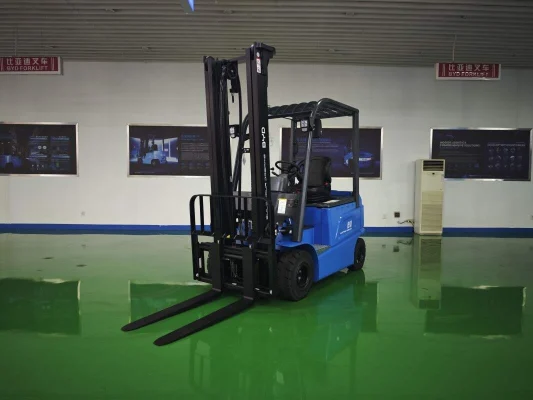
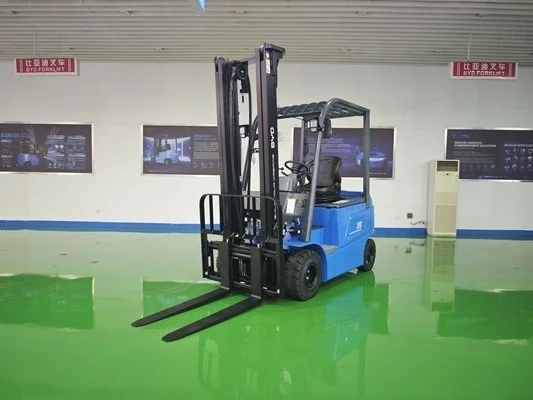
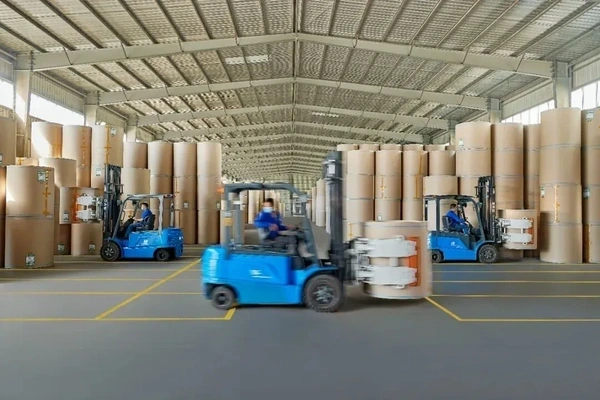
Different Size Forklifts: How to Specify Four-Wheel Counterbalance Electric Models When Load Weight, Lift Height, and Duty Cycle Vary
News 06/11/2026
“Different size forklifts” usually means one buyer needs several machines, or one machine must cover several jobs. With four-wheel counterbalance electric forklifts, size is not a single number on a brochure. It is the result of matching load weight, load center, lift height, duty cycle, and the space the truck must work in. The practical approach is to define the heaviest and highest task first, then check whether a smaller model can handle the lighter work without compromising stability or throughput.
Start With the Load, Not the Model Number
Rated capacity is only meaningful together with load center. A four-wheel counterbalance electric forklift rated at a given capacity at a standard load center will have a lower permitted capacity when the same load is carried further from the fork face. That is why pallet depth, attachment type, and load shape matter as much as weight.
Before comparing models, record these items:
- Heaviest load, including pallet, packaging, and any attachment weight.
- Load dimensions and the actual load center in normal use.
- Whether loads are uniform or vary widely through the shift.
- Any attachment that moves the load forward or changes its geometry.
If the heaviest load already sits close to the rated limit at a standard load center, a larger model is usually the safer starting point. Choosing a truck that is only just adequate leaves little margin when a heavier pallet or a different attachment appears.
Lift Height Changes the Stability Equation
Lift height affects both residual capacity and the practical limits of the mast. Higher lifts generally reduce the capacity a truck can handle safely, and they also raise questions about mast type, free lift, overhead obstructions, and visibility.
Questions to settle before choosing a mast
- What is the highest shelf or rack beam the forks must reach?
- Is there a low doorway, mezzanine, or overhead guard constraint?
- Does the site need free lift to enter a trailer or container?
- Will the operator need a clear view of the load at height?
Do not treat the maximum lift height on a specification sheet as the working height. The useful figure is the height at which the truck can still handle the intended load safely, and that figure must come from the manufacturer’s technical data for the specific model and mast combination.
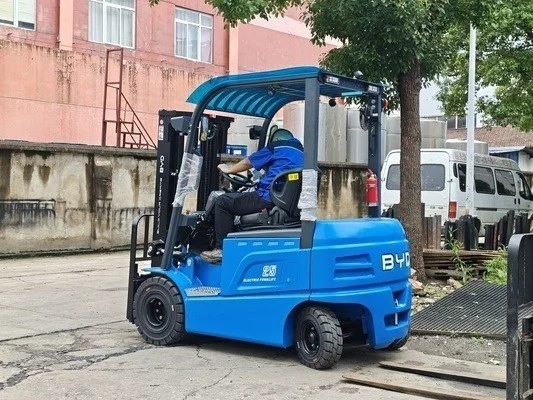
Duty Cycle Decides Battery and Charging Strategy
Duty cycle is often described loosely as light, medium, or heavy. A more useful description covers hours of actual operation, number of shifts, intensity of travel and lifting, and the opportunity to charge between tasks.
With lithium battery models, charging behavior is part of the specification, not an afterthought. The right questions are:
- How many hours per shift will the truck actually run?
- Can the truck be charged during breaks, or must it run a full shift without interruption?
- Is there a suitable charging location and electrical supply?
- Will one truck cover peak periods, or is a second unit needed as backup?
Where charging data is not available, ask the supplier to confirm charge time, available battery capacity, and recommended charging practice for the exact model under consideration. Avoid assuming that a larger battery automatically solves a demanding schedule; the charging window and site power supply still have to support it.
Match Truck Dimensions to the Working Aisle and Floor
Two trucks with similar capacity can differ in length, width, turning radius, and counterweight overhang. Those dimensions determine whether the truck can turn inside the aisle, enter trailers, and pass between racking and walls.
| Site condition | What to measure or confirm |
|---|---|
| Aisle width | Clear width between rack uprights and any fixed obstruction |
| Doorways and trailer entries | Clear opening height and width, plus approach space |
| Floor surface | Joints, ramps, drains, and any change in level |
| Ramps or slopes | Gradient, length, and whether loads are carried up or down |
Floor and ramp conditions also influence wheel choice and the safe handling of loads. A four-wheel counterbalance electric forklift is a common general-purpose choice in factories, loading areas, and warehouse transfer work, but the specific model still has to suit the surface, gradient, and space available. Claims that one configuration suits every site should be treated with caution.
Build a Short Specification Before Requesting a Quote
Specifying different sizes becomes much easier when every candidate is judged against the same written requirements. A short specification sheet helps the supplier recommend a model and configuration instead of guessing.
Information to include
- Heaviest load and its load center.
- Required lift height and any free-lift need.
- Operating hours per shift and charging windows.
- Aisle width, doorway dimensions, and floor or ramp conditions.
- Attachment type and any special handling requirement.
Then compare candidate models on rated capacity at the actual load center, mast specification, overall dimensions, and charging requirements. Where a figure is missing from the available technical data, mark it as unconfirmed rather than filling the gap with an estimate.
Common specification mistakes include choosing capacity at a standard load center while working further out, ignoring the effect of lift height on residual capacity, and selecting a battery or charger without checking the shift pattern. Each of these can lead to a truck that looks correct on paper but struggles in daily use.
If you are comparing several sizes, send the site details, load weight, and lift height to the supplier and ask which four-wheel counterbalance electric forklift configuration fits. A clear brief shortens the selection process and reduces the risk of ordering a truck that is either oversized or marginal.
Frequently Asked Questions
Can one four-wheel counterbalance electric forklift cover different load sizes?
Often it can, provided the truck is rated for the heaviest load at the actual load center and the required lift height. The limit is not the average load but the most demanding combination the site will realistically present.
Does a higher lift height always require a larger truck?
Not always, but lift height does affect residual capacity and mast choice. The correct answer depends on the load, the load center, and the manufacturer’s data for that model and mast.
How does duty cycle affect lithium battery model selection?
Duty cycle determines how much operating time the truck needs between charges and whether opportunity charging is practical. Confirm charge time, battery capacity, and charging arrangements with the supplier rather than assuming a standard configuration will fit.
What should I measure before choosing between different size forklifts?
Measure aisle width, doorway and trailer openings, floor conditions, ramps, and the highest lifting point. Combine those measurements with load weight, load center, and shift pattern so every candidate model is assessed on the same basis.