Evaluating Gradeability and Travel Speed Requirements When Specifying a Four-Wheel Counterbalance Electric Forklift
News 02/11/2026
Gradeability and travel speed are two of the most frequently mis-specified figures in an electric forklift purchase. Buyers often compare brochure numbers without checking the conditions behind them, then discover that a ramp the truck handles empty becomes a problem when it carries a full load. This article explains how to read gradeability and speed data, how the two interact, and what to confirm with the supplier before ordering a four-wheel counterbalance electric forklift.
Why Gradeability and Travel Speed Matter Together
Gradeability describes the steepest slope a forklift can climb under defined conditions. Travel speed describes how fast it moves on level ground. The two are linked through the drivetrain: energy that goes into climbing a ramp is not available to maintain speed, and a truck rated to climb a certain grade may do so only slowly, or only with a reduced load.
A specification sheet may state gradeability with no load, with rated load, or both. It may also state whether the figure applies to a short ramp or sustained travel. These distinctions change the answer substantially. A truck that climbs a 10% grade empty may handle only a gentler slope with its rated load, and a long ramp gives the operator less margin than a short dock ramp.
Travel speed is usually quoted as maximum speed without load. Loaded speed is lower, and the gap varies by model and configuration. Buyers who plan routes around the unloaded figure can end up with unrealistic cycle-time expectations.
Matching the Truck to Your Actual Routes
Start by mapping the real routes the truck will travel, not the ideal ones. Walk the site and record each ramp, dock plate, threshold, and floor transition. Note the length of each slope, its surface, and whether it is used loaded, empty, or both.
Measuring ramps and slopes
Express each slope as a percentage: rise divided by run, multiplied by 100. A ramp that rises one meter over ten meters of horizontal run is a 10% grade. Measure the run along the slope surface rather than the horizontal projection if you want a conservative figure. Record whether the ramp is indoors or outdoors, dry or exposed to rain, and whether the surface is concrete, steel plate, or another material.
Estimating cycle time from speed
Travel speed only matters in the context of distance. Multiply the length of each leg by the number of trips per shift to see where time is actually spent. On short, congested routes, acceleration, braking, and load handling often dominate the cycle, and a higher top speed may contribute little. On long, open transport runs, speed has a larger effect. Ask the supplier how the quoted speed was measured and whether a loaded figure is available.
Accounting for load and attachments
Rated capacity is defined at a specific load center, and adding an attachment or handling a load whose center of gravity sits further forward reduces the capacity the truck can safely carry. Lower capacity means the truck may need to work at a lower speed or may not be suitable at all on a given ramp. Confirm the residual capacity with the attachment fitted, and confirm gradeability at that reduced load rather than at the nominal rating.
Parameters to Confirm Before Ordering
The table below lists the points that most often cause problems after delivery. The right-hand column shows what to request; where a figure is not documented, treat it as unconfirmed rather than assume a value.
| Parameter or condition | Why it matters | What to confirm with the supplier |
|---|---|---|
| Gradeability, loaded and unloaded | Determines whether the truck can use your ramps safely | Test conditions: load, load center, ramp length, surface, and whether the figure is a maximum or a sustained capability |
| Travel speed, loaded and unloaded | Affects cycle time and operator expectations | How speed was measured and whether it is governed by site settings |
| Rated capacity at actual load center | Attachments and off-center loads reduce safe capacity | Residual capacity with your attachment and load dimensions |
| Ramp surface and condition | Wet, oily, or steel surfaces reduce traction | Tyre type and compound suited to your floor and outdoor exposure |
| Battery and charging arrangement | Shift length and charging windows affect availability | Battery capacity, charging time, and whether opportunity charging suits your schedule |
| Operator controls and speed limits | Site rules may require restricted travel speed | Whether speed can be limited and how that interacts with gradeability settings |
Reading gradeability figures honestly
A gradeability percentage is not a guarantee that every operator can use that slope in every condition. Traction, tyre condition, floor contamination, and load stability all affect the practical limit. If your site has a ramp close to the quoted maximum, ask the supplier to explain the assumptions behind the figure and consider a demonstration on a comparable slope. Treat any figure you cannot trace to documented test conditions as indicative only.
Speed settings and site safety
Many electric forklifts allow travel speed to be limited, which is useful in shared pedestrian areas, narrow aisles, and loading docks. Limiting speed can also reduce the energy drawn during acceleration, but the effect on battery life depends on the route and duty cycle. Discuss with the supplier which settings are adjustable, who can change them, and whether any adjustment affects the truck’s rated gradeability.
Common specification errors
- Comparing unloaded gradeability across models when the site ramps are used loaded.
- Assuming top speed applies on short, busy routes where acceleration dominates.
- Ignoring the effect of attachments on residual capacity and therefore on safe ramp performance.
- Overlooking floor surface and contamination, which can make a nominally adequate grade unsafe.
- Planning charging around a single shift without checking whether the battery and charger arrangement supports the actual schedule.
Frequently Asked Questions
Can a four-wheel counterbalance electric forklift climb a loading dock ramp?
Often yes, but the answer depends on the ramp’s grade, length, surface, and the load carried. Dock ramps vary widely, and a truck rated to climb a given percentage unloaded may not do so at full capacity. Measure the ramp, confirm the loaded gradeability figure with the supplier, and check traction on the actual surface, especially when wet.
Does a higher travel speed always shorten the work cycle?
No. On short routes with frequent stops, acceleration, braking, and load handling take up much of the cycle, so a higher top speed may make little difference. Speed matters more on long, open runs. Estimate cycle time using your real distances and trip counts rather than the maximum speed alone.
How does an attachment change gradeability?
An attachment typically moves the load center forward and adds weight, which reduces the capacity the truck can safely handle. With less usable capacity, the truck may need to travel more slowly on ramps or may not be suitable on a given slope at all. Ask the supplier to confirm residual capacity and gradeability with the specific attachment fitted.
What information should I gather before requesting a quotation?
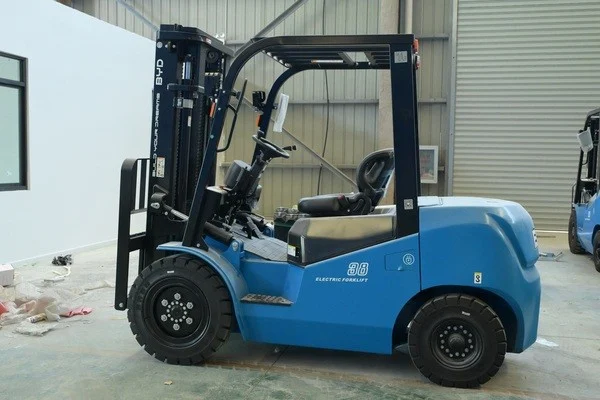
Collect the steepest ramp grade and its length, the surface type and condition, the loads you handle and their dimensions, required lift height, aisle widths, shift pattern, and charging arrangements. With these details, the supplier can advise which configuration suits your site and which figures still need verification. Contact our team with your operating conditions, load, and lift height to discuss selection and configuration of a BYD four-wheel counterbalance electric forklift.
Building a Practical Specification
Gradeability and travel speed are not abstract numbers to be maximized. They are constraints that should match your routes, loads, and safety rules. A truck with a modest top speed may serve a busy indoor operation perfectly well, while a site with long outdoor ramps needs careful attention to loaded gradeability and traction.
Before ordering, complete a short checklist: measured ramp grades and lengths; surface types and contamination risks; actual loads and load centers; attachment requirements; required lift height and aisle dimensions; shift and charging schedule; and any site speed limits. Ask the supplier to document the test conditions behind each gradeability and speed figure, and to confirm residual capacity with your attachment. Where documentation is missing, plan a demonstration on a comparable slope rather than relying on the brochure. This approach keeps expectations realistic and reduces the risk of a truck that cannot handle the work it was bought to do.