Electric Forklift Sizing Guide: Confirming Four-Wheel Counterbalance Capacity Against Factory Ramp Gradients and Load Stability
News 07/11/2026
Sizing an electric forklift for factory work rarely fails because the truck is too small on flat concrete. It fails because the ramp, the load center, and the attachment were treated as afterthoughts. A four-wheel counterbalance electric forklift rated at a nominal capacity on a level floor can lose a meaningful part of that capacity once the same load is carried up a gradient or shifted forward. This guide explains how to confirm capacity against real factory conditions before you commit to a model, and which parameters you must collect first.
Start With the Duty Cycle, Not the Nameplate Capacity
Nameplate capacity is a reference point measured under defined test conditions, usually with a stated load center and a level surface. It is not a promise about your aisle, your ramp, or your pallet overhang. Before comparing models, write down what the truck actually does during a shift.
Operating data to collect
- Peak load weight, including packaging, pallets, and any residual product, not just the nominal unit weight.
- Load dimensions and load center: the horizontal distance from the vertical face of the forks to the center of gravity of the load. A load that overhangs the fork face shifts the center forward.
- Lift height required at each stage, plus free lift needs if the truck must enter trailers or low-clearance areas.
- Ramp or incline: grade percentage, length, surface condition, and whether the truck travels loaded uphill, downhill, or both.
- Aisle and door widths, plus any turning points where the counterweight tail swing matters.
- Shift pattern and charging window: how many hours the truck runs, and when it can be charged or have its battery exchanged.
This list is the minimum input an equipment supplier needs to propose a configuration. If any item is missing, the resulting recommendation rests on assumptions rather than verified conditions.
Reading Ramp Gradients Against Rated Capacity
Gradients affect a counterbalance truck in two ways. First, the load’s weight component along the slope adds to the forces the mast and chassis must resist. Second, traveling on an incline changes the effective geometry of the load relative to the stability base. Manufacturers publish capacity ratings that assume a level surface; those ratings do not automatically transfer to a ramp.
Practical checks before accepting a capacity figure
- Ask the supplier to confirm whether the rated capacity applies on the gradient you actually use, and under what load center.
- Confirm the maximum gradient the truck is rated to climb with the intended load, and whether that figure assumes the load is carried low and tilted back.
- Check ground conditions on the ramp: smooth concrete, expansion joints, steel plates, or wet surfaces all change traction and braking behavior.
- Consider travel direction. Descending a ramp with a load changes braking demands, and the operator’s ability to stop safely must be part of the assessment.
A grade expressed as a percentage is rise divided by run. A ramp rising one meter over twenty meters of horizontal run is a five percent grade. Measure it rather than estimating it, because small differences in grade matter when the truck is near its capacity limit.
Why derating is normal, not a defect
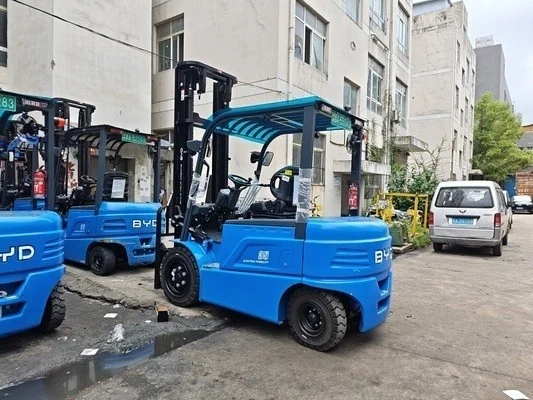
Capacity reduction at increased load center or lift height is standard counterbalance behavior, driven by stability limits. The important question is whether the derated capacity at your worst-case combination of load center, lift height, and gradient still covers your peak load with a sensible margin. If it does not, the answer is usually a larger model or a different load-handling approach, not a promise that the truck will manage.
Load Stability, Attachments, and the Conditions That Change the Answer
Stability is the result of the load, the truck, and the surface acting together. A load that is stable in a rack can become marginal during a turn on a ramp. Several factors deserve explicit attention.
Load center and attachments
Any attachment that moves the load forward, such as a side shifter or a clamp, reduces the capacity available at a given load center. If your process needs an attachment, state it at the inquiry stage so capacity can be assessed with the attachment fitted, not as an afterthought.
Load integrity and handling practice
Unstable stacking, damaged pallets, or loads taller than the carriage backrest can compromise stability regardless of rated capacity. Operators should travel with the load low and the mast tilted back, following the manufacturer’s operating instructions. Training and site rules are part of the safety envelope, not optional extras.
Floor, tire, and environment
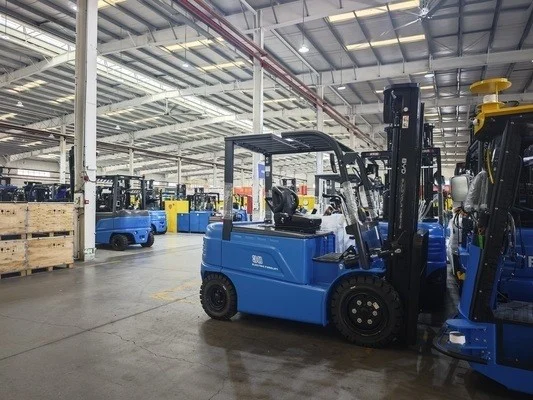
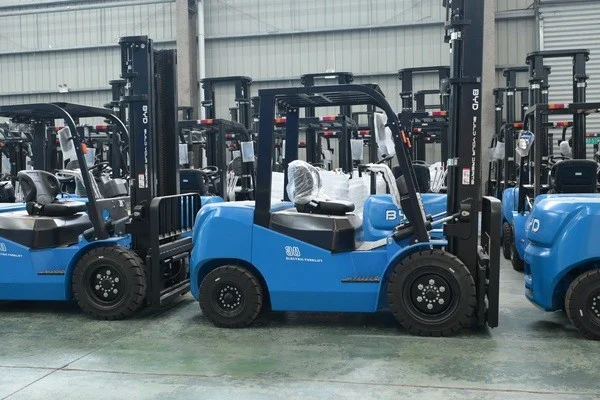
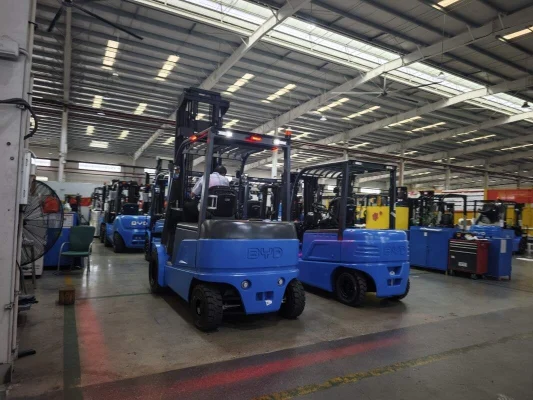
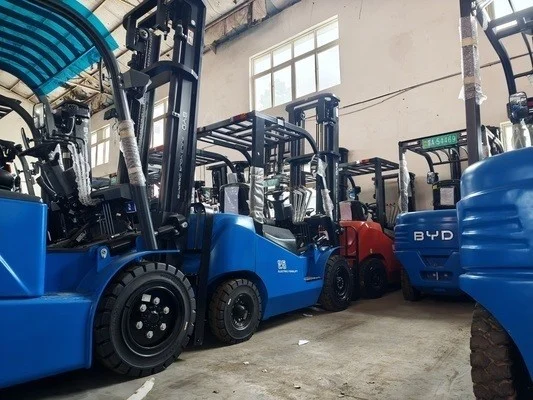
Four-wheel counterbalance electric forklifts are common general-purpose choices in factories and warehouses because they combine load capacity with maneuverability on prepared surfaces. Whether a specific model suits your building depends on floor flatness and load-bearing capacity, tire type, door and aisle dimensions, and any dust, moisture, or temperature extremes. None of these can be judged from a capacity number alone.
Charging and shift coverage
Battery capacity and charging strategy determine whether the truck can complete the shift without an interruption. Lithium-ion models can often be opportunity-charged during breaks, but the practical answer depends on the charger available, the facility’s electrical capacity, and the actual energy demand of your duty cycle. Confirm these details with the supplier rather than assuming a standard configuration fits.
Frequently Asked Questions
Can a four-wheel counterbalance electric forklift work on a ramp?
It can, provided the model is rated for the gradient and the load being carried, and provided the load is handled according to the manufacturer’s instructions. The rated capacity on level ground does not automatically apply on a slope, so confirm the gradient rating and the load center with the supplier before relying on the truck in that location.
How do I know if my load center is within the rated range?
Measure the distance from the vertical face of the forks to the load’s center of gravity. Compare that figure with the load center stated on the capacity plate. If your load center is greater, the available capacity is lower than the nameplate figure, and the supplier should confirm the derated value at your actual load center and lift height.
What information should I prepare before requesting a quotation?
Prepare peak load weight and dimensions, load center, required lift height, ramp grade and length, aisle and door widths, floor condition, shift length, and charging arrangements. Also state any attachment needs. These details let the supplier propose a configuration that matches your conditions instead of a generic model.
Does adding an attachment reduce capacity?
Attachments that move the load forward or add weight to the carriage generally reduce the capacity available at a given load center. The exact effect depends on the attachment and the truck, so it should be confirmed against the manufacturer’s technical data with the attachment specified.
Before finalizing a selection, verify the ramp grade, the worst-case load center, the lift height, and the charging plan against the supplier’s technical documentation. Where a figure is not documented, treat it as unconfirmed and ask. A capacity claim that cannot be tied to your actual conditions is not a basis for a safe purchase decision.