Planning Lithium Battery Recharging Windows Across Three-Shift Operations: A Four-Wheel Counterbalance Electric Forklift Guide
News 06/11/2026
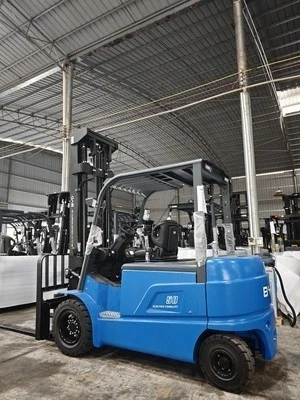
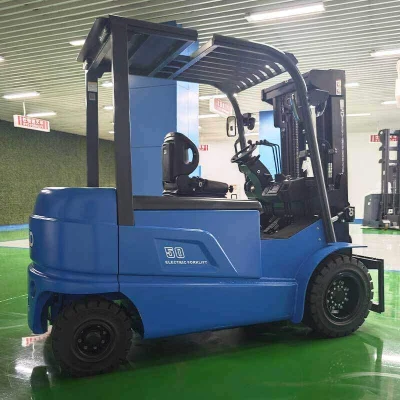
Three-shift operation turns recharging from an afterthought into a scheduling problem. A four-wheel counterbalance electric forklift running a factory floor across 24 hours needs a charging plan that keeps trucks available at shift change, avoids peak-demand charges, and stays inside the battery supplier’s stated limits. This guide explains how to build that plan using verified operating data rather than guesswork, and it highlights the parameters you should confirm before you commit to a configuration.
Why Recharging Windows Matter More in a Three-Shift Plant
A single-shift site can usually recharge overnight and accept the cost. A three-shift site cannot. Every truck is either working, waiting, or charging, and the balance between those states determines how many units you actually need. When an electric forklift serves factory logistics, the charging window is a production constraint, not a maintenance detail.
Three practical pressures shape the plan:
- Shift-change peaks. Trucks often return to the charging area at the same time, so charger count and bay layout matter as much as battery capacity.
- Opportunity charging. Short breaks and idle periods can top up a lithium battery, but only if the battery management system (BMS) and charger permit partial charging within the supplier’s stated conditions.
- Electrical demand. High-rate charging during production hours can coincide with other plant loads, so the electricity supply and tariff structure need review.
Lithium batteries generally accept opportunity charging better than lead-acid designs, which typically need longer, fuller cycles and cooling periods. That is a general material characteristic, not a guarantee of any specific product’s behavior. Confirm the actual charging profile, temperature limits, and cycle expectations with the battery and truck supplier.
Building a Charging Schedule Around Real Duty Cycles
A reliable schedule starts with measured duty, not assumed duty. Record how each truck is used before you decide how many chargers to install.
Step 1: Measure the duty cycle
Log the following across a representative week, ideally covering all three shifts:
- Operating hours per shift and per truck.
- Distance travelled and lift cycles per shift.
- Average and maximum load weight, plus the load center in use.
- Lift heights and the attachments fitted, since these affect energy draw.
- Idle periods long enough to accept a partial charge.
Energy consumption depends on load, lift height, travel distance, floor conditions, and operator behavior. Without measured data, any runtime figure is an estimate. Ask the supplier to state the conditions behind any runtime claim they provide.
Step 2: Define the charging windows
Map the day into windows where a truck can be offline without disrupting material flow. Typical candidates include shift handover, scheduled breaks, and low-activity periods. Then check each window against three constraints:
- Duration. Is the window long enough for the charge the truck needs, given the charger rating and the battery’s accepted charge curve?
- Temperature. Is the battery and charging area within the operating and charging temperature range the manufacturer specifies?
- Availability. Is a charger and a safe parking bay free at that time?
Step 3: Decide between opportunity charging and full-cycle charging
Opportunity charging spreads energy intake across the day and can reduce the need for a large single charge. Full-cycle charging concentrates the work into one longer window, which may suit a site with a quiet overnight period. Neither approach is universally better. The right choice depends on the battery’s specified charge acceptance, the BMS limits, the charger’s capability, and how much downtime the operation can absorb.
Step 4: Size the charger fleet and bay layout
Count chargers by peak simultaneous demand, not by total truck count. If four trucks return at shift change and each needs a charge, two chargers create a queue. Also check the electrical supply capacity, cable routing, ventilation, and fire-safety requirements that apply at your site. These are site-engineering questions; confirm them with your electrical contractor and the equipment supplier.
Step 5: Set rules operators can follow
Write a short charging procedure covering plug-in sequence, connector handling, what to do when a fault appears, and who authorizes a change to the schedule. Keep the battery supplier’s instructions at the charging bay. A schedule only works if operators can follow it without interpretation.
Parameters and Site Conditions to Confirm Before Purchase
The table below lists the items that most often decide whether a charging plan works. Treat every entry as something to verify with the supplier or your site team; none of these values should be assumed.
| Item to confirm | Why it matters to a three-shift factory | What to ask or check |
|---|---|---|
| Battery capacity and stated runtime | Determines how much energy each truck needs between charges | Runtime test conditions: load, lift height, travel, temperature |
| Charger rating and charge curve | Sets how long a window must be | Rated output, compatibility with the BMS, partial-charge behavior |
| Operating and charging temperature range | Affects whether charging bays and cold areas are usable | Manufacturer’s stated limits and any derating below or above them |
| Rated load, load center, and remaining capacity with attachments | Overloading raises energy draw and affects stability | Data plate values and the effect of any fitted attachment |
| Aisle width and turning radius | Determines whether a four-wheel counterbalance truck fits the layout | Measured aisle dimensions against the truck’s published figures |
| Floor and ramp conditions | Slopes and rough floors increase energy use | Gradient, surface type, and drainage in the travel routes |
| Electrical supply and tariff | Charging windows may need to avoid demand peaks | Available capacity, connection type, and peak/off-peak pricing |
| Charging bay ventilation and safety provisions | Affects layout and compliance | Local requirements and the supplier’s installation guidance |
Standard and optional features vary by model and configuration. Do not assume that a feature seen on one truck is standard on another. Ask the supplier to mark each item as standard, optional, or subject to confirmation.
Where a site’s aisle width, lift height, or load center falls outside what a four-wheel counterbalance electric forklift can handle safely, say so and revisit the layout or the task. Do not force a task into a truck class that does not suit it.
An illustrative scheduling scenario
Consider a hypothetical factory running three eight-hour shifts with six four-wheel counterbalance trucks. Suppose each truck is logged as active seven hours per shift, with a 30-minute handover window. A planner might assign two trucks to charge during each handover, rotating the pairs across the day so that every truck receives a partial charge at least once per shift. Whether that is enough depends entirely on measured energy use and the battery’s accepted charge rate. The scenario shows the planning method, not a validated result.
Frequently Asked Questions
Can a lithium battery be opportunity-charged during short breaks?
Often yes, but the answer depends on the battery’s BMS and the charger’s design. Confirm the manufacturer’s guidance on partial charging, connector cycles, and any limits on repeated short charges. Do not treat opportunity charging as universally approved.
How many chargers does a three-shift operation need?
There is no fixed ratio. Count how many trucks must charge at the same time during your busiest window, then check the charger output, the electrical supply, and the bay space. A supplier can help size the charger fleet once you provide measured duty data.
What should I give a supplier to get an accurate recommendation?
Provide shift patterns, measured operating hours, load weights and load centers, lift heights, aisle widths, floor and ramp conditions, ambient temperatures, and your electrical supply details. These inputs let the supplier match a four-wheel counterbalance electric forklift configuration to your actual work.
Does charging temperature affect the schedule?
Yes. Batteries have specified operating and charging temperature ranges, and charging outside them may be restricted or derated. Check the manufacturer’s stated limits and plan charging bays accordingly, especially where ambient temperatures vary through the year.
Before ordering, assemble your duty-cycle records, site measurements, and electrical details, then ask the supplier to confirm every specification that affects your charging plan. If you are evaluating a four-wheel counterbalance electric forklift from our range, share your load, lift height, aisle, and shift data so the selection and configuration discussion starts from your real operating conditions.