Evaluating BYD forklift: Key Considerations Industrial Manufacturing And Warehouse Applications
News 02/10/2026
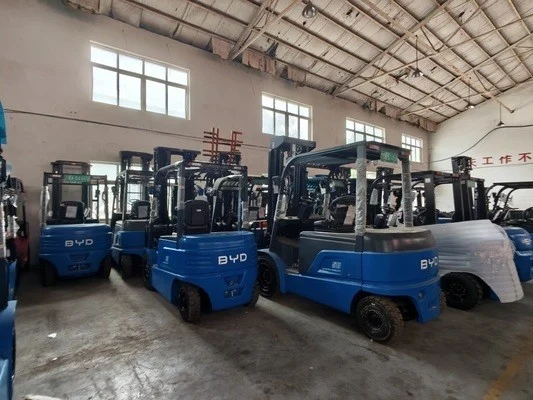
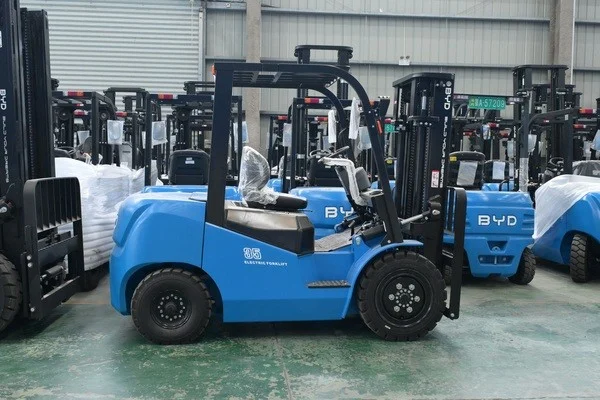
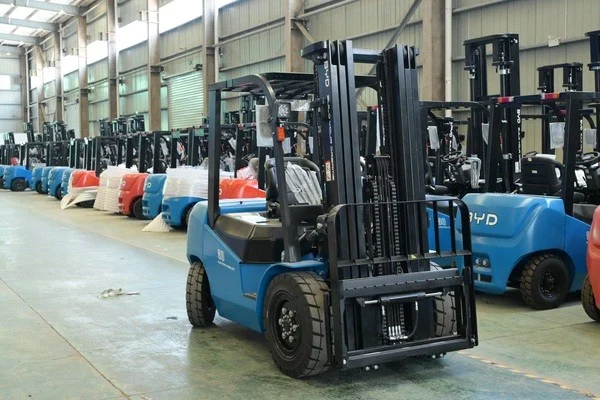
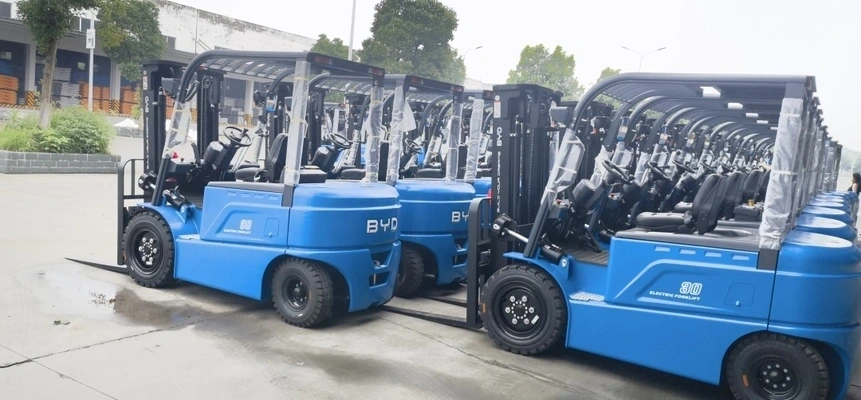
Material handling equipment selection directly impacts operational efficiency and worker safety across industrial manufacturing and warehouse sites. BYD has emerged as a major player in the global electric forklift market, leveraging its extensive experience in battery production to build lithium iron phosphate (LFP) powered material handling solutions. This guide outlines key considerations any operation can use when evaluating BYD forklifts, matching core attributes to common application needs and highlighting potential limitations to assess before purchase.
Core Performance Attributes Of BYD Forklifts
BYD builds all its forklift models around in-house produced LFP battery technology, which sets its products apart from many competing brands that source third-party batteries. Below we break down key performance characteristics common across BYD’s product line.
In-House LFP Battery Technology
LFP batteries offer multiple advantages over older lead acid battery designs used in legacy electric forklifts. These batteries support faster full charging, often reaching 100% capacity within two hours, compared against 8+ hour lead acid alternatives. LFP batteries also require no regular maintenance such as fluid top-offs, reducing routine work among facility maintenance teams. BYD’s integrated battery design also creates a lower center of gravity across the entire forklift, improving overall stability during operation.
Wide Range Of Load Capacities
BYD produces forklift models covering nearly all common industrial use cases. Capacity ranges start at 3,000 pounds supporting light-duty warehouse order picking and walk-behind models, and extend to more than 30,000 pounds supporting heavy-duty manufacturing and container handling applications. Narrow aisle models are also available serving high-density storage warehouses, where space is limited.
Standard Integrated Safety Features
Most BYD forklift models come standard with safety features common to modern electric equipment, including regenerative braking that reduces brake wear and improves energy efficiency, automatic parking brake engagement, and overload protection systems that prevent unsafe operation beyond the model’s rated capacity.
Application Fit: Industrial Manufacturing And Warehouse Use
BYD forklifts work well across many common use cases, but performance varies based on operational conditions. Below we break down fit across the two core application areas noted in this guide.
Industrial Manufacturing Applications
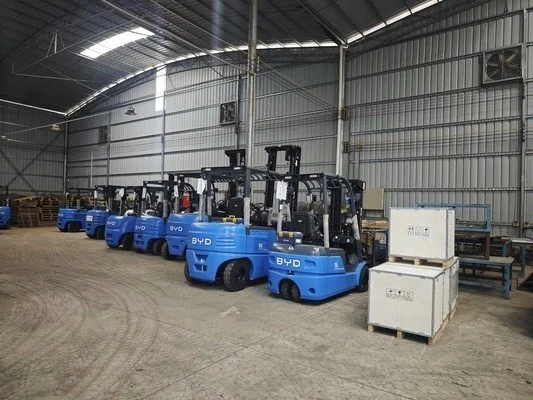
BYD forklifts fit well most indoor manufacturing environments, where zero tailpipe emissions improve indoor air quality compared to internal combustion powered models. Many heavy-duty BYD models also support outdoor yard storage and loading zones, moving large components or finished goods between production and storage areas. Key limitations to note here: LFP battery performance drops in consistently sub-zero temperatures, so operations in unheated facilities or cold climate regions must confirm cold-weather rated battery package availability before purchase. Heavy-duty continuous operation around the clock may also require additional investment in extra battery packs supporting multi-shift schedules.
Warehouse Applications
Electric BYD forklifts offer major benefits warehouse environments, where lower noise levels improve working conditions among staff compared to loud internal combustion models. Narrow aisle stand-up and sit-down models match well high-density pallet storage, helping operations maximize existing storage space. Lower maintenance needs also reduce unplanned downtime, which keeps order picking and shipping workflows on schedule. One key tradeoff here: BYD forklifts often carry higher upfront purchase prices compared to entry-level lead acid electric forklifts, so small operations with limited capital must assess total cost of ownership over time to confirm value.
Key Selection Criteria When Evaluating BYD Forklifts
Beyond performance and application fit, several practical factors help operations determine if a BYD forklift fleet matches operational needs.
Total Cost Of Ownership Calculation
While BYD forklifts have higher upfront costs than many competing options, lower long-term costs often offset this initial investment. Savings come from reduced maintenance, fewer battery replacements over the forklift’s lifespan, and no fuel costs compared to internal combustion models. Operations should calculate total cost across a 5 to 10 year ownership period to get an accurate picture of value, rather than focusing only on upfront purchase price.
Infrastructure Requirements Assessment
All BYD forklifts require dedicated charging infrastructure. Operations need to confirm sufficient electrical capacity exists at their facility to power charging stations, and allocate dedicated charging zone space. New construction projects can integrate charging infrastructure design early, but existing facilities may need electrical upgrades supporting a full fleet of electric BYD forklifts.
Local Service And Parts Access
BYD’s dealer and service network continues to expand globally, but coverage varies significantly across regions. Before purchasing, operations should confirm access to local certified technicians, readily available replacement parts, and emergency service support. Limited local service can lead to long unplanned downtime if a forklift requires repairs.
Known Limitations To Evaluate
While BYD forklifts offer many benefits, several limitations require consideration before purchase: BYD’s custom model configurations can have longer lead times in some regions, delaying fleet deployment projects. The resale market of used BYD forklifts remains less developed than markets belonging to longer-established forklift brands, making resale value projections less certain. And as noted earlier, standard LFP batteries lose significant capacity in consistent sub-zero operating conditions, so cold storage operations need specialized rated equipment.
Frequently Asked Questions
Are all BYD forklifts electric?
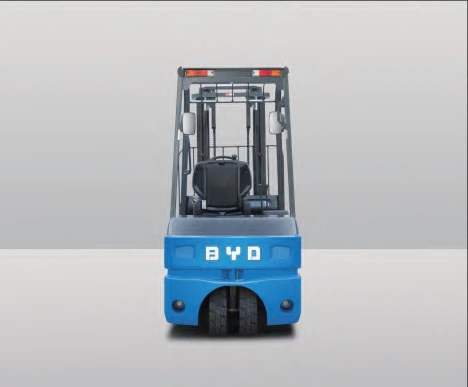
Yes, BYD currently manufactures only electric powered material handling forklifts. The company does not produce internal combustion powered models.
Can BYD forklifts operate in outdoor environments?
Many BYD forklift models include weather-sealed components engineered for outdoor use. Always check the specific model’s environmental ratings before regular use in wet or dusty outdoor conditions.
How long do BYD forklift batteries last?
Battery lifespan depends on usage habits, charging frequency, and operating environment. With proper care and maintenance, most BYD LFP forklift batteries deliver 5 to 10 years of reliable service across typical operations.
Does BYD offer warranty coverage on new forklifts?
Most new BYD forklifts include standard warranty coverage covering the entire vehicle, with extended warranty options available covering the battery system. Warranty terms vary by region and dealer, so always review all coverage details before completing a purchase.
Conclusion
Evaluating BYD forklifts requires alignment between model capabilities, your operation’s specific application needs, and local support infrastructure. BYD’s integrated LFP battery technology brings clear benefits many industrial manufacturing and warehouse operations, including lower long-term maintenance and zero on-site emissions. However, higher upfront costs, infrastructure requirements, and varying regional service coverage mean thorough due diligence helps ensure your investment meets operational needs long-term.