Factors Affecting Electric Forklift Traction and Load Capacity on Inclined Warehouse Docks
News 11/10/2026
Many warehouse facilities use inclined loading docks to align truck beds with facility floor levels. Operating electric forklifts on these sloped surfaces creates unique performance challenges, especially related to traction and maximum load capacity. Understanding the key factors that change performance helps facility managers and operators avoid safety incidents and maintain efficient workflow.
Core Physical Factors Impacting Performance
Tire Condition and Traction Surface
Tread depth and rubber compound directly impact how much traction an electric forklift gains on an inclined surface. Worn tires with low tread cannot grip textured concrete or asphalt docks, increasing risk of slipping even under light loads. Wet or contaminated surfaces (covered in oil, water, or debris) further reduce traction, regardless of tire condition. Some facilities add non-slip coatings to dock surfaces to improve grip, but this cannot compensate for excessively worn tires.
Battery State of Charge
Electric forklifts rely on battery power to deliver torque to drive wheels. Lower battery charge reduces torque output, which directly limits ability to climb inclined surfaces while carrying full load. Most electric forklifts experience measurable torque reduction once charge drops below 30%, with steep drops in performance below 20%. This torque loss translates to lower effective load capacity, as the drive system cannot move the combined weight of the forklift and its load up the slope.
Load Center of Gravity
Inclined surfaces shift a load’s center of gravity compared to operation on flat ground. When moving up an incline, the center shifts toward the rear of the forklift, reducing front wheel traction. When moving down, the center shifts forward, increasing risk of forward tip-over. Carrying loads outside the manufacturer’s recommended load center distance amplifies these shifts, leading to further reduction in safe maximum load capacity.
Operational Guidance For Inclined Dock Use
Start with equipment selection: If your warehouse regularly works with inclines steeper than 10%, select electric forklift models rated to handle sloped operation. Light-duty electric pallet jacks designed to work on flat indoor floors rarely handle inclines over 5% safely.
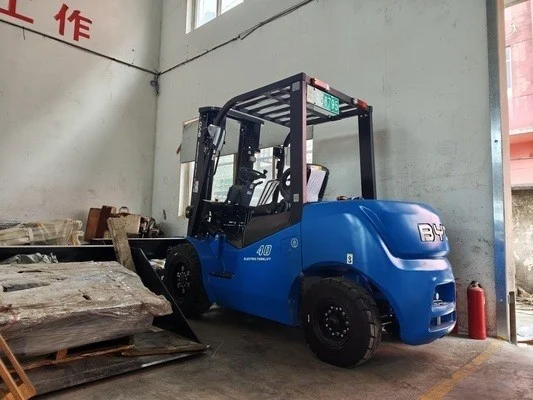
Always match load size to current conditions. If operating on an incline, reduce maximum load weight by at least 10% to 20% depending on slope angle, even if the forklift is rated to work on the slope. This creates a safety buffer against center of gravity shifts and traction loss.
Implement regular maintenance checks focused on factors tied to incline performance: Inspect tire tread weekly, replace tires when tread drops below manufacturer recommended minimum levels. Check battery health regularly, as degraded old batteries cannot deliver full torque even when fully charged.
Establish clear operating rules: Do not stop or turn an electric forklift while on an inclined dock. Slow travel speed to half the normal flat-floor speed to maintain control. Avoid carrying unbalanced loads, which amplify center of gravity shifts on sloped surfaces.
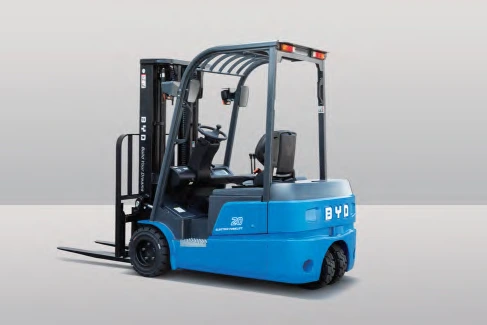
Key limitations to note: Even well-maintained, properly rated electric forklifts cannot maintain full rated load capacity on any incline. Slope angle directly reduces maximum safe load, so planning load sizes around this limitation prevents safety incidents. Facilities with permanently inclined docks should post clear signage, listing maximum allowed load matching each common forklift type used on site.
Frequently Asked Questions
Can an electric forklift operate safely on any inclined warehouse dock?
No. Most standard electric forklift models come with maximum slope ratings between 5% and 15% from manufacturers. Always review official manufacturer specifications before operating on any inclined surface. Slopes steeper than the rated limit increase risk of traction loss, tip-over, and mechanical damage to drive systems.
Does load capacity drop consistently as slope angle increases?
No. Capacity reduction grows as slope angle rises. Even a small 3% incline can cut maximum safe load by 10% to 15% across most standard models, with steeper slopes seeing larger drops. Some manufacturers publish load reduction charts matching different slope angles, but these values assume ideal traction and full battery charge.
Do different electric forklift types perform differently on inclined docks?
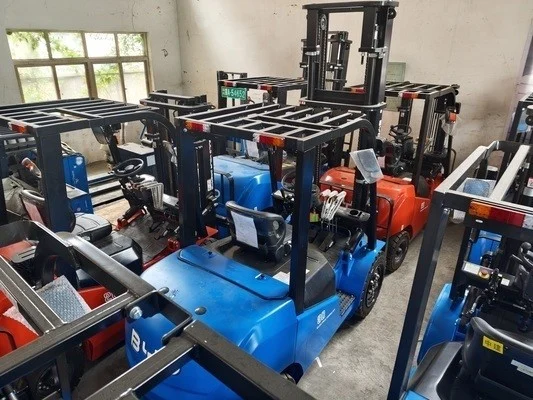
Yes. Three-wheel counterbalance models typically have lower traction limits than heavy-duty four-wheel counterbalance models. Light-duty electric pallet jacks and walk-behind units have far lower slope ratings than sit-down rider industrial models. Always check ratings specific to your forklift type, rather than general electric forklift guidance.
Understanding the factors that impact performance helps teams make informed decisions about equipment selection, operation, and maintenance, reducing safety risks and improving workflow efficiency on inclined warehouse docks.