How Many Types of Forklift Are There: Battery Voltage and Charger Infrastructure Decisions When Specifying a Four-Wheel Counterbalance Electric Truck
News 10/11/2026
“How many types of forklift are there” has no single fixed answer, because the industry classifies trucks by power source, chassis layout, mast design, and duty. The practical count matters less than the shortlist it produces. Once a buyer narrows the field to a four-wheel counterbalance electric forklift, the decisions that shape daily usability are battery voltage and the charger infrastructure behind it. This article treats the type question as a starting filter, then explains how voltage and charging choices interact with shift patterns, available power, and floor space.
The Type Question as a Filter, Not a Catalogue
Most published counts of forklift types mix categories. A single truck can be electric, counterbalance, four-wheel, and cushion-tyre at once. Treating each label as a separate “type” inflates the number without helping a specification decision. A more useful approach groups trucks by the job they are built to do.
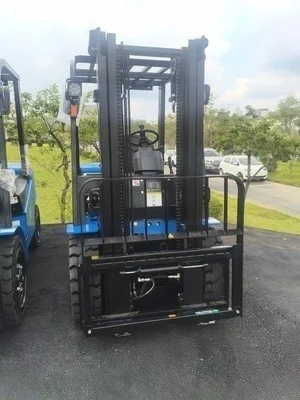
- Counterbalance trucks carry the load ahead of the front wheels and lift it with a mast. They are common in loading, unloading, and general transfer work.
- Warehouse trucks such as reach trucks and order pickers are designed around narrow aisles and high racking. They suit different tasks and are outside the scope discussed here.
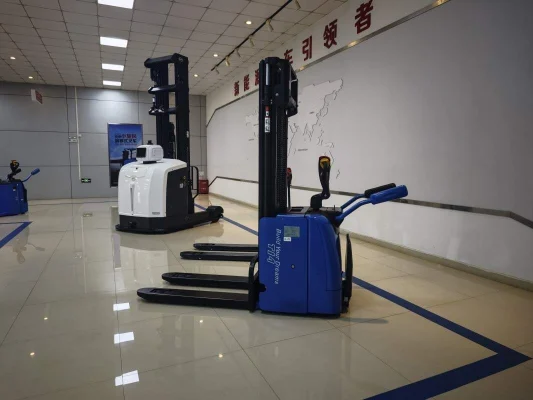
- Pallet trucks and stackers handle horizontal movement or short lifts at lower heights.
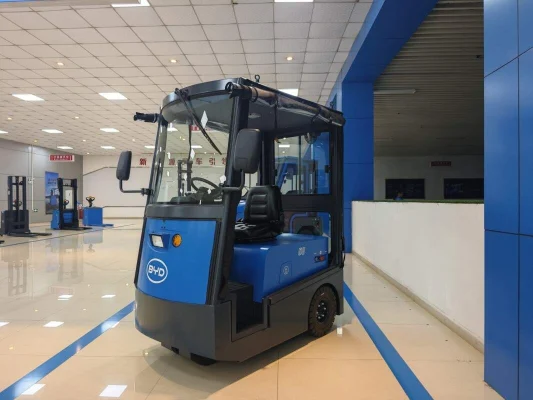
- Tow tractors pull trailers rather than lift loads.
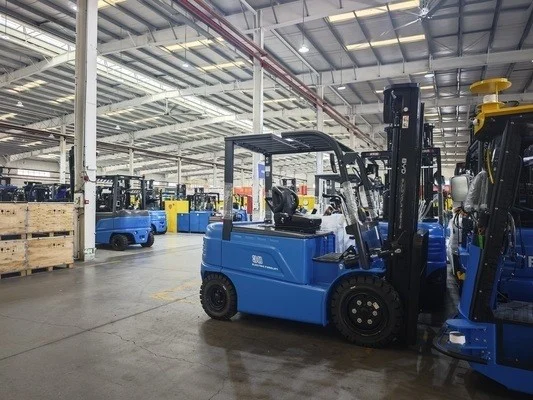
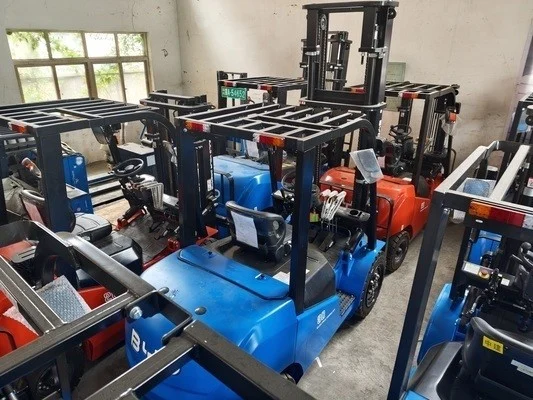
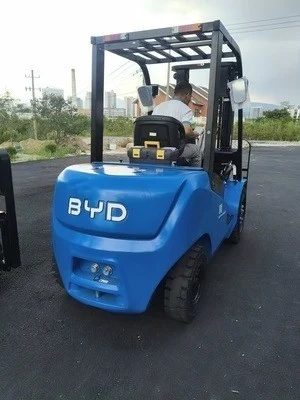
This site sells four-wheel counterbalance electric forklifts, including lithium-battery models. Readers comparing broad type lists should keep that boundary in mind: the voltage and charging guidance below applies to that class of truck, not to every machine a type count might include.
Why Battery Voltage Deserves a Place in the Specification
Voltage is not a marketing detail. It affects which chargers, connectors, and battery configurations are compatible, and it shapes how a truck fits an existing electrical supply. Common nominal voltages in counterbalance electric trucks include 48 V, 80 V, and higher classes on larger models. The right figure depends on the truck’s design and the manufacturer’s technical data, not on a general preference.
Three questions usually settle the voltage discussion:
- What does the truck’s data sheet specify? Voltage class, battery capacity, and charger requirements should come from the manufacturer’s documentation. Do not assume a voltage because a similar-looking truck uses it.
- What charging power is available? Higher-voltage systems generally draw different current and need chargers matched to the battery. The site’s electrical capacity, breaker ratings, and cable runs all need checking before equipment is ordered.
- How does the shift pattern work? One shift with a long recharge window is a different problem from multi-shift operation with short breaks. The answer influences both battery capacity and charger count.
Where documentation is incomplete, ask the supplier to confirm the voltage, battery type, connector standard, and charger compatibility in writing. Those four points prevent most mismatch problems later.
Charger Infrastructure: The Part Buyers Underestimate
Charging is often treated as an afterthought, yet it determines whether a truck is available when the next shift starts. Infrastructure decisions fall into a few practical areas.
Charger type and placement
Chargers must match the battery chemistry and voltage the truck uses. Placement matters as much as specification: charging areas need ventilation, clearance from traffic routes, and protection from impact. A charger installed in a busy aisle creates a hazard regardless of its rating.
Electrical supply and site constraints
Before ordering, confirm the available supply voltage, the capacity of the distribution board, and whether the intended charging position can support the charger’s demand. If the site cannot supply the required power at the planned location, the options are usually a different charger configuration or a different charging location. Both should be checked with an electrician and the equipment supplier rather than assumed.
Battery handling and opportunity charging
Lithium-battery trucks can often be opportunity-charged during breaks, but the acceptable pattern depends on the battery management system and the manufacturer’s instructions. Lead-acid batteries typically need different handling, including specified charging profiles and cooling periods. Treat any claim about charging speed or battery life as conditional until the supplier confirms it against the actual battery and charger combination.
A Practical Specification Sequence
The following sequence keeps voltage and charging decisions tied to real operating conditions. It is general guidance, not a substitute for the manufacturer’s data.
| Step | What to establish | Why it matters |
|---|---|---|
| 1. Duty profile | Loads, lift heights, load centre, shift length, and daily run time | Sets the truck class and battery capacity range to discuss |
| 2. Site conditions | Aisle width, floor surface, ramps, doorways, and outdoor exposure | Confirms whether a four-wheel counterbalance truck fits the layout |
| 3. Voltage and battery | Nominal voltage, battery type, and capacity from supplier data | Ensures charger and connector compatibility |
| 4. Charging plan | Charger type, number of chargers, charging windows, and location | Matches recharge time to the operating schedule |
| 5. Electrical check | Supply capacity, protection, cabling, and ventilation | Prevents installation delays and unsafe setups |
A hypothetical example shows how the pieces connect. Suppose a warehouse runs two shifts and plans one truck to cover both. The buyer would need to confirm the truck’s rated capacity at the required lift height and load centre, then check whether the battery and charging window can support the second shift without an unacceptable gap. If the numbers do not fit, the answer may be a larger battery, an additional charger, or a revised charging schedule. None of those choices should be made without the supplier’s documented figures.
Common mistakes include ordering a charger before confirming the battery voltage, assuming a standard connector, and planning a charging point without checking the electrical supply. Each is avoidable with a short written checklist agreed between buyer, electrician, and supplier.
Frequently Asked Questions
Does the number of forklift types affect which truck I should buy?
Only indirectly. Type categories help narrow the field to trucks built for your task. Once you are considering a four-wheel counterbalance electric forklift, the decisive factors are load, lift height, load centre, aisle space, shift pattern, and charging arrangements.
Can I use any charger with a lithium-battery forklift?
No. The charger must match the battery chemistry, voltage, and connector specified by the manufacturer. Using an incompatible charger can damage equipment and create safety risks. Confirm compatibility in writing before purchase.
Is a higher voltage always better?
Not necessarily. Voltage class should follow the truck’s design and the manufacturer’s data. A higher-voltage system may suit larger trucks or demanding duty, but it also affects charger requirements and site electrical capacity. Match the voltage to the application and the available infrastructure.
What information should I prepare before requesting a quotation?
Gather typical and maximum loads, required lift heights, load centre, aisle and doorway dimensions, floor and ramp conditions, shift length, daily operating hours, and the electrical supply available at the charging location. These details let the supplier propose a configuration that fits your operation rather than a generic model.
When you are ready to specify a four-wheel counterbalance electric forklift, share your actual working conditions, load requirements, and lift heights with our team so the voltage, battery, and charger configuration can be checked against the manufacturer’s technical data.