How Many Types of Forklift Are There: Reading a Four-Wheel Counterbalance Electric Load Chart Against Your Heaviest Attachment and Lift Height
News 04/11/2026
“How many types of forklift are there” is usually answered with a long list: counterbalance, reach truck, pallet truck, order picker, tow tractor, and more. That list is a starting point, not a decision. If your work involves lifting loads onto racks or truck beds with a rider-on counterweight machine, the practical question is narrower: what does a four-wheel counterbalance electric forklift actually carry once your heaviest attachment is fitted and the forks are raised to your real lift height? This article explains the type landscape briefly, then shows how to read a load chart so the machine you choose matches the job.
Forklift Types at a Glance, and Why the Load Chart Decides
Forklift families differ mainly in how they carry a load and where the operator stands. The broad categories most buyers encounter include:
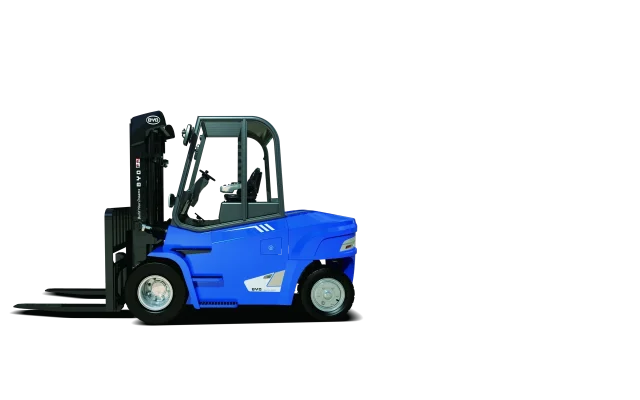
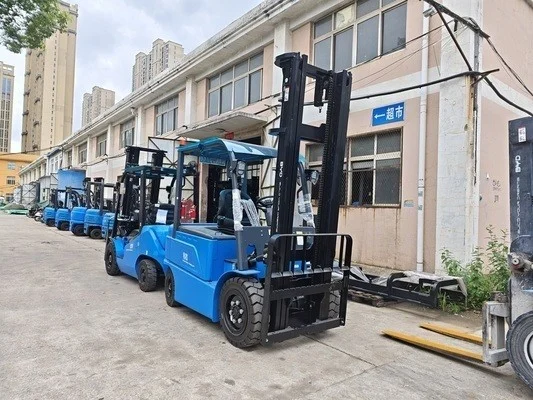
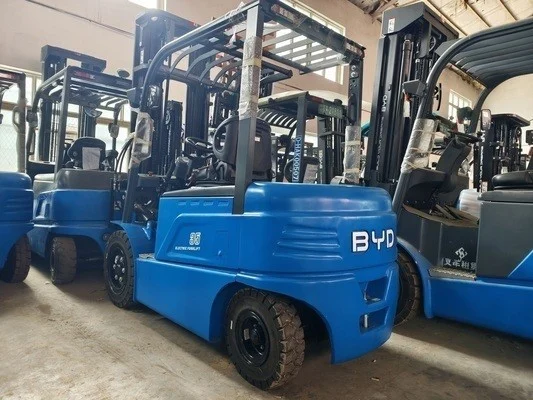
- Counterbalance trucks — the load sits ahead of the front wheels and the machine’s own weight balances it. Four-wheel counterbalance electric models are common in general factory, loading-dock, and warehouse transfer work.
- Reach trucks — the mast or forks reach into racking, typically used in narrow aisles with high racking.
- Pallet trucks and stackers — low-lift or short-lift handling of pallets, often in tight spaces.
- Order pickers and tow tractors — picking at height and horizontal towing respectively.
This site sells four-wheel counterbalance electric forklifts, including lithium-battery models, so the rest of this article stays with that family. Other types appear here only to explain where the boundary lies.
Within the counterbalance family, the load chart is the document that turns a headline capacity into a usable number. A truck rated at a nominal capacity is rated at a specific load center and a specific lift height. Add an attachment, raise the forks higher, or move the load center forward, and the safe capacity falls. Buyers who compare only the headline number often discover the gap after delivery, when the heaviest attachment and the top rack position are combined.
Reading the Load Chart Against Attachment Weight and Lift Height
A load chart, sometimes printed on the mast or in the operator manual, shows allowable load as a function of load center and lift height. The steps below turn that chart into a selection decision. They use general principles that apply to counterbalance trucks; exact figures must come from the manufacturer’s data sheet for the model you are considering.
Step 1: Establish the real load center
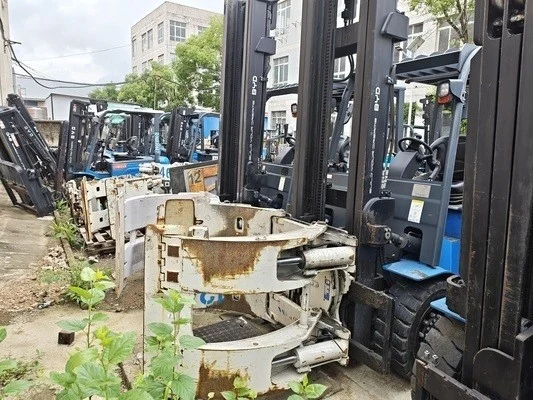
Load center is the horizontal distance from the vertical face of the forks to the center of gravity of the load. A standard pallet load is often described with a nominal load center, but an attachment such as a clamp, push-pull, or rotator moves the load forward and adds its own weight. Both effects reduce remaining capacity. Record the attachment weight and the load center it creates, using the attachment supplier’s data, and compare that with the load center used on the chart.
Step 2: Fix the true lift height
Lift height is not the height of the top shelf alone. It is the height at which the forks must be raised to place or retrieve the load, plus clearance. A truck may be rated at full capacity at one height and a reduced capacity at a higher height. If your top rack beam sits at a height where the chart shows a lower rating, that lower rating governs the job.
Step 3: Combine attachment and height effects
Attachment weight and forward load center reduce capacity, and height may reduce it further. The combination, not either factor alone, is the number to check. A machine that handles the load at low height with bare forks may not handle the same load with the attachment at your top lift height.
Step 4: Check the stability and site conditions the chart assumes
Load charts assume a level surface and a properly maintained truck. Slopes, uneven floors, and dynamic loads from fast travel or braking change the real margin. Confirm the floor conditions and any ramp use with the supplier, and treat the chart as a starting limit rather than a guarantee under every operating condition.
Step 5: Confirm with the manufacturer before ordering
Because attachment geometry and mast configuration vary, the final capacity check belongs with the supplier. Provide the attachment model and weight, the load center, the maximum lift height, the load weight and dimensions, and the site conditions. Ask the supplier to confirm the rated capacity of the specific configuration, not the base model.
Specifications and Configuration Checks That Matter in General Industrial Handling
The table below organizes the parameters that most often decide whether a four-wheel counterbalance electric forklift suits general factory, dock, and warehouse transfer work. It separates what is usually standard, what is optional, and what must be confirmed with the manufacturer. No values are given here because they depend on the model and the manufacturer’s data sheet.
| Parameter or configuration | Why it matters in this work | What to confirm with the supplier | Standard, optional, or to confirm |
|---|---|---|---|
| Rated capacity at load center | Headline capacity can mislead once an attachment shifts the load forward | Capacity at your actual load center and at your maximum lift height | To confirm from the model data sheet |
| Attachment weight and geometry | Attachments reduce remaining capacity and change load center | Attachment weight, added load center, and any derating the manufacturer applies | To confirm; attachment compatibility varies |
| Maximum lift height and mast type | Higher lift positions can reduce rated capacity | Capacity at the required lift height, plus free-lift needs | Model-dependent; to confirm |
| Aisle width and turning radius | Determines whether the truck can maneuver at the rack face and dock | Right-angle stacking aisle and turning radius figures | To confirm from dimensional drawings |
| Battery and charging arrangement | Shift length and charging windows affect uptime | Battery capacity, charger type, charging time, and opportunity-charging guidance | Configuration-dependent; to confirm |
| Floor and ramp conditions | Slopes and uneven surfaces affect stability and traction | Allowable slope, floor flatness assumptions, and tire options | To confirm against site survey |
| Operator compartment and visibility | Affects safe handling at height and in busy docks | Overhead guard, display, and visibility features available | Standard or optional depending on model |
How to verify capacity before purchase
Ask the supplier to state the rated capacity of the exact configuration you will receive, including the attachment and the lift height. Compare that figure with the heaviest load you will handle at the highest position, not with an average load at floor level. If the supplier cannot confirm the combined figure, treat the configuration as unverified.
Where the four-wheel counterbalance design has limits
Four-wheel counterbalance trucks are a common general-purpose choice, but they are not the answer to every layout. Very narrow aisles, very high racking that demands a reach mechanism, or tasks that are essentially horizontal pallet movement may point to other equipment families. In those cases, say so honestly rather than forcing a counterbalance truck into a layout it does not fit. For dock and general transfer work with adequate aisle width, the counterbalance design remains a practical default, subject to the load chart check above.
An illustrative scenario, not a case study
Consider a hypothetical factory that moves palletized components from receiving to racking. The heaviest load uses a clamp attachment, and the top rack beam requires a lift height above the level where the base truck is rated at full capacity. The correct approach is to collect the clamp weight, the resulting load center, the load weight, and the top lift height, then ask the supplier to confirm the rated capacity of that combination. If the confirmed figure falls below the load, the options include a higher-capacity model, a different attachment, or a layout change. This example is illustrative only; it is not a report of a measured installation.
Frequently Asked Questions
Does a higher-capacity forklift always solve an attachment capacity problem?
Not automatically. A larger model may restore capacity, but the attachment still shifts the load center and the lift height still affects the rating. The reliable path is to confirm the rated capacity of the specific truck, attachment, and lift height combination with the manufacturer.
Can I use the headline capacity if I only lift to low heights?
Only if the chart confirms full capacity at that height and at your actual load center. Headline capacity is tied to stated conditions. If your attachment changes the load center, the chart value at your real conditions is the one that applies.
What information should I prepare before asking for a selection recommendation?
Prepare the heaviest load weight and dimensions, the attachment type and weight, the maximum lift height, the load center, aisle and door widths, floor and ramp conditions, shift pattern, and charging arrangements. These details let the supplier check the load chart against your job instead of quoting a base model.
Is a four-wheel counterbalance electric forklift suitable for every warehouse?
No. It is a common general-purpose choice where aisle width, floor conditions, and lift height suit a counterweight design. Very narrow aisles or specialized high-rack handling may call for other equipment types. Confirm dimensions and capacity against your layout before committing.
How do I verify the load chart figures are correct at delivery?
Check that the delivered configuration matches the quotation: attachment model, mast type, and any capacity plate or chart supplied with the truck. Ask the supplier to explain how the plate figures correspond to your lift height and load center, and keep that documentation with the machine records.
Before ordering, assemble your data list: load weight and dimensions, attachment weight and load center, maximum lift height, aisle and turning dimensions, floor and ramp conditions, shift and charging pattern, and any site-specific constraints. Then ask the supplier to confirm the rated capacity of the exact configuration and to identify which features are standard, optional, or unavailable. A short, specific question about the load chart at your real lift height and attachment is worth more than a long comparison of headline capacities.